Retreatment of upper central incisor with over extended GP, a clinical case report
13/07/2026
Warning: Undefined variable $post in /home/styleendo/htdocs/styleitaliano-endodontics.org/wp-content/plugins/oxygen/component-framework/components/classes/code-block.class.php(133) : eval()'d code on line 2
Warning: Attempt to read property "ID" on null in /home/styleendo/htdocs/styleitaliano-endodontics.org/wp-content/plugins/oxygen/component-framework/components/classes/code-block.class.php(133) : eval()'d code on line 2
Root canal obturation should ideally terminate at the apical constriction, not beyond it. Overfilling into the periapical area may provoke foreign body reactions, chronic inflammation, and delayed healing. In cases where gutta-percha has passed beyond the foramen, retreatment is required to remove the extruded material and re-seal the canal at the correct working length.
Discussion
1. Causes of Overextension
- Inaccurate working length measurement
- Over-enlargement of the apical area without creating a proper stop
- Excessive pressure during obturation (especially warm vertical techniques)
2. Retreatment Strategy
- Gutta-percha was removed using an H-file in a circumferential filing motion
- Apex locator used to redefine the correct working length
- Irrigation with 2.5% NaOCl and 17% EDTA
- Obturation performed using NeoPUTTY bioceramic material for apical sealing
3. Advantages of H-File Use
- Greater tactile control compared to rotary systems
- Effective retrieval of condensed gutta-percha
- Minimal risk of pushing material further apically
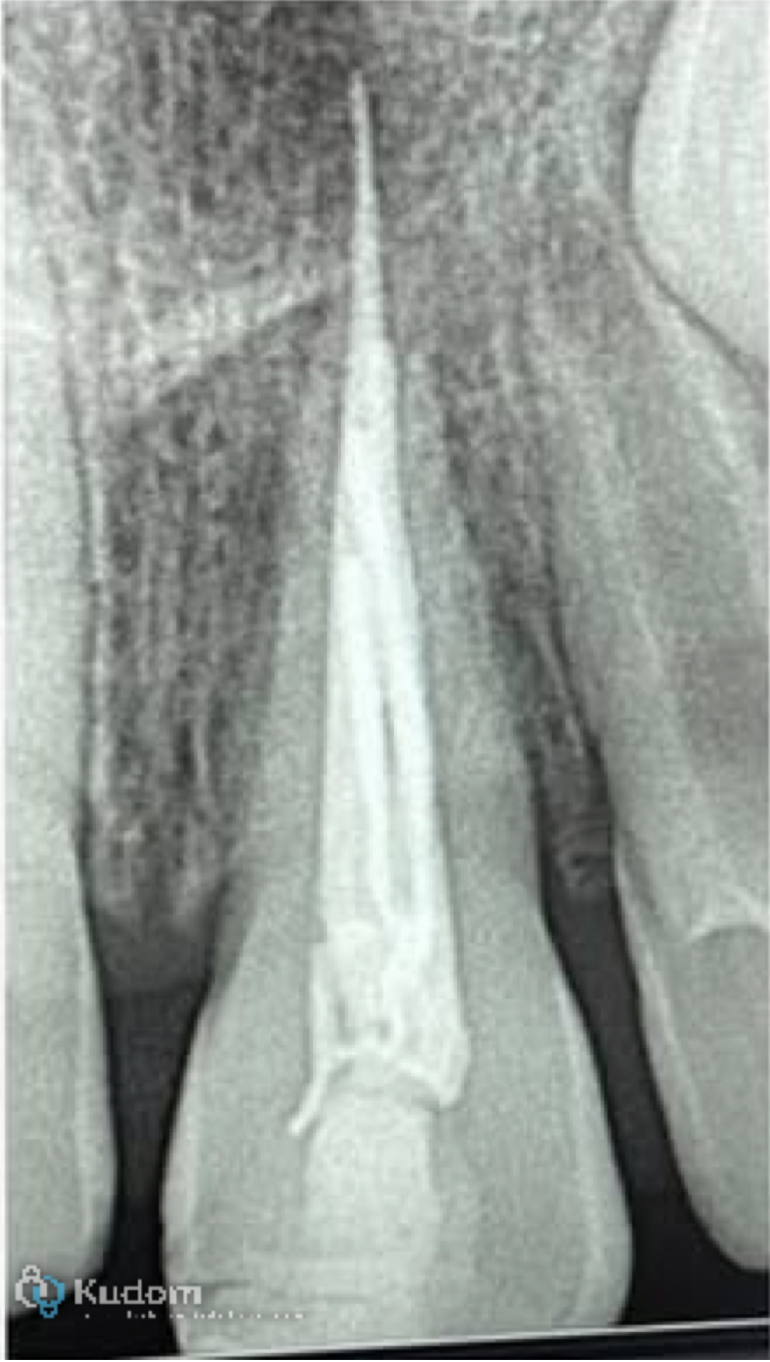
Fig. 1
Case Report
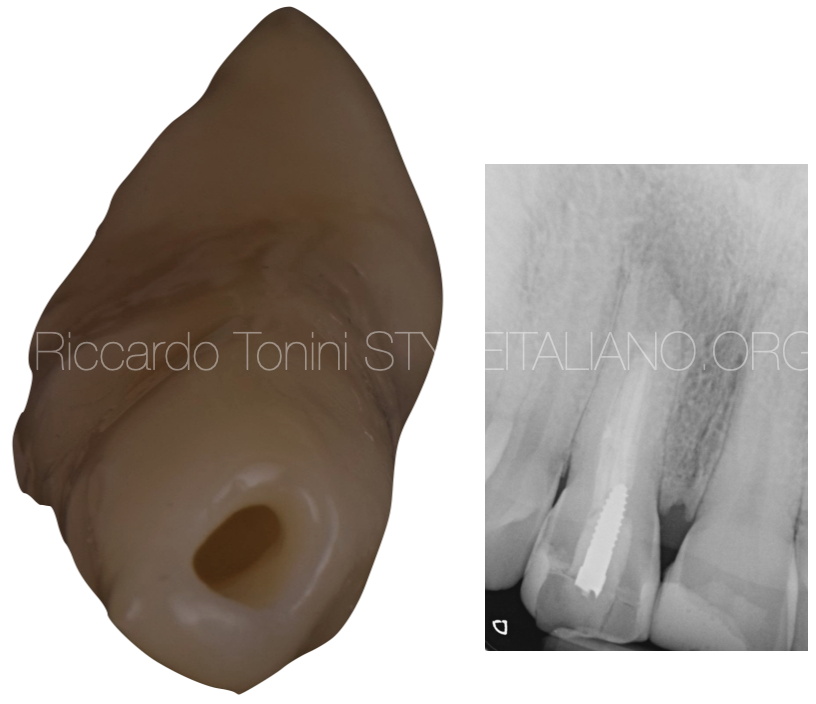
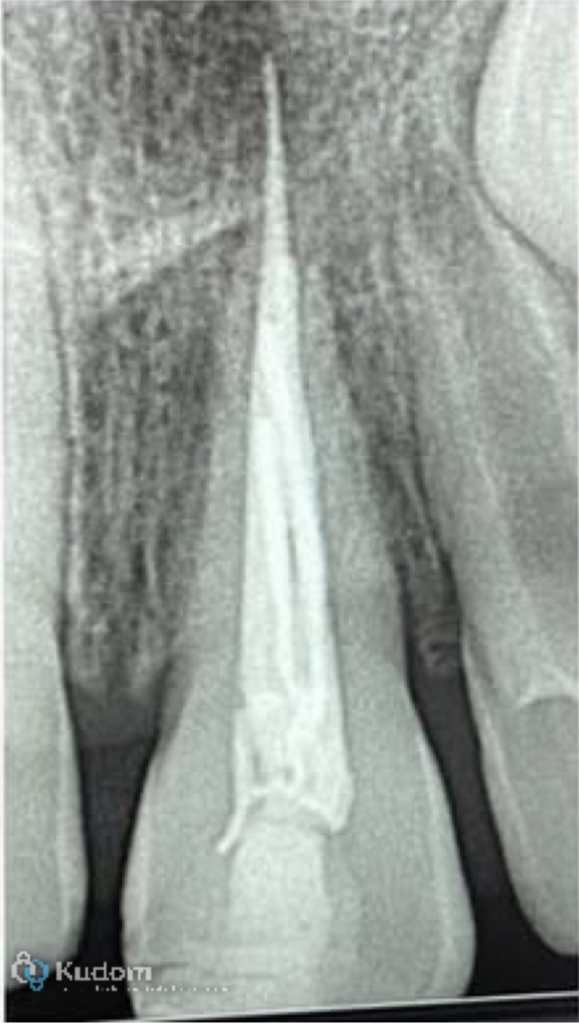
A 28-year-old patient presented with mild discomfort and sensitivity to percussion in a maxillary central incisor. The radiograph revealed an overextended gutta-percha point projecting beyond the apical foramen
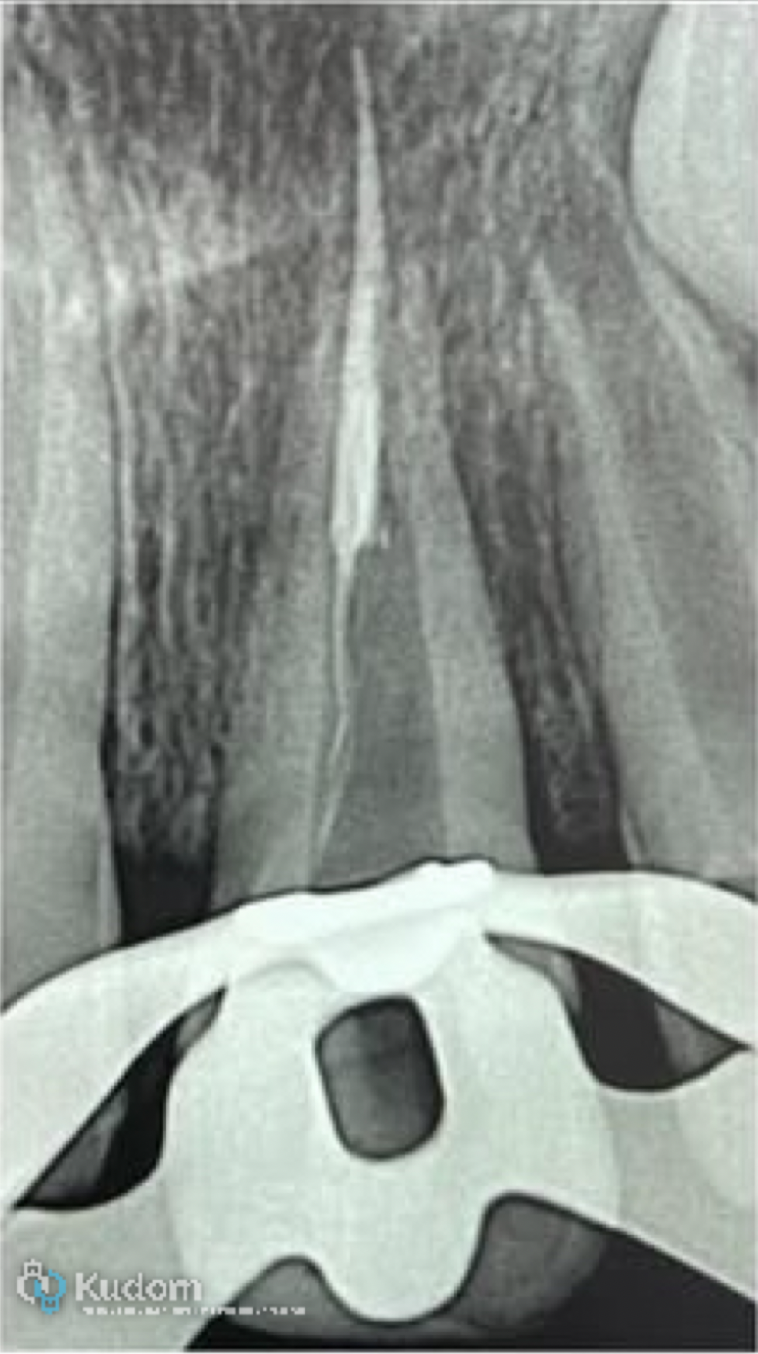
Fig. 2
Treatment:
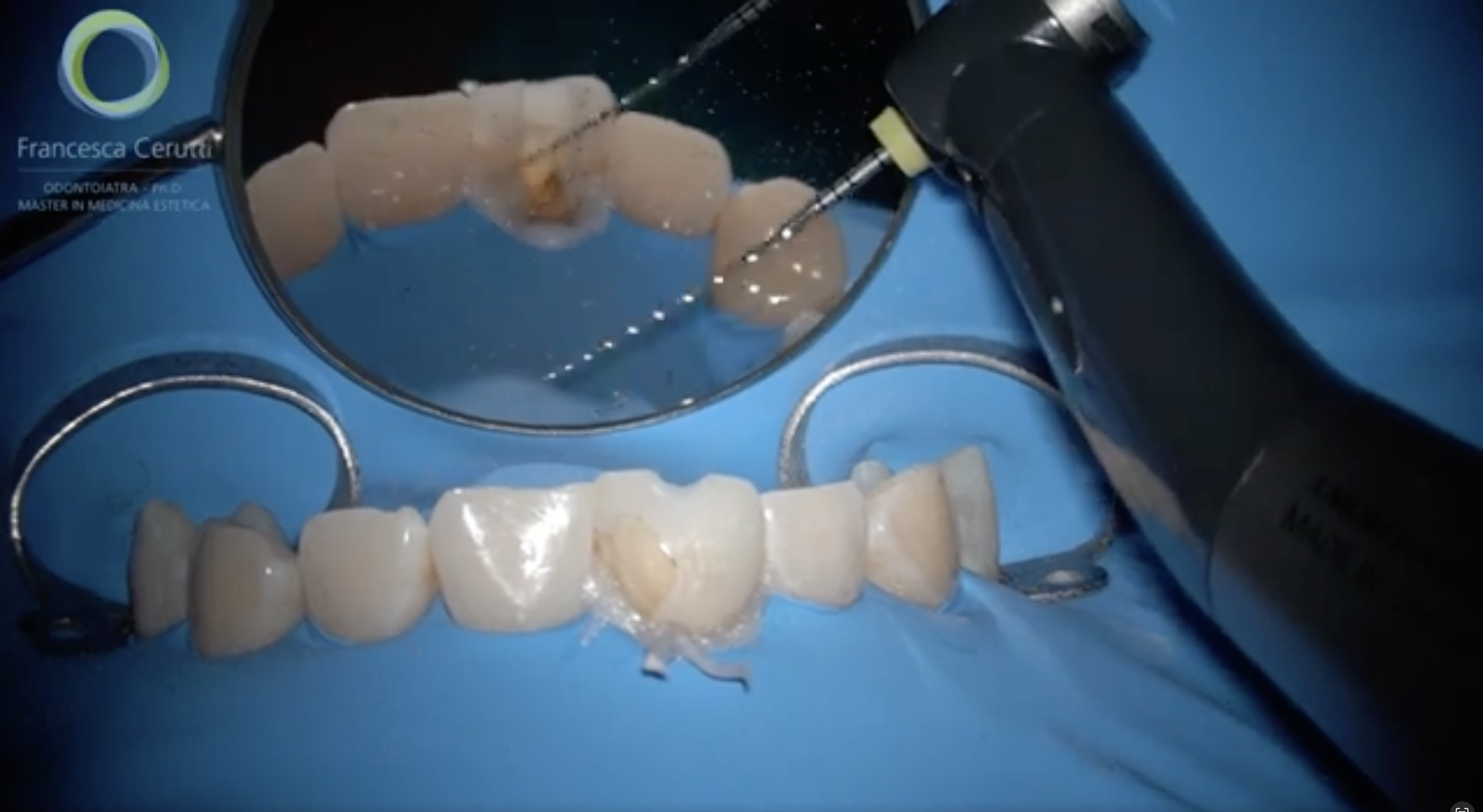
- Rubber dam isolation was applied, and access was gained through the old composite
- H-files were used to mechanically retrieve the extruded gutta-percha
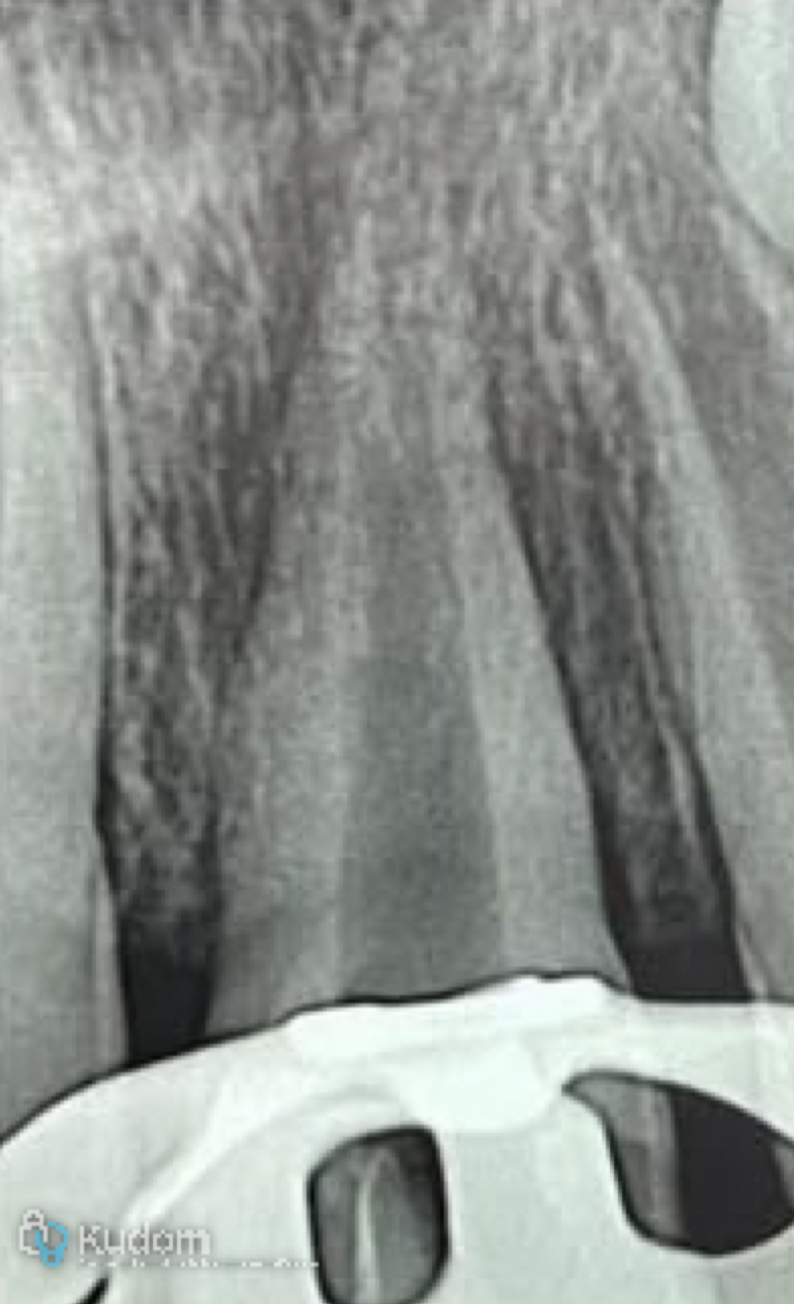
Fig. 3
- Working length confirmed by apex locator and radiograph
- Irrigation protocol included NaOCl and EDTA
- Obturation performed using (bioceramic) to the correct apical limit
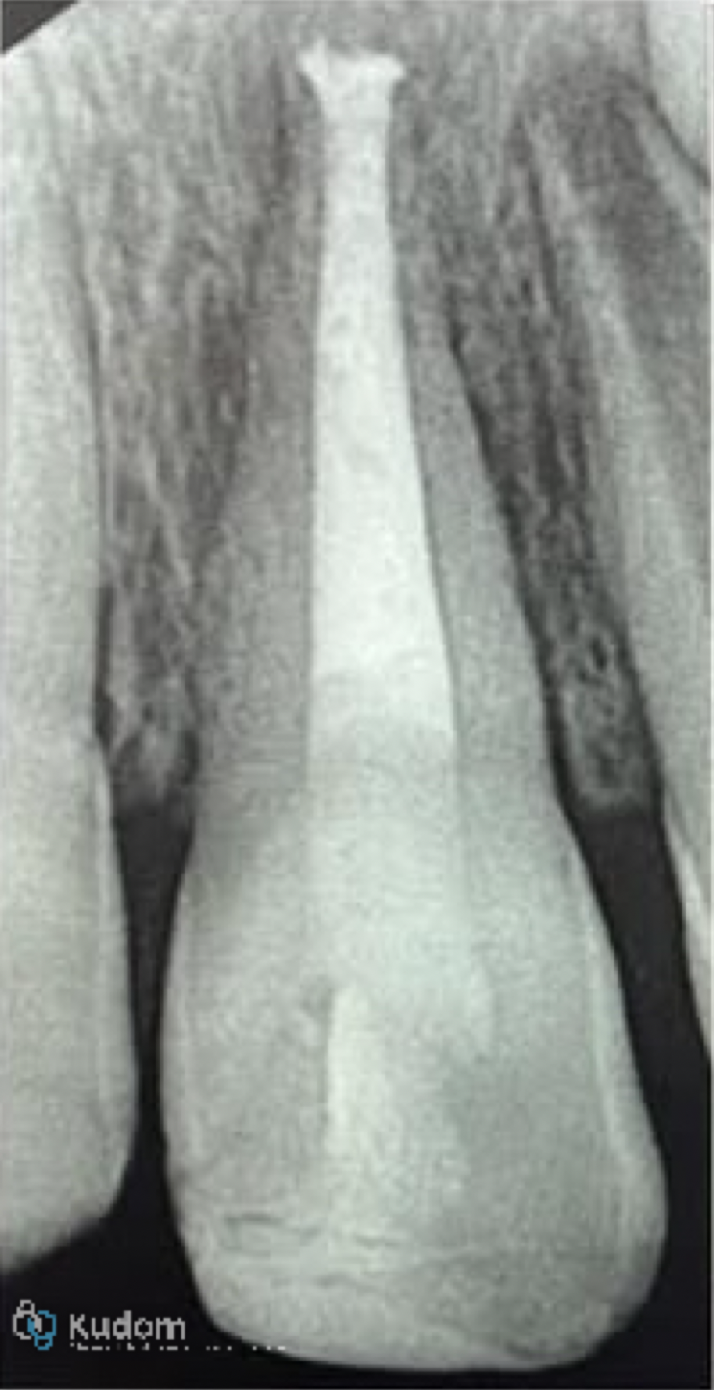
Fig. 4
- Post-operative radiograph showed ideal apical fill with no extrusion
Outcome:
The patient reported complete relief from symptoms within one week. A 1-month follow-up indicated the beginning of apical healing, and no tenderness was observed.
Fig. 1
About the author
Dr Ahmed Hameed Alharran
BDS
graduated from basra dental collage-Iraq 2015-2016
Conclusions
Overextended root canal fillings should not be ignored. Retreatment using an H-file allows for controlled and precise removal of old filling material. When combined with a biocompatible material like MTA, excellent apical sealing can be achieved. Careful length determination and gentle obturation remain essential to long-term endodontic success.
Bibliography
- Siqueira JF, Rôças IN. Clinical implications and microbiology of apical periodontitis. Endod Topics. 2004.
- Schilder H. Filling root canals in three dimensions. Dent Clin North Am. 1967.
- Chong BS, Pitt Ford TR. Root canal treatment failure: A review. Int Endod J. 1992.