Retreating Russian Red
27/04/2026
Warning: Undefined variable $post in /home/styleendo/htdocs/styleitaliano-endodontics.org/wp-content/plugins/oxygen/component-framework/components/classes/code-block.class.php(133) : eval()'d code on line 2
Warning: Attempt to read property "ID" on null in /home/styleendo/htdocs/styleitaliano-endodontics.org/wp-content/plugins/oxygen/component-framework/components/classes/code-block.class.php(133) : eval()'d code on line 2
Resorcinol–formaldehyde (RF) resin, commonly known as “Russian Red” cement, is a peculiar material that was widely used in Eastern European countries. RF resin consists of a mixture of formaldehyde (in an alcohol solution), resorcinol powder, and a sodium hydroxide catalyst. It can be mixed to various consistencies and placed in root canals as either a temporary or permanent obturating material.
The principle behind this material was the “mummification” of the pulp tissue. Formaldehyde causes histopathologic fixation of the tissue and also provides an antibacterial effect. Resorcinol and formaldehyde react to form a polymerized resin within the canal, producing a hard, plastic-like mass that seals the canal space.
Its application involved incomplete removal of the pulp tissue, followed by placement of the material, which both fixed the remaining tissue and sealed the canal system through polymerization.
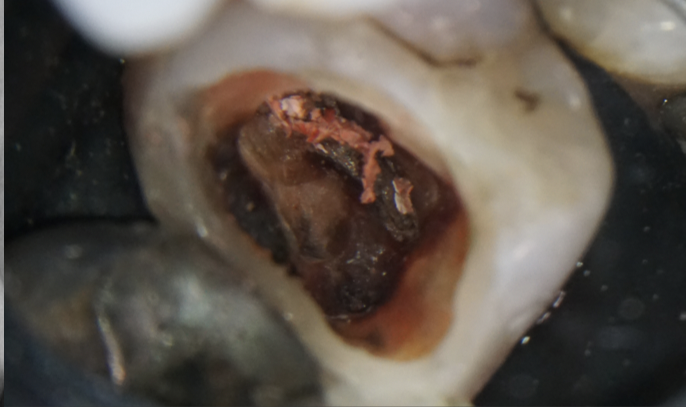
However, the material had significant drawbacks. Formaldehyde is highly cytotoxic and harmful to radicular tissues. In addition, it permanently stains the tooth a reddish-brown color, which led to the name “Russian Red.” Depending on the degree of polymerization, the material can become extremely hard and difficult to remove, potentially leading to complications such as ledge formation.
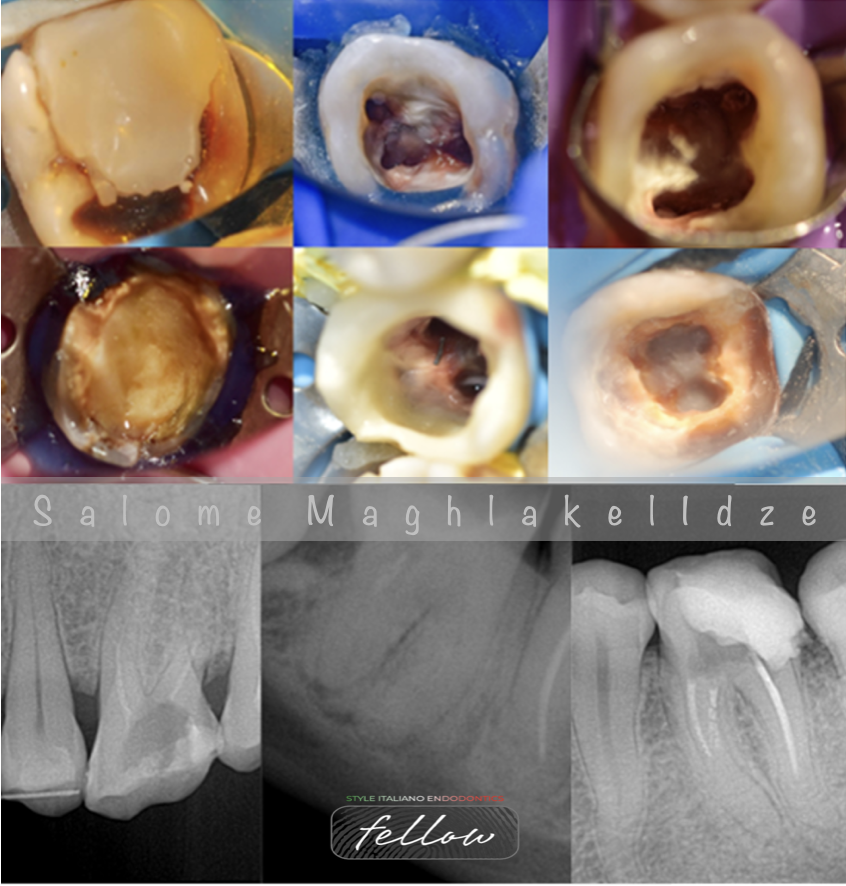
The following case demonstrates the retreatment of a molar previously treated with Russian Red.
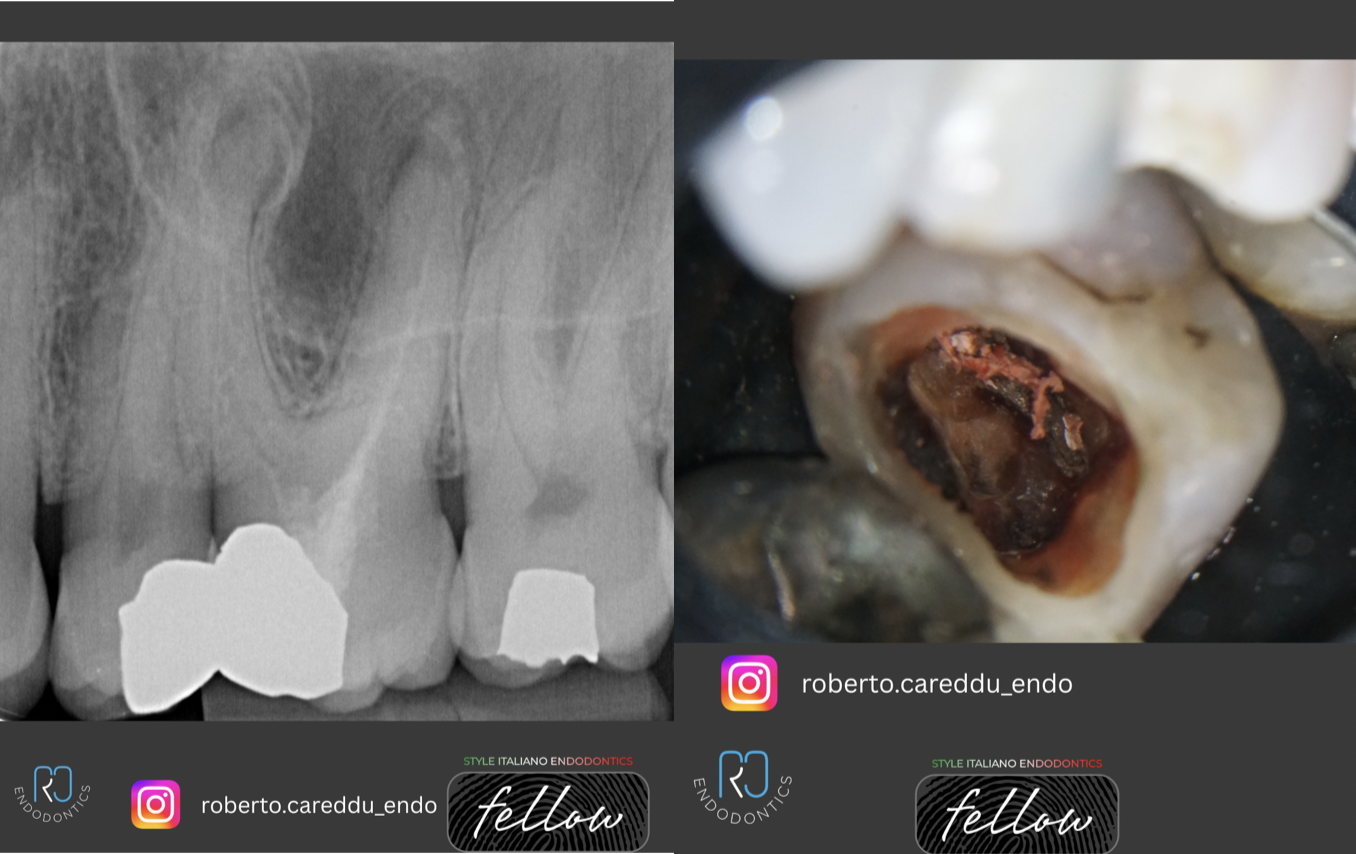
Fig. 1
The patient was referred for retreatment of symptomatic tooth 26, which presented with a periapical radiolucency (PARL). The tooth exhibited the characteristic reddish discoloration associated with the use of “Russian Red” material. The treatment had been carried out in the 90s in a Easter European Country
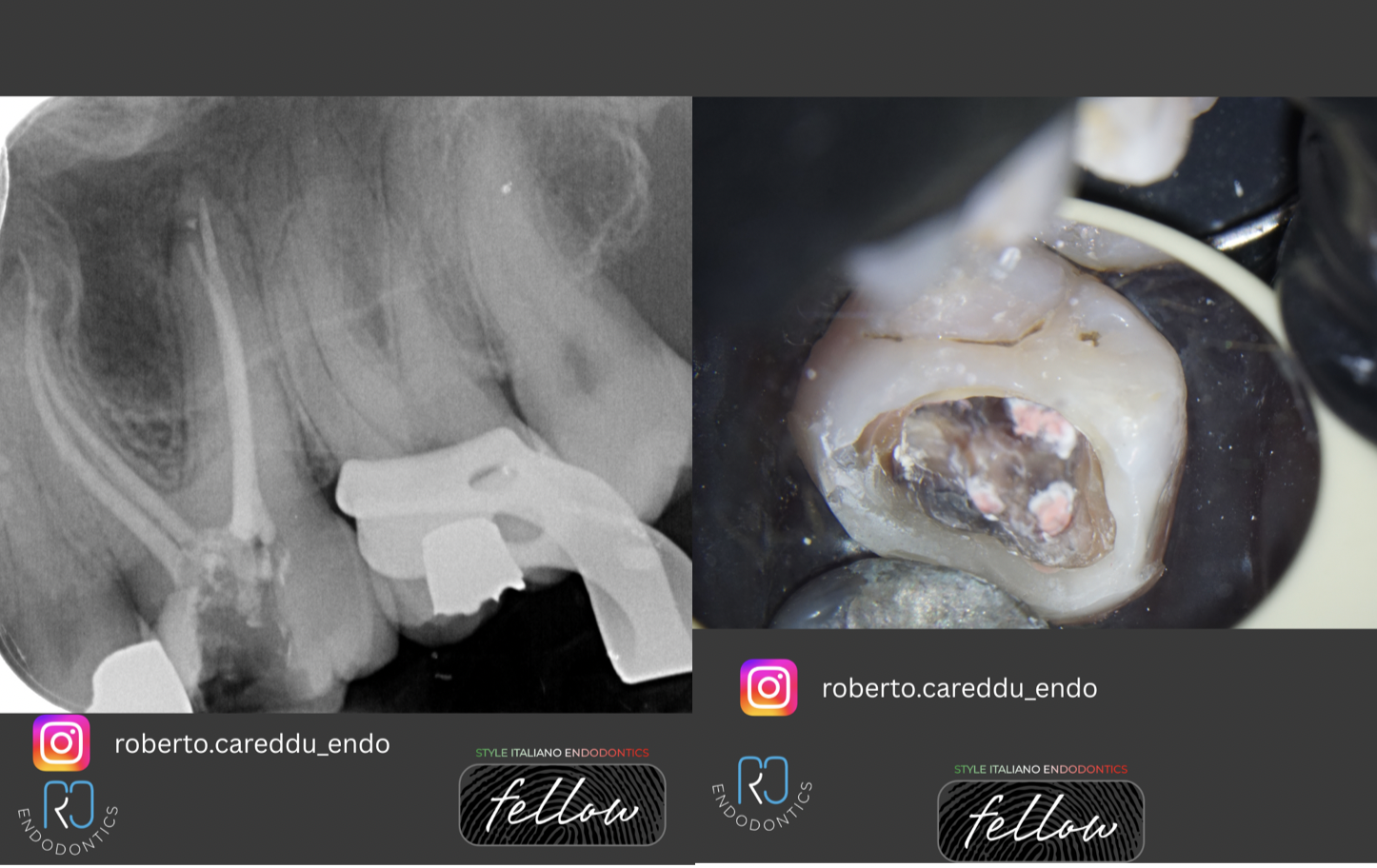
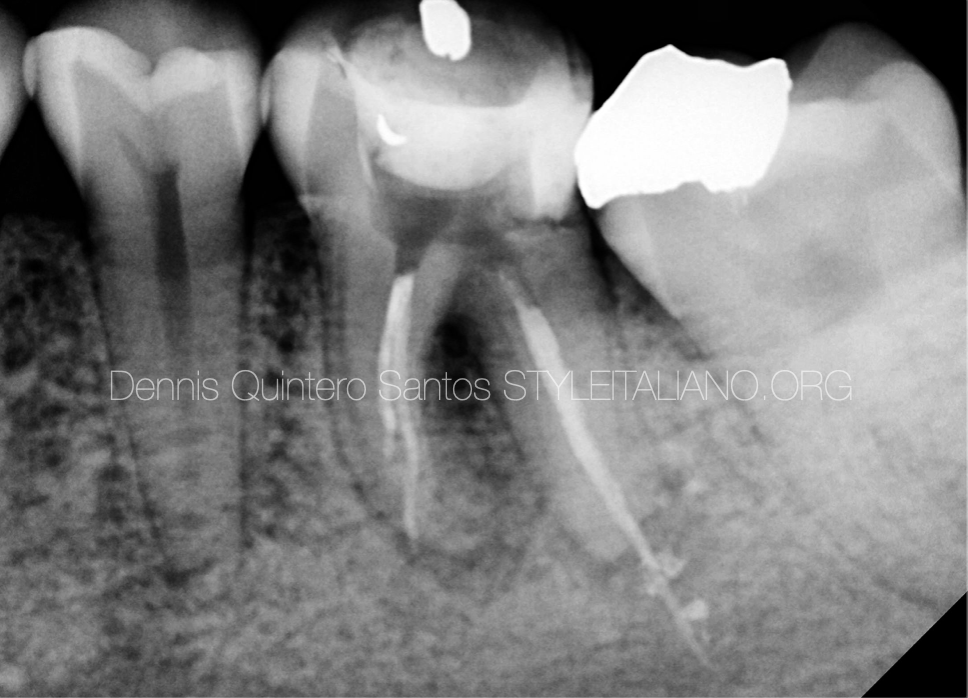
Fig. 2
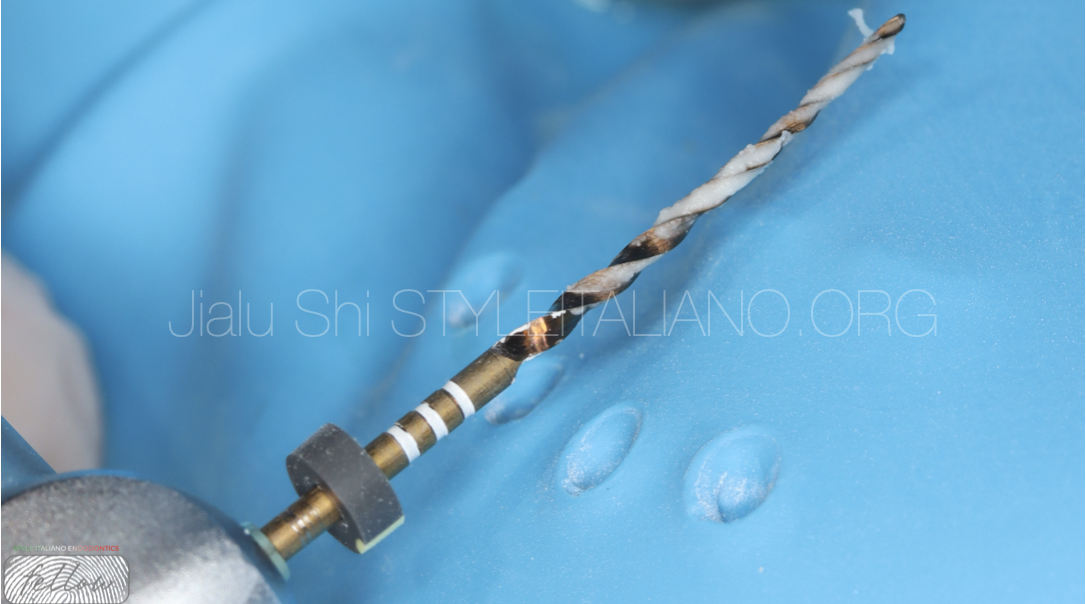
The existing amalgam restoration was removed, and access to the pulp chamber was established. The material was then carefully removed using ultrasonic tips and austenitic rotary files. The canal system was shaped and irrigated with sodium hypochlorite (NaOCl) and EDTA, with sonic activation to enhance effectiveness. The canals were subsequently obturated using a hydraulic cement in combination with gutta-percha.
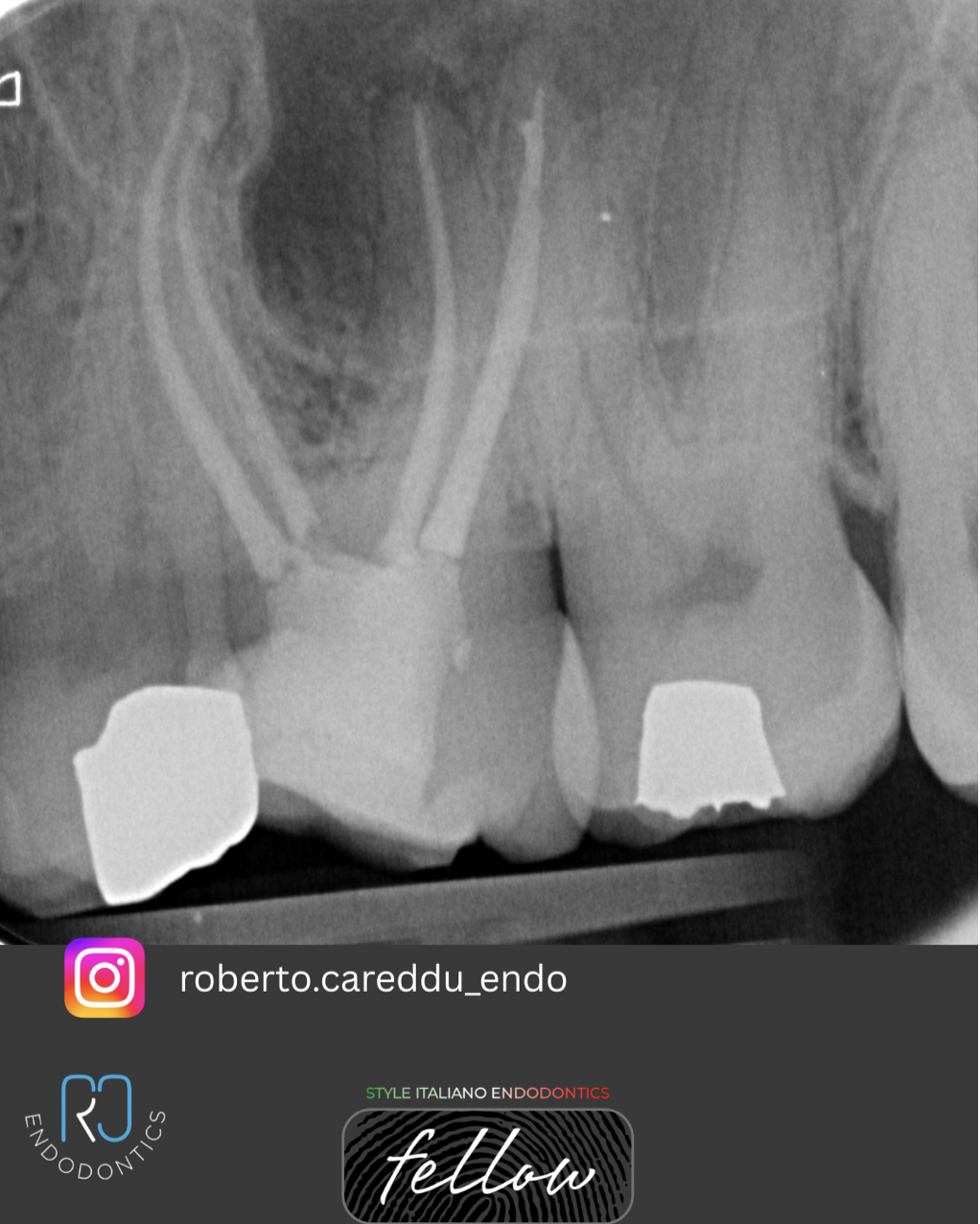
Fig. 3
Once the canal system was sealed, a permanent fibre reinforced resin filling was placed

Fig. 4
About the author:
Roberto Careddu
I was born in Sardinia (Italy) and I graduated with Honors from the University of Cagliari (Italy). My endodontic journey started with a Master in Clinical Endodontics and continued with courses and univeristy programs in different countries. I recently completed my PhD at Trinity College of Dublin.
I live in Dublin, where I work as Endodontist in private practice and I am Clinical Supervisor in the Dublin Dental University Hospital.
I have authored scientific articles and I serve as an international conference speaker.
I am Member of the Faculty of Dental Surgery of the Royal College of Surgeons of Ireland, Member of the Committee of the Irish Endodontic Society (IES) and the Irish representing for the European Society of Endodontology (ESE).
Conclusions
“Russian Red” was a material commonly used in certain countries in past decades. However, it had several significant drawbacks, including discoloration, toxicity, and difficulties during retreatment. Although this material is no longer in use, patients previously treated with it still present for retreatment, making it important for clinicians to be aware of its properties and associated challenges.
Bibliography
Nathan W. Schwandt; Tom G. Gound. (2003). Resorcinol-Formaldehyde Resin “Russian Red” Endodontic Therapy. , 29(7), 435–437. doi:10.1097/00004770-200307000-00002
Gambrel MG, Hartwell GR, Moon PC, Cardon JW. The effect of endodontic solutions on resorcinol-formalin paste in teeth. J Endod. 2005 Jan;31(1):25-9. doi:10.1097/01.don.0000147783.02453.82. PMID: 15614001.