R-One Mini: Simplicity Without Compromise in Endodontics
30/05/2026
Warning: Undefined variable $post in /home/styleendo/htdocs/styleitaliano-endodontics.org/wp-content/plugins/oxygen/component-framework/components/classes/code-block.class.php(133) : eval()'d code on line 2
Warning: Attempt to read property "ID" on null in /home/styleendo/htdocs/styleitaliano-endodontics.org/wp-content/plugins/oxygen/component-framework/components/classes/code-block.class.php(133) : eval()'d code on line 2
Modern endodontics aims to achieve effective cleaning and shaping while preserving the original canal anatomy and remaining dentine. Clinicians are increasingly seeking simplified rotary systems that can provide efficiency, safety, and predictable results across a wide variety of clinical situations.
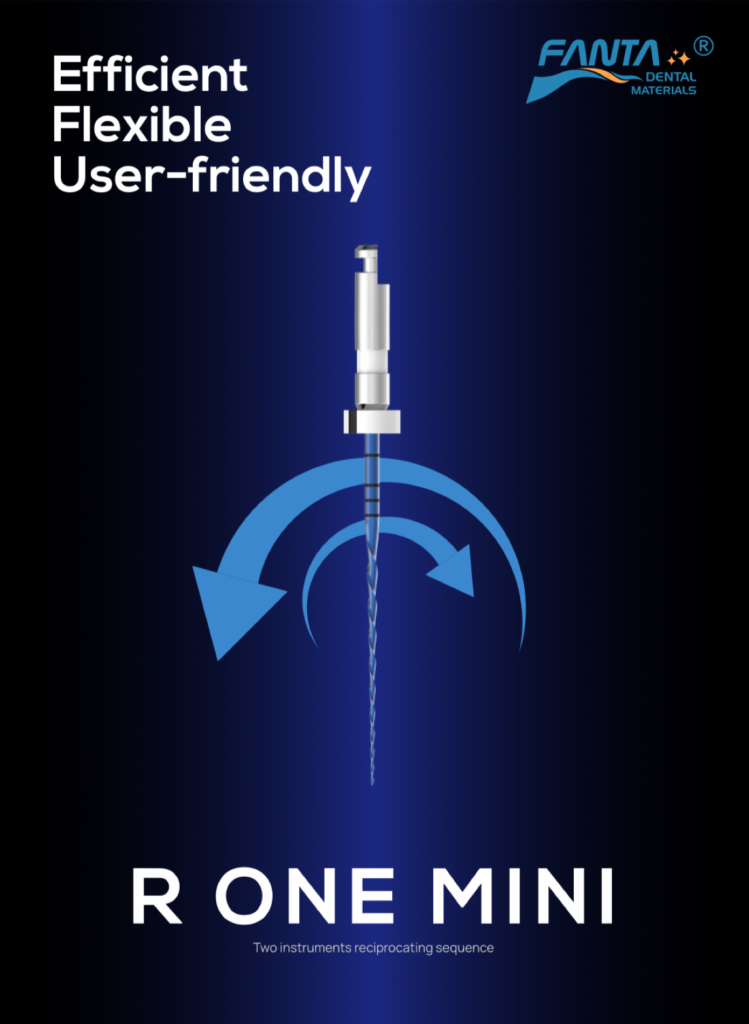
The R-One Mini system by Fanta Dental was designed with this philosophy in mind. It is a simplified reciprocating system based on a sequence of one glide path file followed by two shaping files, reducing the number of instruments required during treatment while maintaining efficiency and control.
The files feature a Double-S cross section, enhancing cutting efficiency and debris removal while reducing the screw-in effect during instrumentation. One of the major advantages of the system is the use of two different heat treatments within the sequence, providing an ideal balance between flexibility, resistance to cyclic fatigue, and cutting performance. This allows safer negotiation of curved and complex anatomies while respecting the original canal anatomy and preserving dentine.
In addition, the files present a reduced maximum flute diameter of 1.1 mm, contributing to a more conservative shaping approach and improved preservation of pericervical dentine (PCD), an important factor in maintaining the long-term structural integrity of the tooth.
Despite its simplicity, the R-One Mini system is capable of managing not only straightforward cases, but also more challenging anatomies with efficiency and safety.
This article presents three clinical cases of varying complexity, demonstrating the versatility and clinical potential of the R-One Mini system in modern endodontic practice.
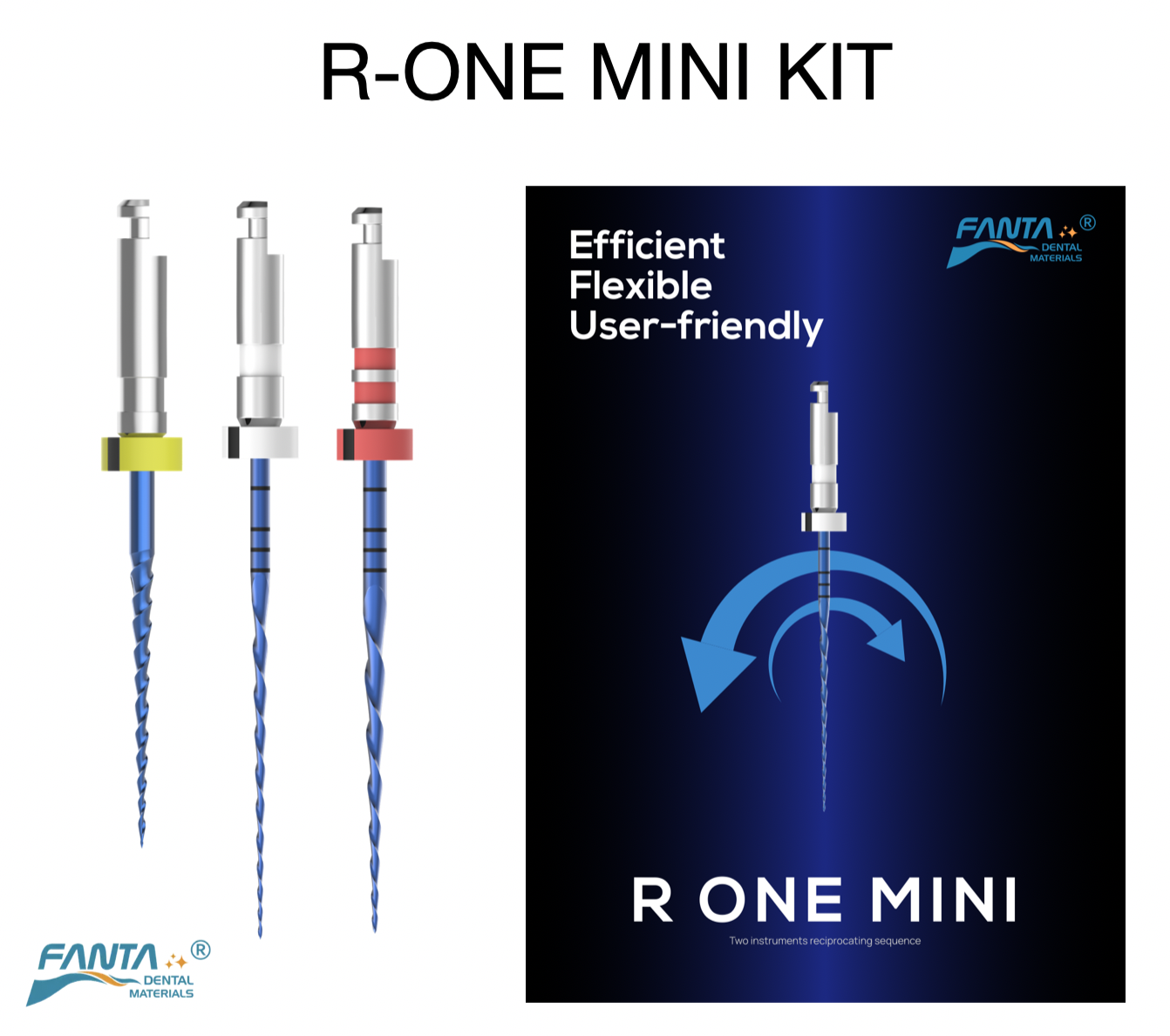
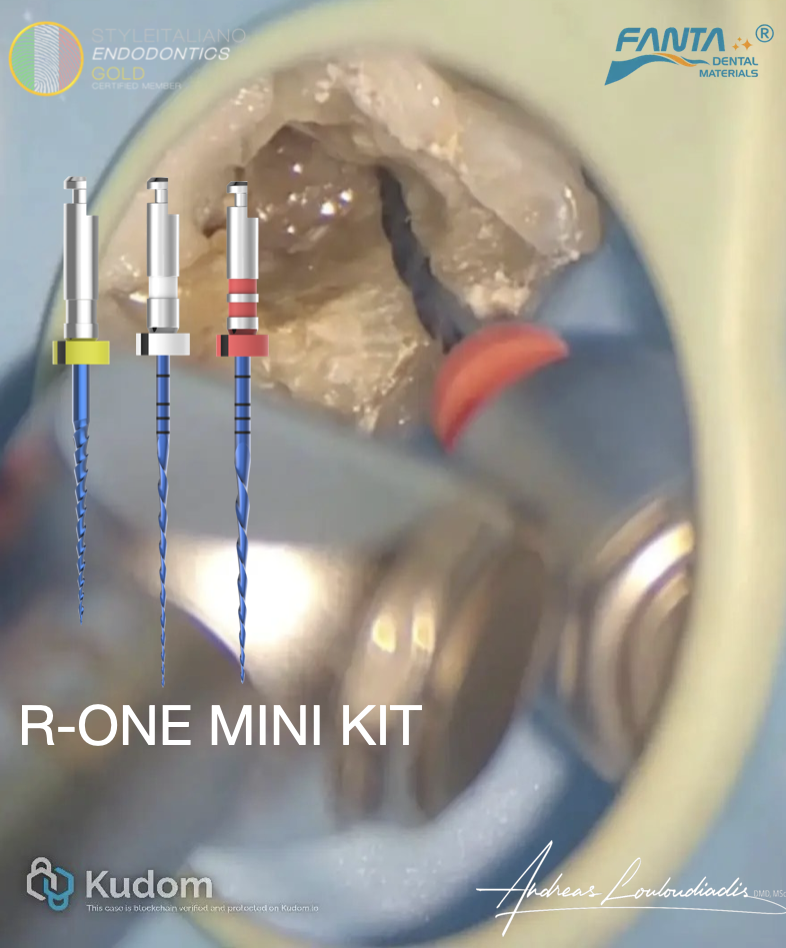
Fig. 1
R-one Mini Kit Sequence system.
19/05 : This file is called an Early Flarer- 0.19 tip and 0.5 variable taper with the same diameter coronal as the last file of the sequence and it is used in Continuous rotation at slow speed of 250 Rpm.
17/04 : This is the Glide path file 0.17 tip and 0.4 variable taper design. It is made of AF-L wire alloy making it less flexible that the 25/06 in order to progress nicely and smoothly into the calcified canal, preparing the canal for the finishing file.
25/06- The last file of the sequence, the finishing file, which is also of variable taper 0.6 and 0.25 tip. It is made of AF-R wire alloy to increase flexibility and flexural resistance. The 25/06 completes the preparation of the canal in a minimal invasive way preserving the valuable pericervical dentin due to its thiner coronal diameter.
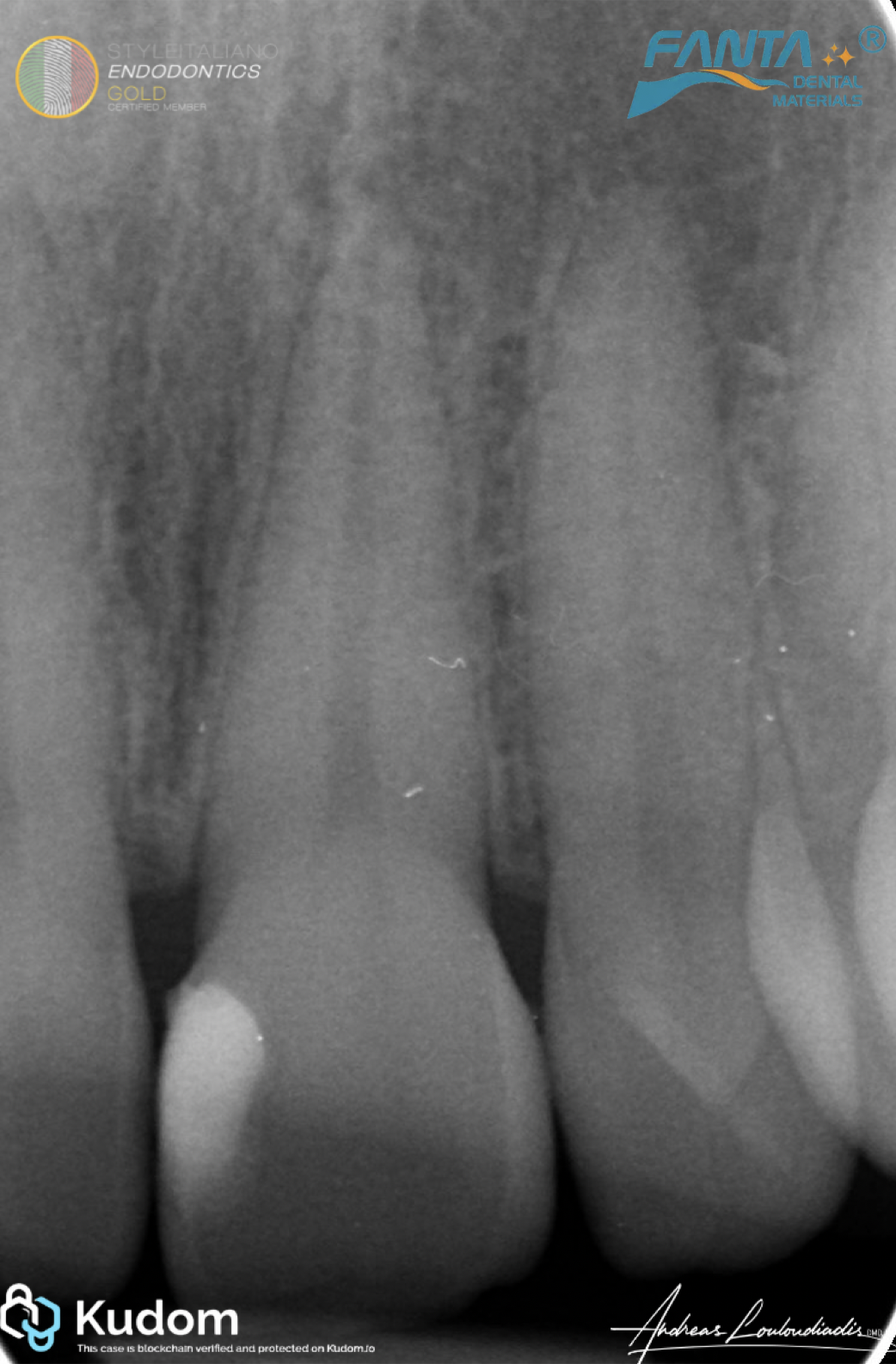
Fig. 2
Case 1
45 YEARS old patient referred for symptoms on upper left central incisor (#21).
Tooth was tender to percussion and did not respond to sensibility tests. Diagnosis was Pulp necrosis and Symptomatic Apical periodontitis.
Xray showed a restoration with a calcified pulp chamber but no periapical lesion is obvious on 2d X-ray.
History of trauma in younger age and tooth was slightly discolored.
Video of the procedure
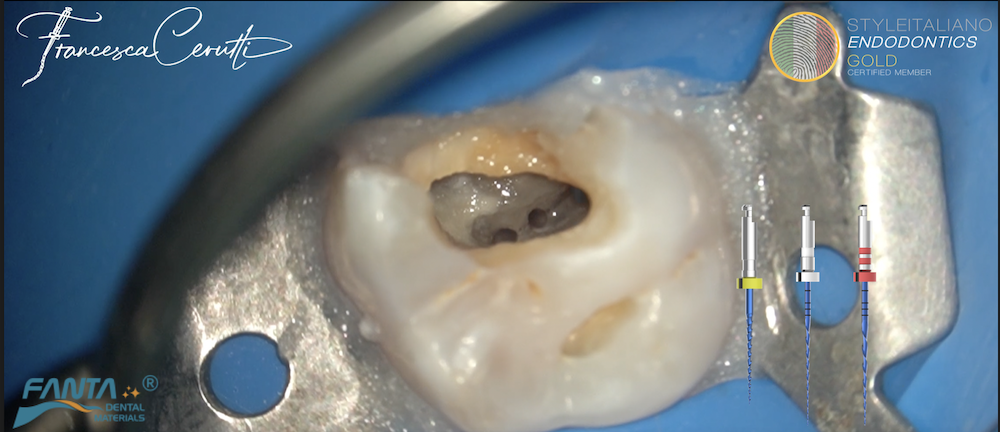
The calcified pulp chamber was carefully troughened with ultrasonics under magnification until the canal orifice was finally located.
Instrumentation began with the Early Flarer file from the R-One Mini system to achieve controlled coronal preflaring and improve straight-line access to the canal. This facilitated safer negotiation of the calcified anatomy and reduced stress on the shaping instruments.
Shaping was then completed with the 17/04 and 25/06 R-One Mini reciprocating files by Fanta Dental. Their flexibility, conservative taper, and Double-S cross section allowed efficient cutting and debris removal while respecting the original canal anatomy and preserving dentine throughout preparation.
Irrigation was performed using 5.25% NaOCl and 17% EDTA, activated with EDDY sonic activation, followed by a final rinse with distilled water to improve disinfection of areas beyond the reach of the instruments.
Obturation was completed with Single cone and bioceramic sealer.
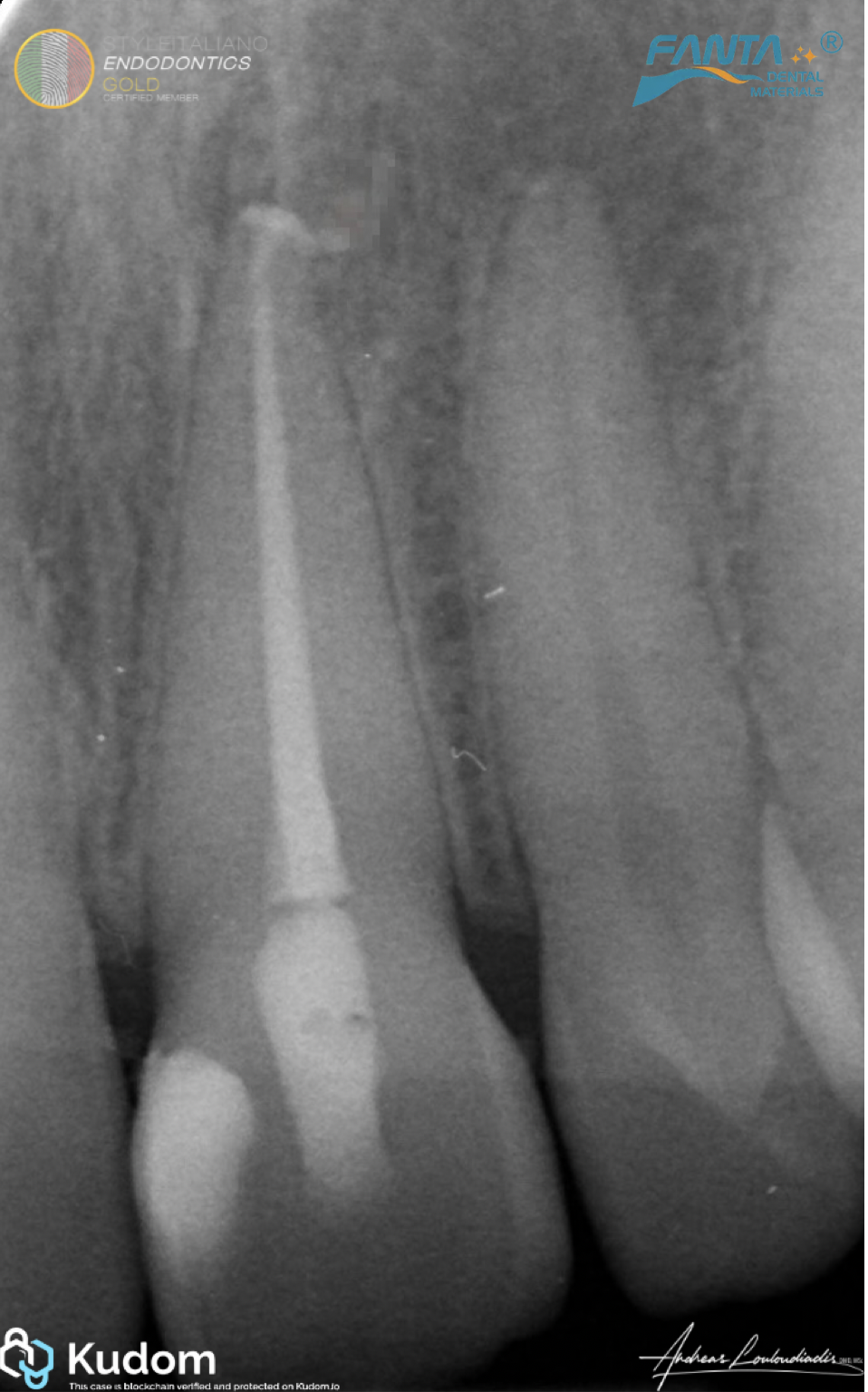
Fig. 3
Post - Operative radiograph demonstrating a conservative and biologically driven result
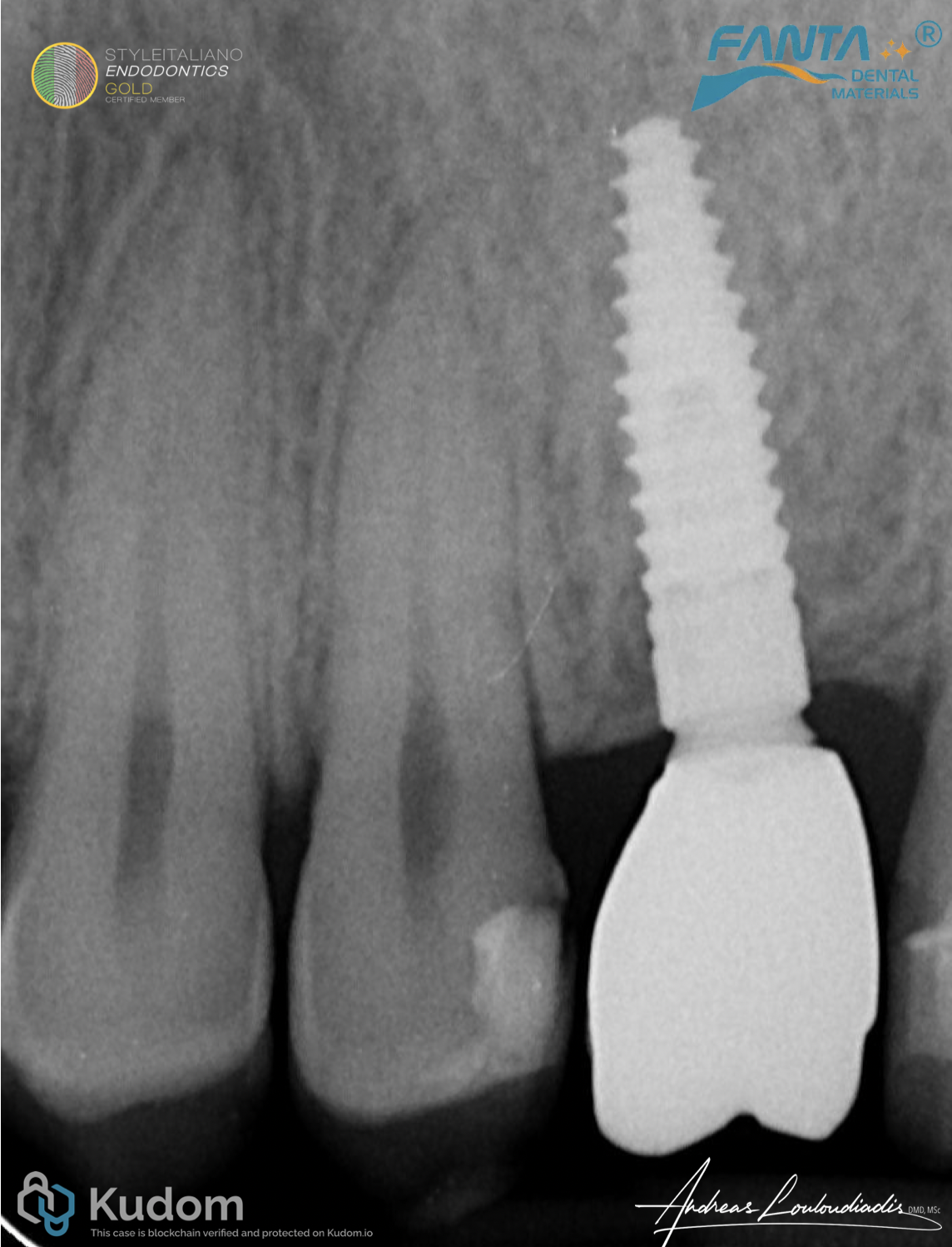
Fig. 4
Case 2
A slightly more demanding case compared to the previous one, requiring careful planning, precision, and a restorative-driven access approach to preserve as much healthy tooth structure as possible.
58 years old female patient referred for RCT on upper second premolar due to pain and inability to eat. Tooth was tender to percusion and very sensitive to thermal tests and has been waking him up for the past 3 days.
Diagnosis was Symptomatic irreversible pulpits and Symptomatic Apical periodontitis
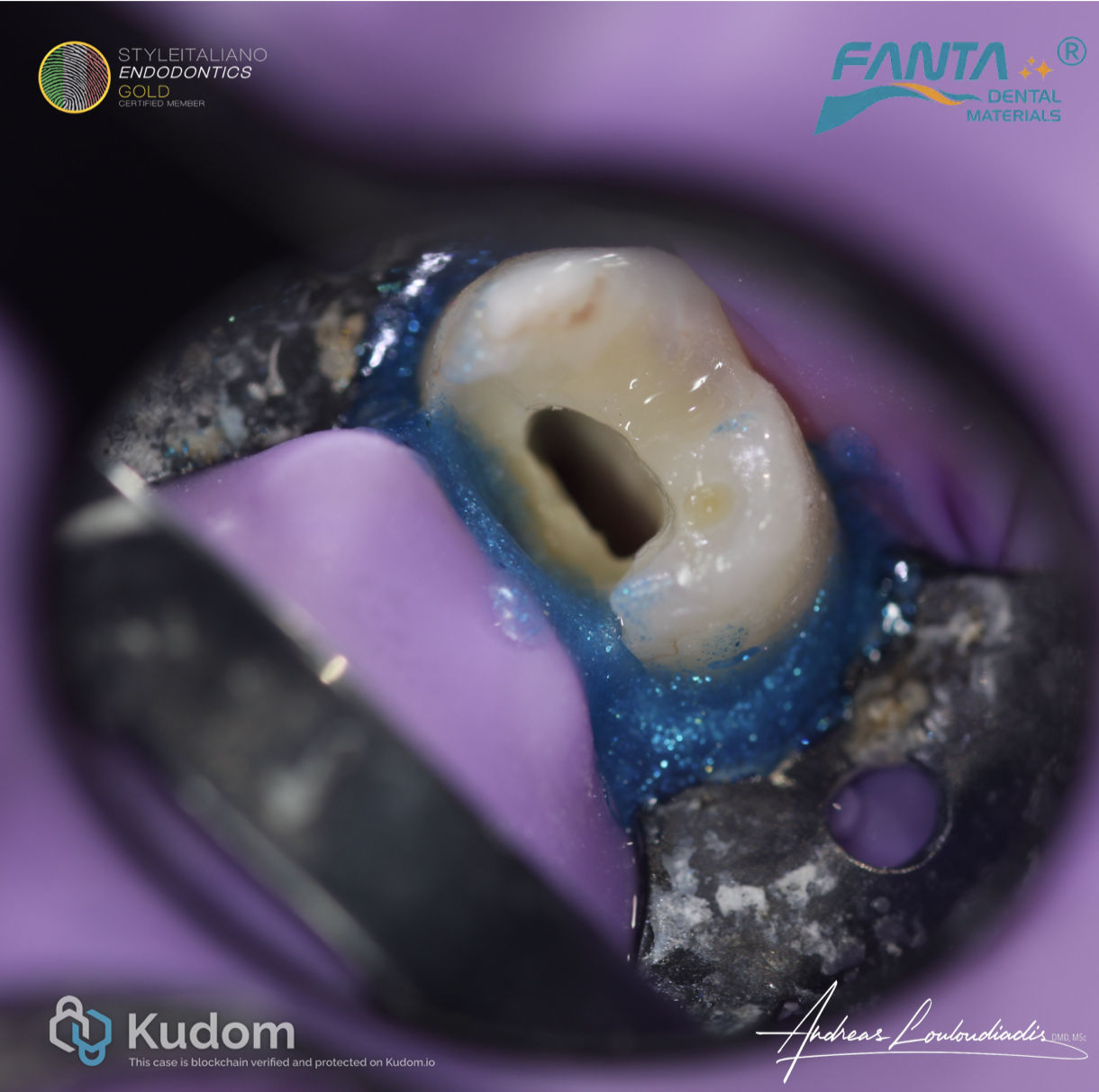
Fig. 5
A conservative restorative-driven access cavity was therefore performed, allowing proper location and treatment of the canals while maintaining maximum structural integrity of the tooth.
The access was carefully refined using ultrasonic tips, improving visibility and precision while minimizing unnecessary dentine removal.
The R-One Mini system by Fanta Dental proved extremely valuable in this case.
After coronal enlargement with the Early Flare file, shaping was completed using the 17/04 and 25/04 R-One Mini files. The reciprocating motion, Double-S cross section, reduced maximum flute diameter, and advanced heat treatment allowed the files to remain centered within the canals, respecting the original anatomy while minimizing unnecessary dentine removal.
Irrigation was performed with 5.25% NaOCl and 17% EDTA, activated using ultrasonic activation, followed by a final rinse with distilled water
Obturation was completed with single cone and bioceramic sealer.
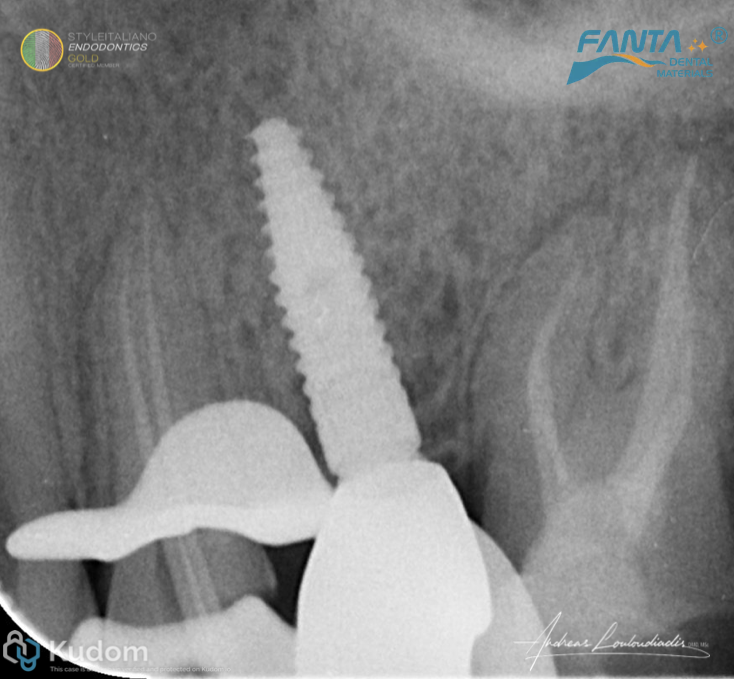
Fig. 6
A cone fit X-ray is taken before obturation to confirm that the master gutta-percha cones fit correctly within the prepared canals.
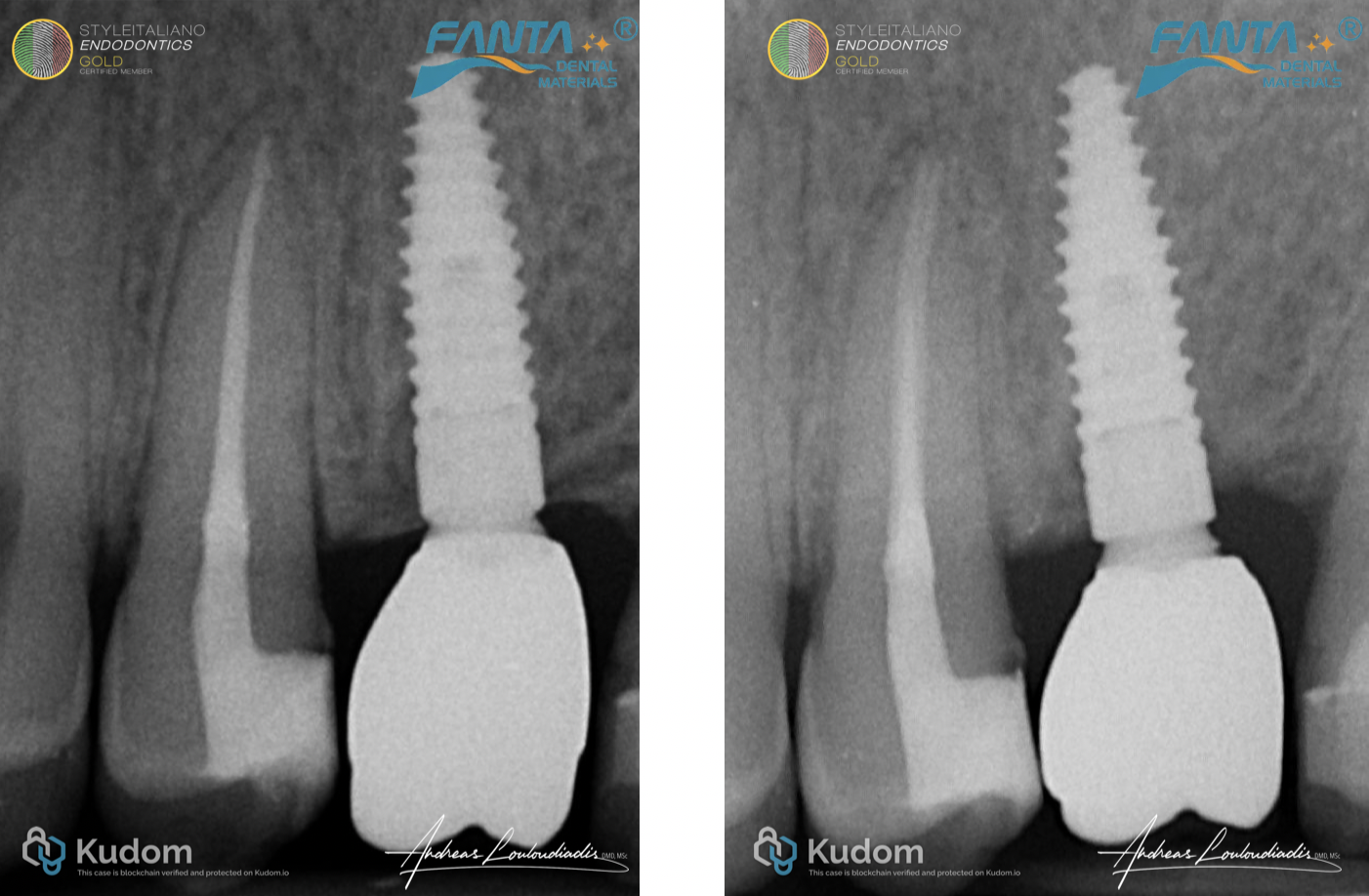
Fig. 7
Post - Operative radiograph.
Obturation performed with BC sealer and Cold Hydraulic Condensation.
The final radiographs demonstrate an ultra-conservative shaping approach, preserving PCD without transportation or iatrogenic errors.
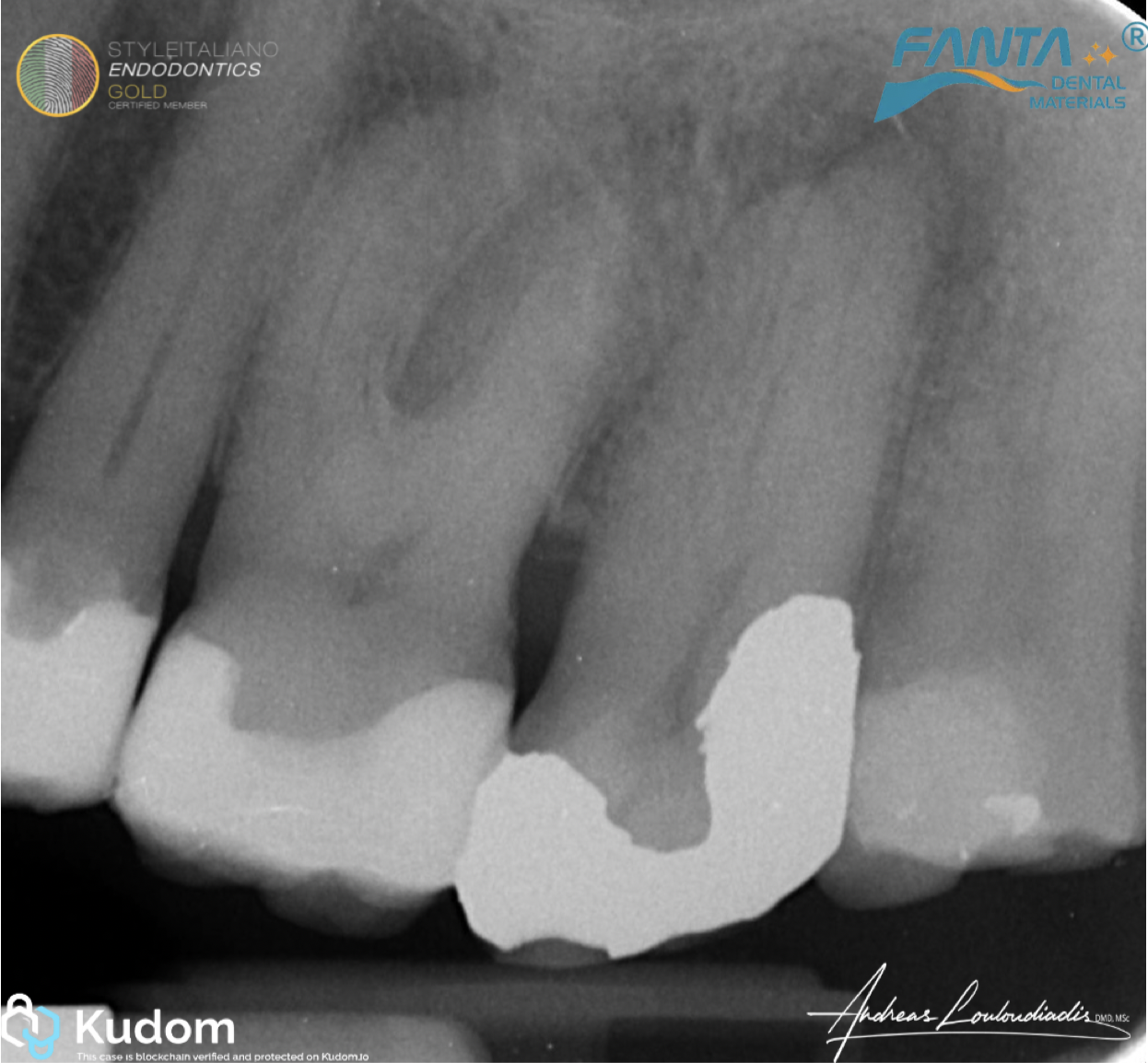
Fig. 8
Case 3
68 YEARS old patient referred for symptoms on upper left second molar ( #27)
Tooth was tender to percussion and did not respond to sensibility tests. Diagnosis was Pulp necrosis and Symptomatic Apical periodontitis.
The pre-operative radiograph suggested narrow canals and difficult access, requiring a careful and conservative approach to avoid unnecessary dentine removal or iatrogenic errors.
In additio, an associated periapical lesion was obvious on the x-ray.
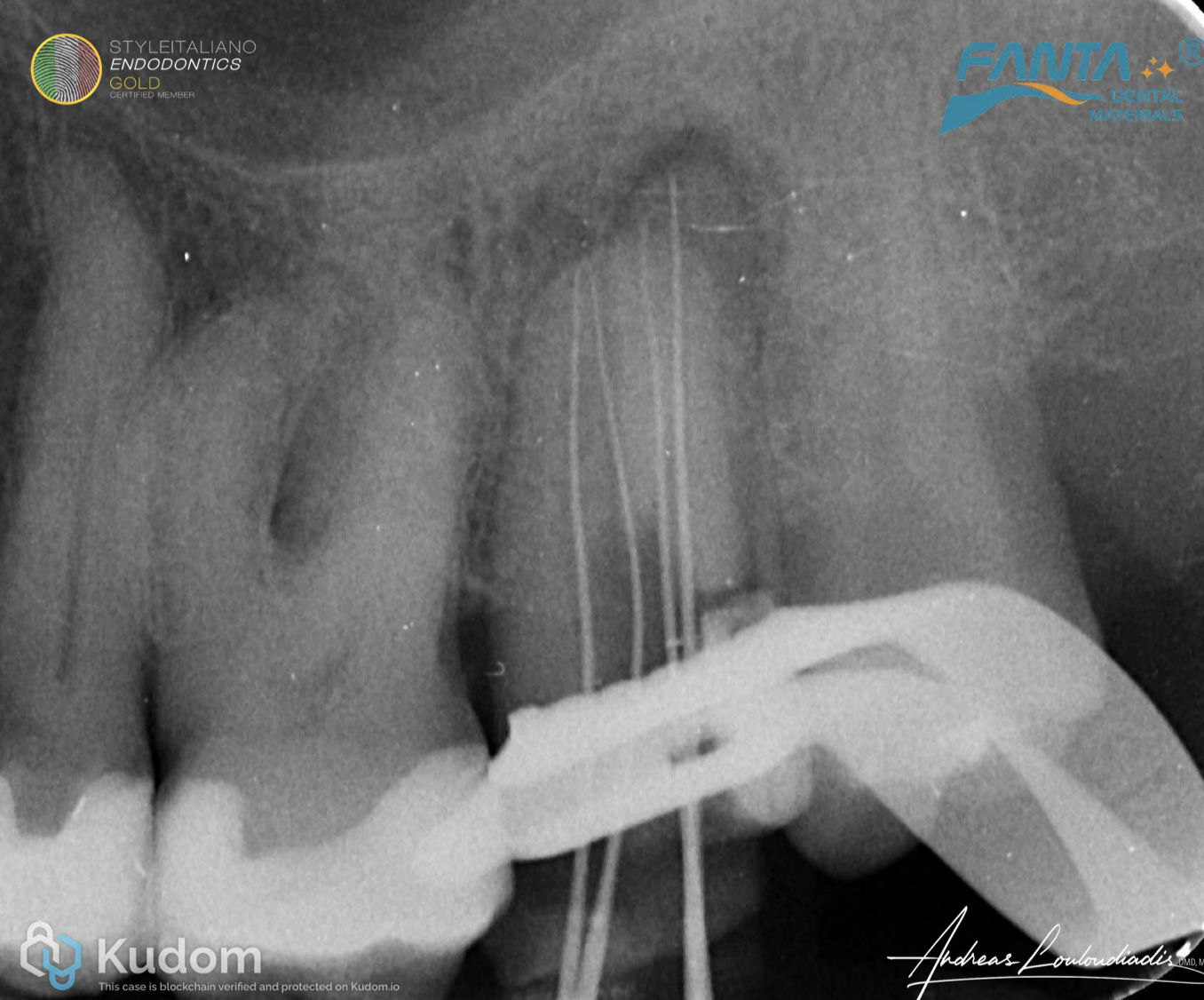
Fig. 9
Working length radiograph demonstrating the complexity of this UL7.
Establishing a reproducible glide path and respecting the original canal trajectory were essential steps in preventing transportation, ledging, or unnecessary dentine removal.
One of the key steps in this case was the use of the Early Flarer 19/05 file from the R-One Mini system. The controlled coronal preflaring created safer straight-line access, improved canal negotiation, and reduced stress on the shaping instruments.
Following pre-flaring, canal negotiation and shaping were completed using the 17/04 and 25/04 R-One Mini reciprocating files. The flexibility provided by the heat-treated alloy allowed the instruments to safely follow the original canal anatomy while minimizing the risk of transportation and iatrogenic errors. The Double-S cross section enhanced cutting efficiency and debris removal, while the conservative shaping philosophy helped preserve dentine and respect PCD.
Irrigation was performed using 5.25% NaOCl and 17% EDTA, activated with ultra sonic activation, followed by a final rinse with distilled water .
Obturation was completed with Single cone and bioceramic sealer, achieving adaptation into the complex canal anatomy and supporting a biologically driven outcome.
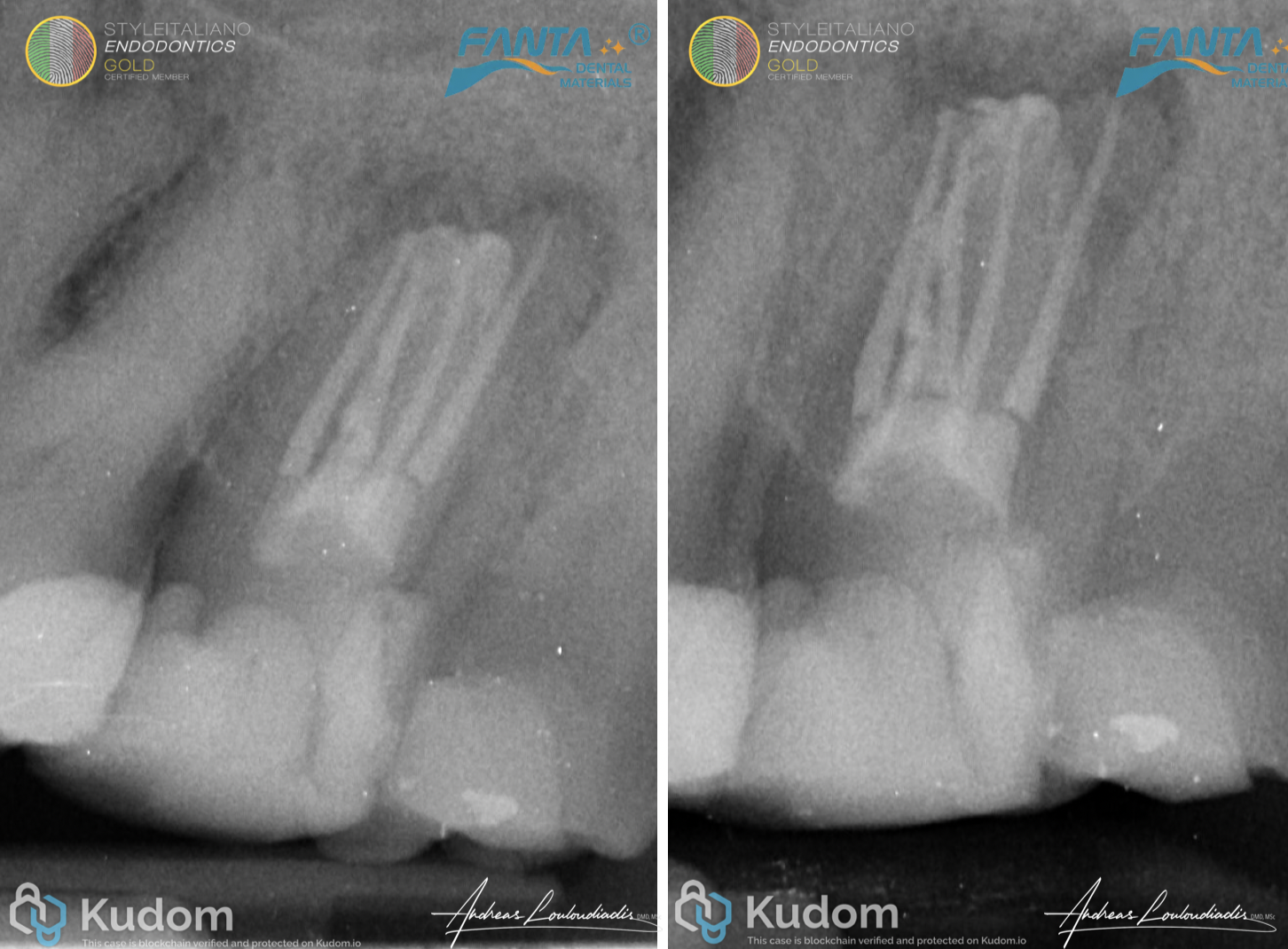
Fig. 10
Post - Operative radiograph.
Obturation performed with BC sealer and Cold Hydraulic Condensation.
A middle mesial canal was revealed after obturation. The canal was filled with bioceramic sealer, indicating the important role the irrigation protocal has for the overall success of the root canal treatment.
CBCT studies: Most large-scale CBCT surveys report 0–1% prevalence for MB3 in maxillary second molars.
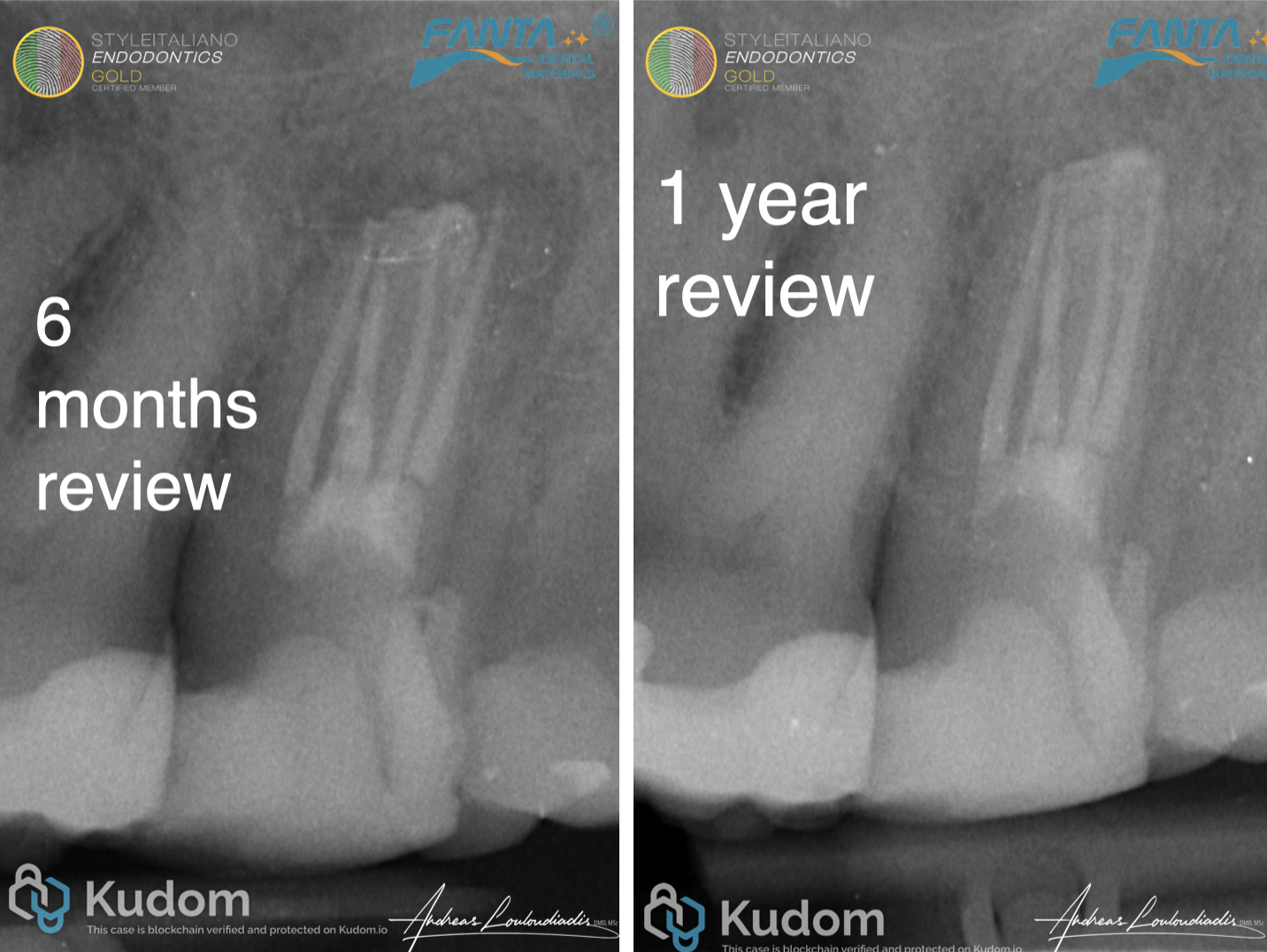
Fig. 11
Review radiographs.
At both the 6-month and 1-year review, healing was clearly noted radiographically, confirming the importance of conservative shaping, effective irrigation, and proper sealing of the root canal system.
Conclusions
The cases presented in this article demonstrate that a simplified endodontic system does not necessarily limit clinical capability. The R-One Mini system was able to manage a wide range of anatomical complexities, from straightforward canals to severely curved and calcified cases, while maintaining a conservative shaping philosophy.
One of the main advantages of the system is its simplified sequence of one glide path file followed by two shaping files. This reduces the number of instruments required, simplifies the clinical workflow, and improves efficiency without compromising safety or shaping quality.
The reciprocating movement combined with the Double-S cross section provided effective cutting efficiency and debris removal while minimizing the screw-in effect. In addition, the use of two different heat treatments within the sequence offered an excellent balance between flexibility and resistance, allowing the files to safely negotiate curved and challenging anatomies.
Another important feature is the reduced maximum flute diameter of 1.1 mm, which supports a minimally invasive approach and preservation of pericervical dentine. Maintaining dentine while respecting the original anatomy is increasingly recognized as a key factor for the long-term prognosis of endodontically treated teeth.
Within the limitations of a clinical case series, the R-One Mini system demonstrated versatility, safety, and efficiency in both simple and complex anatomies. The system allows clinicians to adopt a conservative and biologically driven approach while simplifying the shaping procedure.
In conclusion, the R-One Mini system proves that simplicity in endodontics does not mean compromise. With the appropriate clinical protocol and irrigation strategy, a minimalistic system can successfully manage a broad spectrum of endodontic challenges while respecting anatomy and preserving tooth structure.
Bibliography
1.Murilo P. Alcalde et al (2017). Cyclic and Torsional Fatigue Resistance of Reciprocating Single Files Manufactured by Different Nickel-Titanium Alloys J Endod 43: 1186-1191
2.De-Deus G, Marins J, Silva EJ et al (2021) Accumulated hard tissue debris produced during reciprocating and rotary nickel-titanium canal preparation. J Endod 41:676–681.
3.Kang, Y.J., Kwak, S.W., Ha, JH. et al. Fracture resistances of heat-treated nickel-titanium files used for minimally invasive instrumentation. BMC Oral Health 25, 126 (2025).
4.Al-madi, ebtissam. “Comparison of Cyclic Fatigue Resistance of 5 Heat-Treated Nickel-Titanium Reciprocating Systems in Canals with Single and Double Curvatures.” Journal of Endodontics, Elsevier BV, 2019.