
From Rotation to Reciprocation: Understanding File Movement in Clinical Endodontics
15/04/2026
Warning: Undefined variable $post in /home/styleendo/htdocs/styleitaliano-endodontics.org/wp-content/plugins/oxygen/component-framework/components/classes/code-block.class.php(133) : eval()'d code on line 2
Warning: Attempt to read property "ID" on null in /home/styleendo/htdocs/styleitaliano-endodontics.org/wp-content/plugins/oxygen/component-framework/components/classes/code-block.class.php(133) : eval()'d code on line 2
In the evolving landscape of endodontics, the demand for instruments that balance effectiveness with conservation of tooth structure has never been greater. While we must shape our root canals to create volume for our irrigants to kill and solve tissue, at the same time we need to maintain as much as practical safe and sound dentin especially in the Pericervical area.
Long time ago we used to shaped canal using manual instruments with several type of motions like watch winding, balance force, crown down technique and else. But this technique require long learning curve and not to mentioned difficulties and risks. This thing evolved in modern era with mechanical instrumentation in which practitioners gain more advantage in efficiency and predictability.
But even in this mechanical era, we also have several options of motions that sometime make us confuse of which motion is the best.
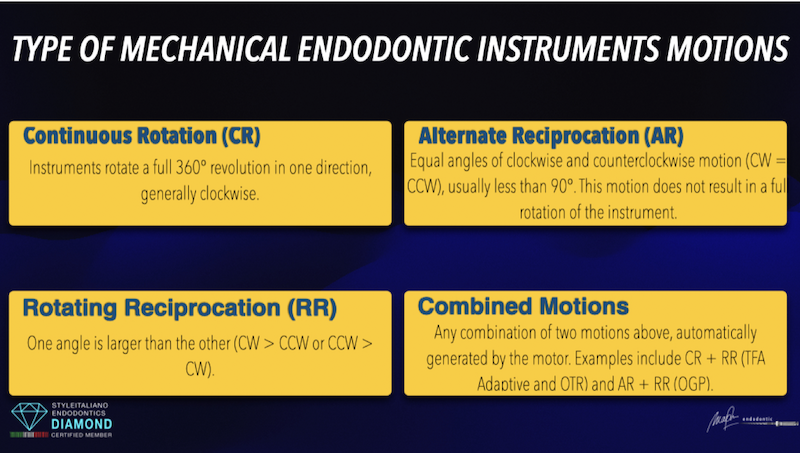
Fig. 1
These are the types of mechanical endodontic instrumentations
The motions described in this animation

Fig. 2
CONTINOUS ROTATION
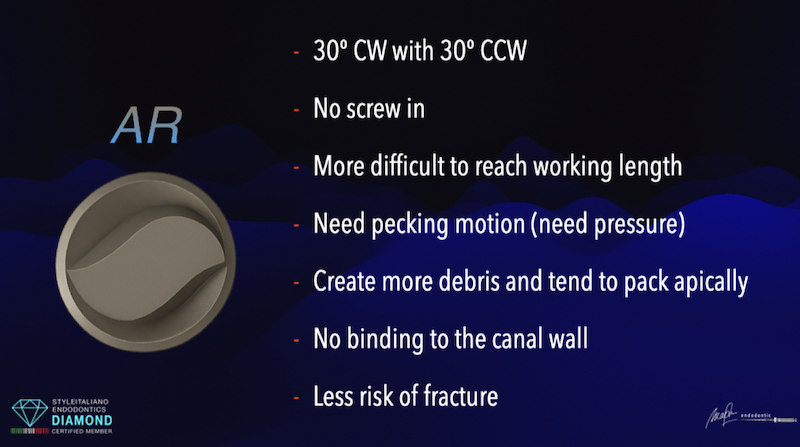
Fig. 3
ALTERNATING RECIPROCATION
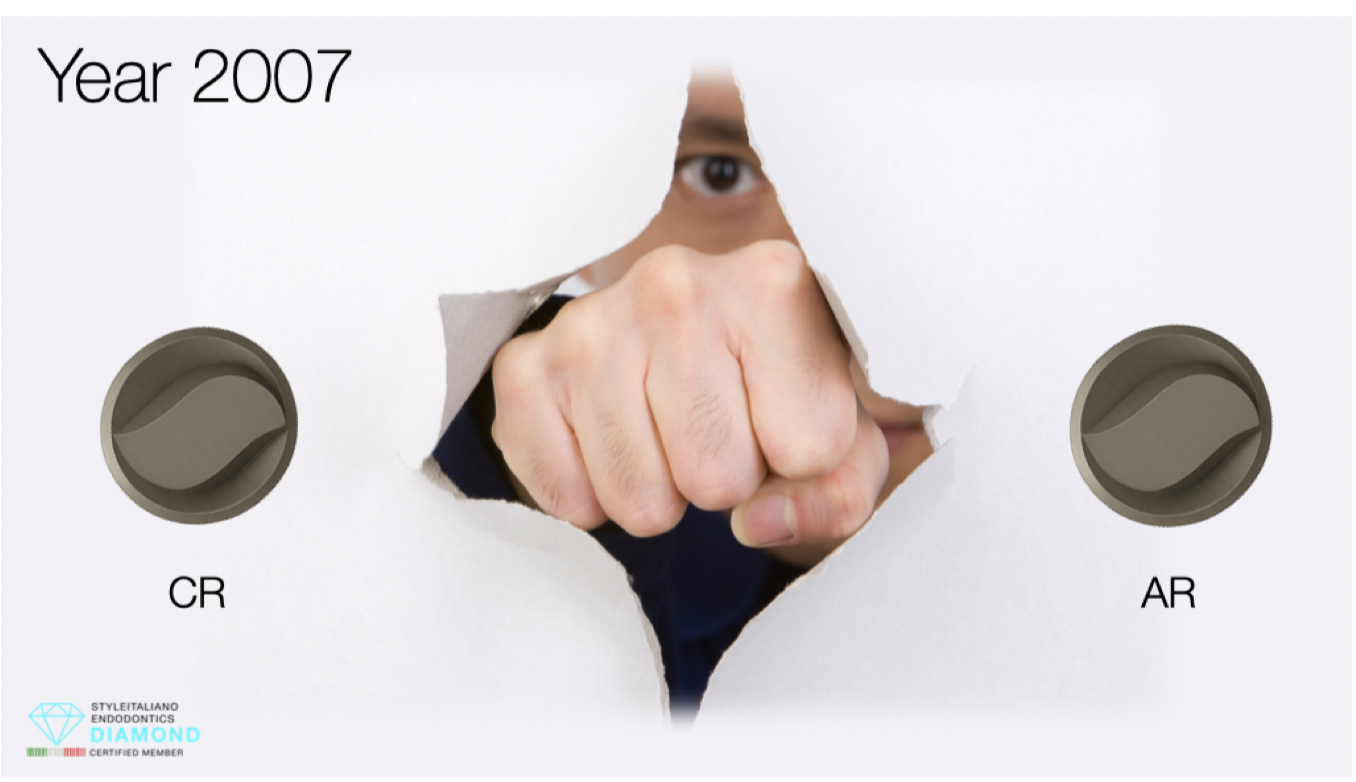
Fig. 4
But in year 2007, there was a breakthrough in endodontic instrumentation
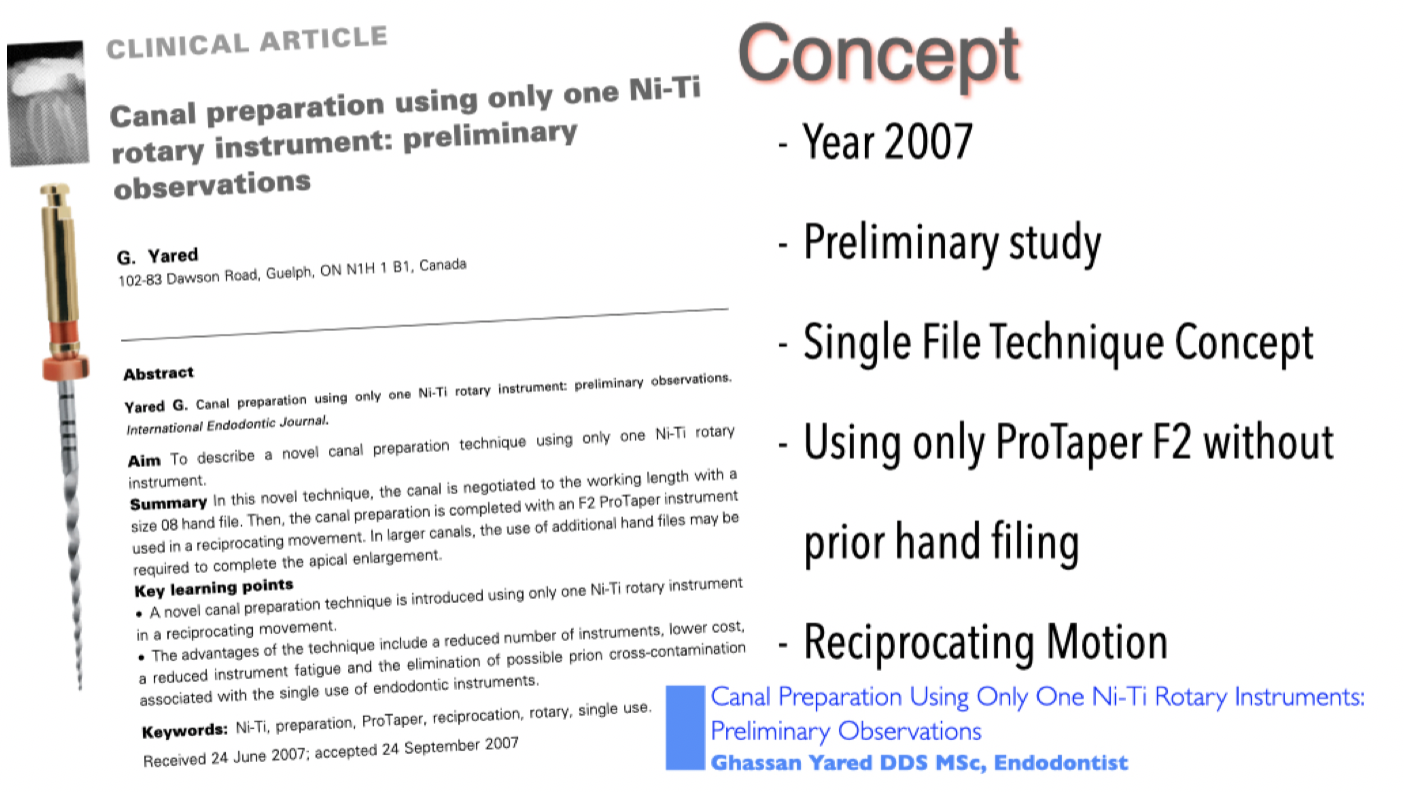
Fig. 5
It was introduced by Dr. Ghassan Yared in his preliminary study using a single ProTaper F2 in reciprocating motion
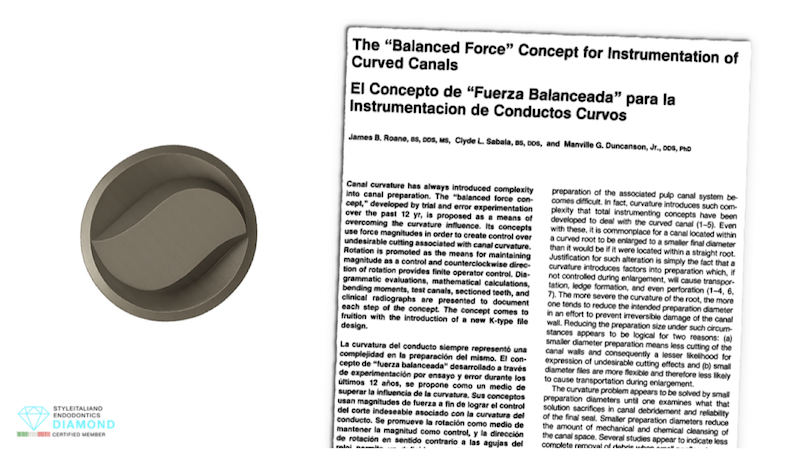
Fig. 6
This concept was adapting from balanced force techniques and Alternating Reciprocation movement

Fig. 7
Where studies showed that Alternating Rotation improved the lifetime of our instruments and its cyclic fatigue

Fig. 8
And from Dr. Ghassan Yared study, we have new motion of instrumentation which is Rotating Reciprocation

Fig. 9
And from Dr. Ghassan Yared study, we have new motion of instrumentation which is Rotating Reciprocation

Fig. 10
And why reciprocation motion ?
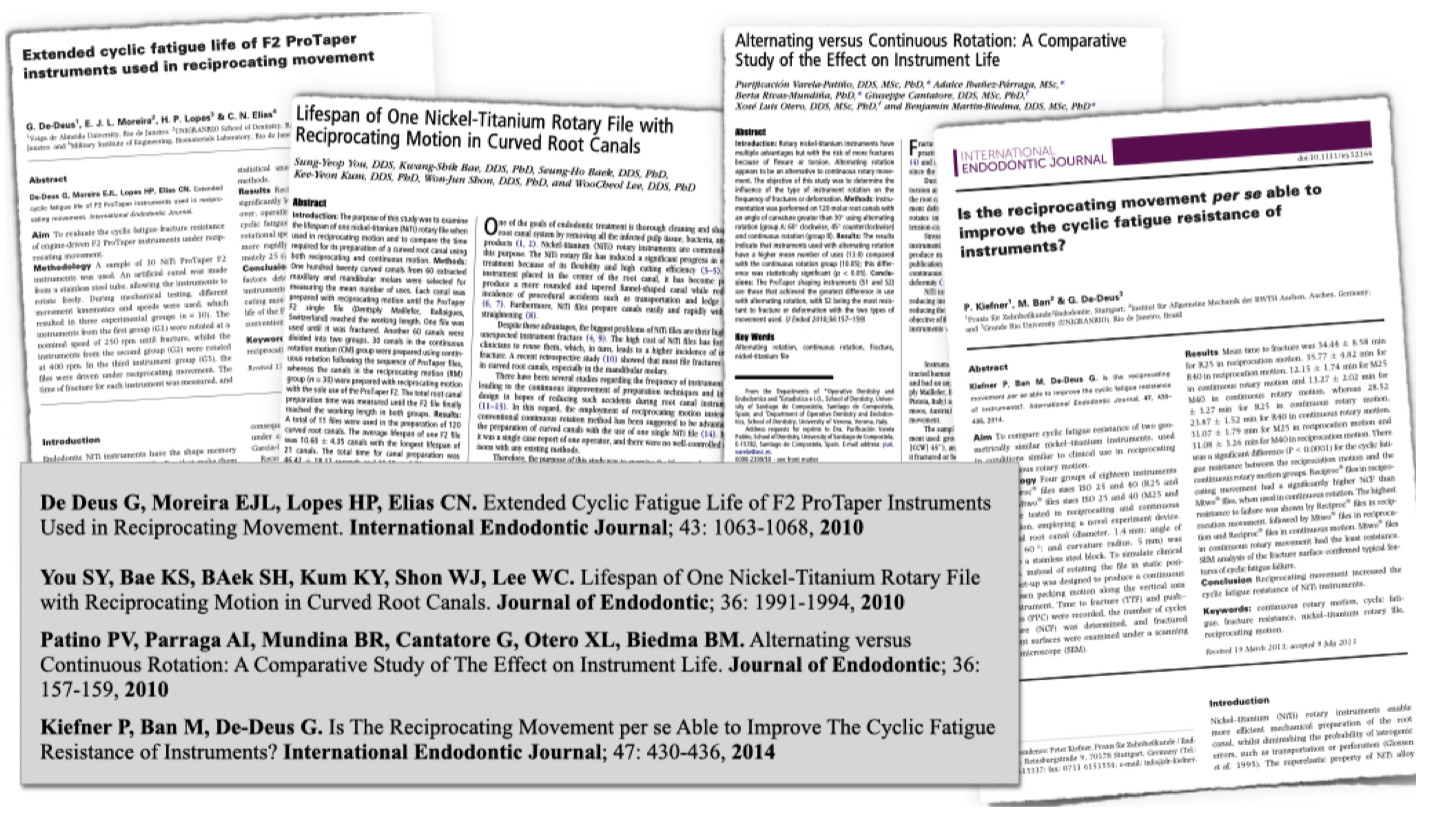
Fig. 11
Some studies that supporting reciprocation motion
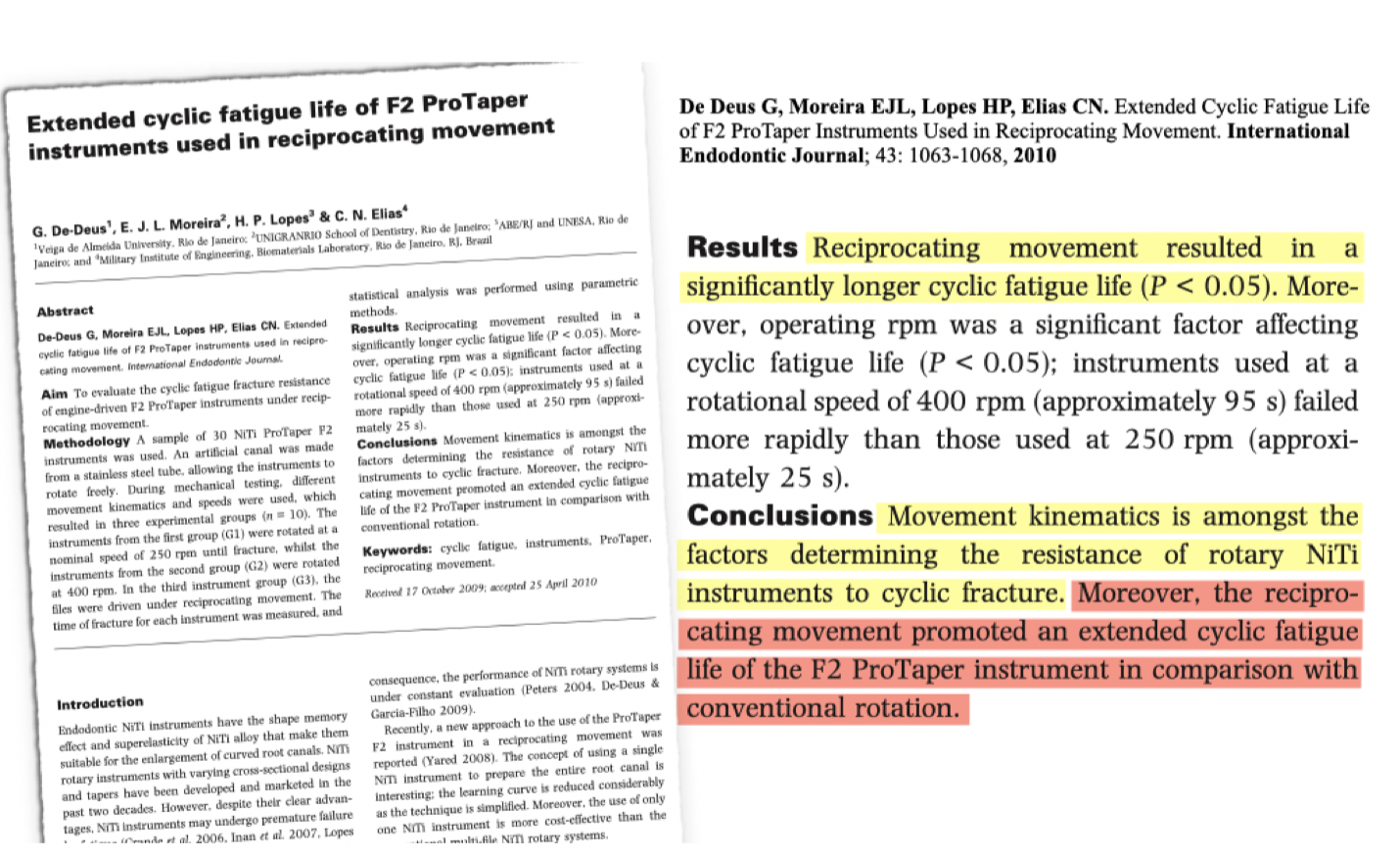
Fig. 12
Some studies that supporting reciprocation motion
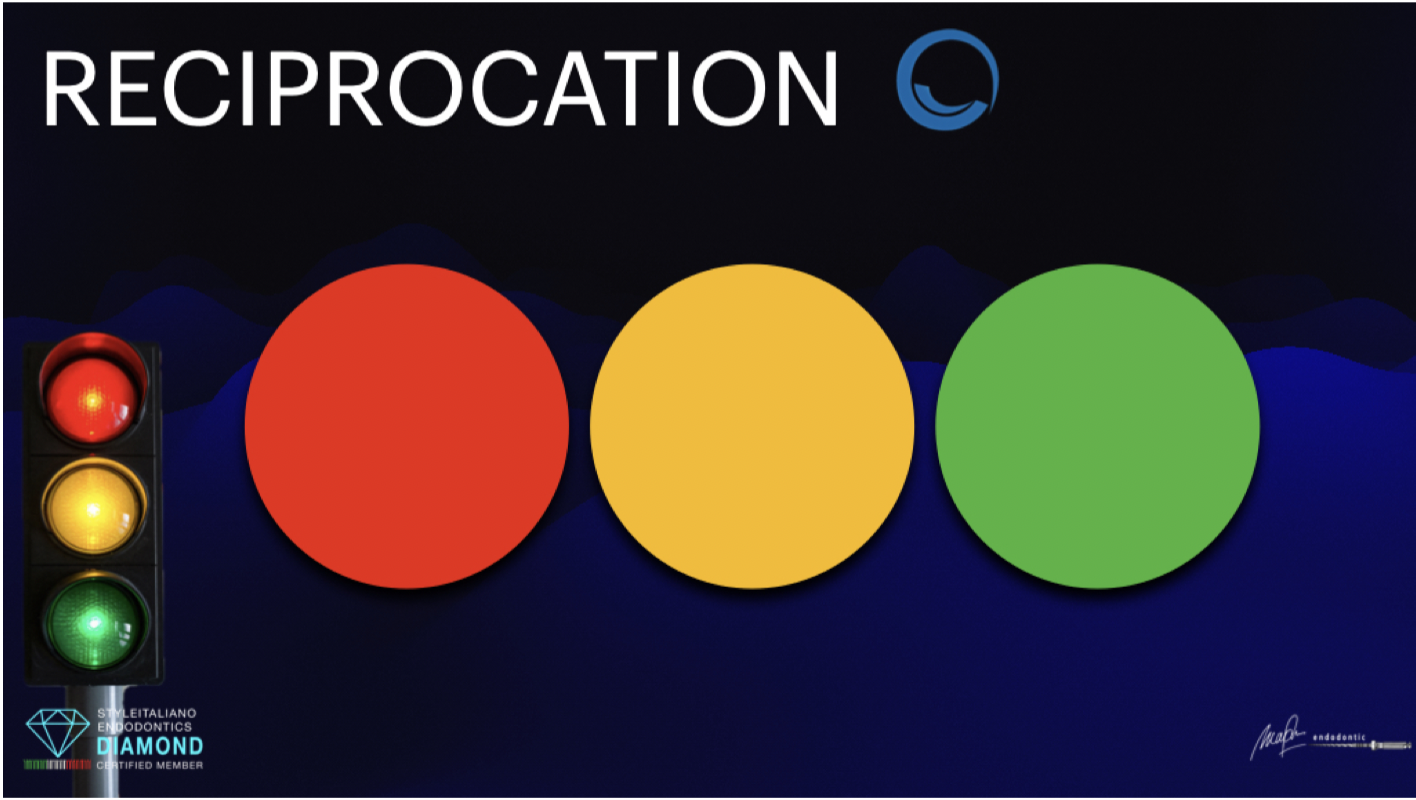
Fig. 13
But like any other systems, there are also some advantages and disadvantages. And here are some pros and cons from reciprocation motion
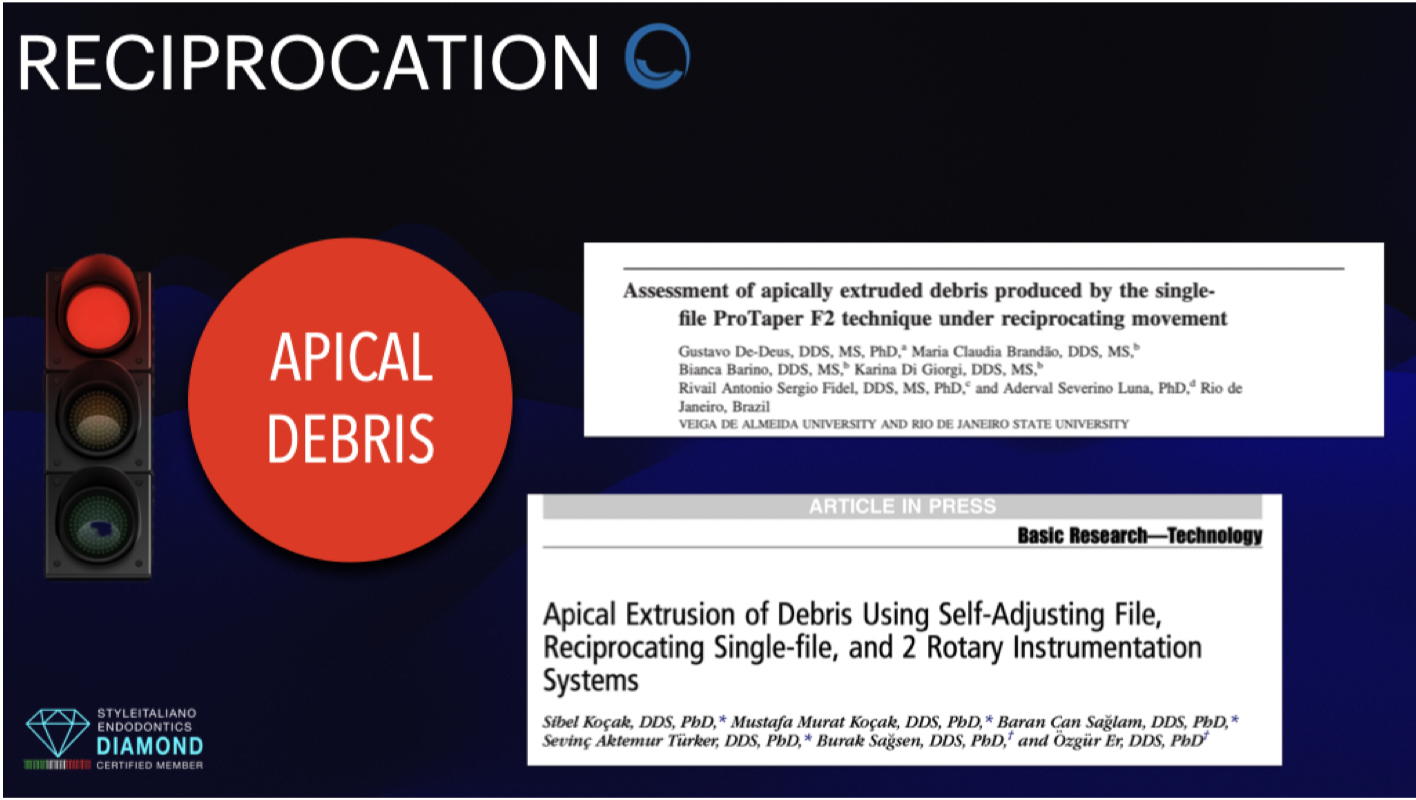
Fig. 14
Some studies concern about its apical debris extrusion
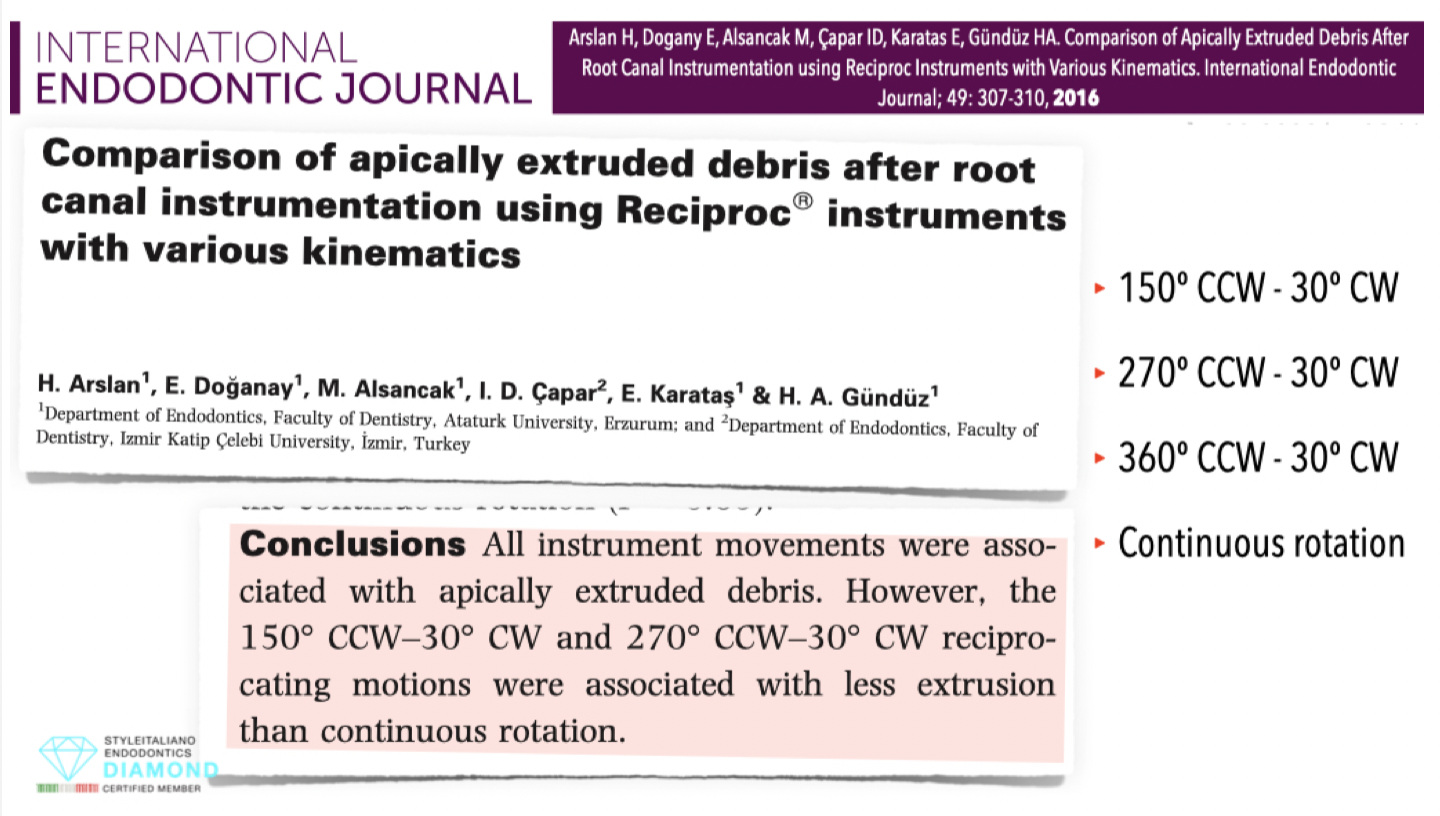
Fig. 15
But apparently the apical debris extrusion from reciprocation not that different with rotation

Fig. 16
Its more on technique dependent in terms of apical debris extrusion rather than its motion and design
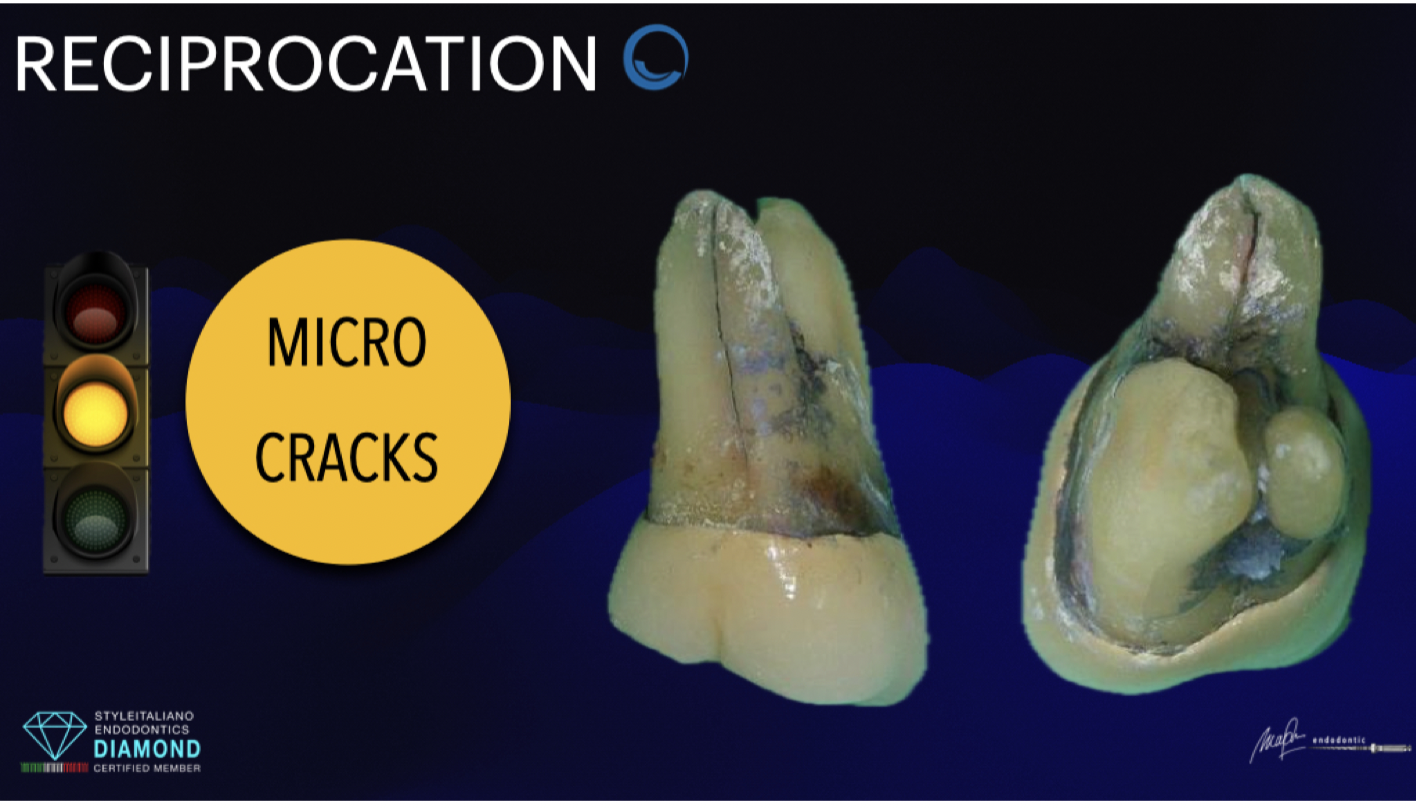
Fig. 17
Another doubt on reciprocation was on their risks of creating micro cracks
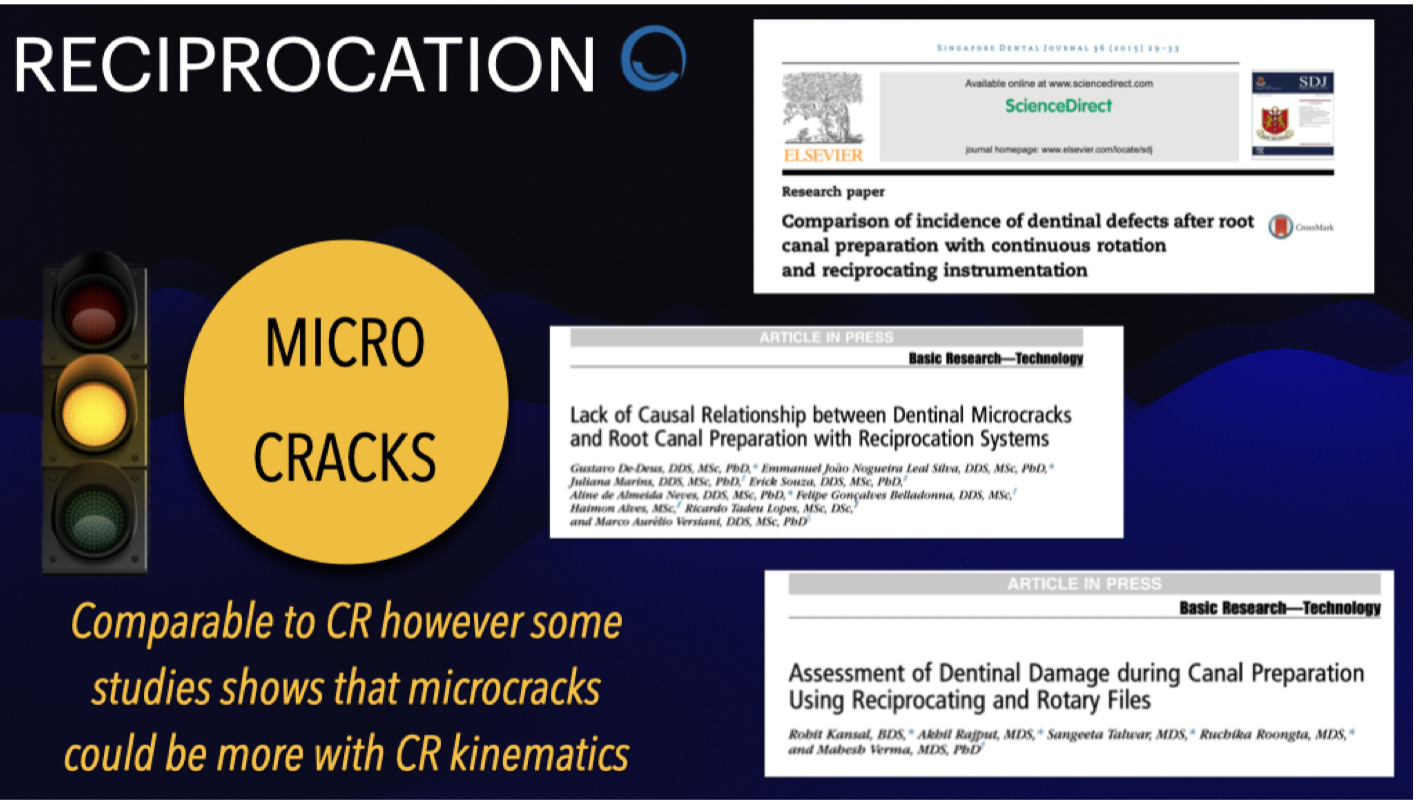
Fig. 18
But, studies showed that its still comparable to continous rotation although we still need to be careful

Fig. 19
But the positive things from reciprocation is the reduce of instruments separation

Fig. 20
So here are few reasons to choose reciprocation motion
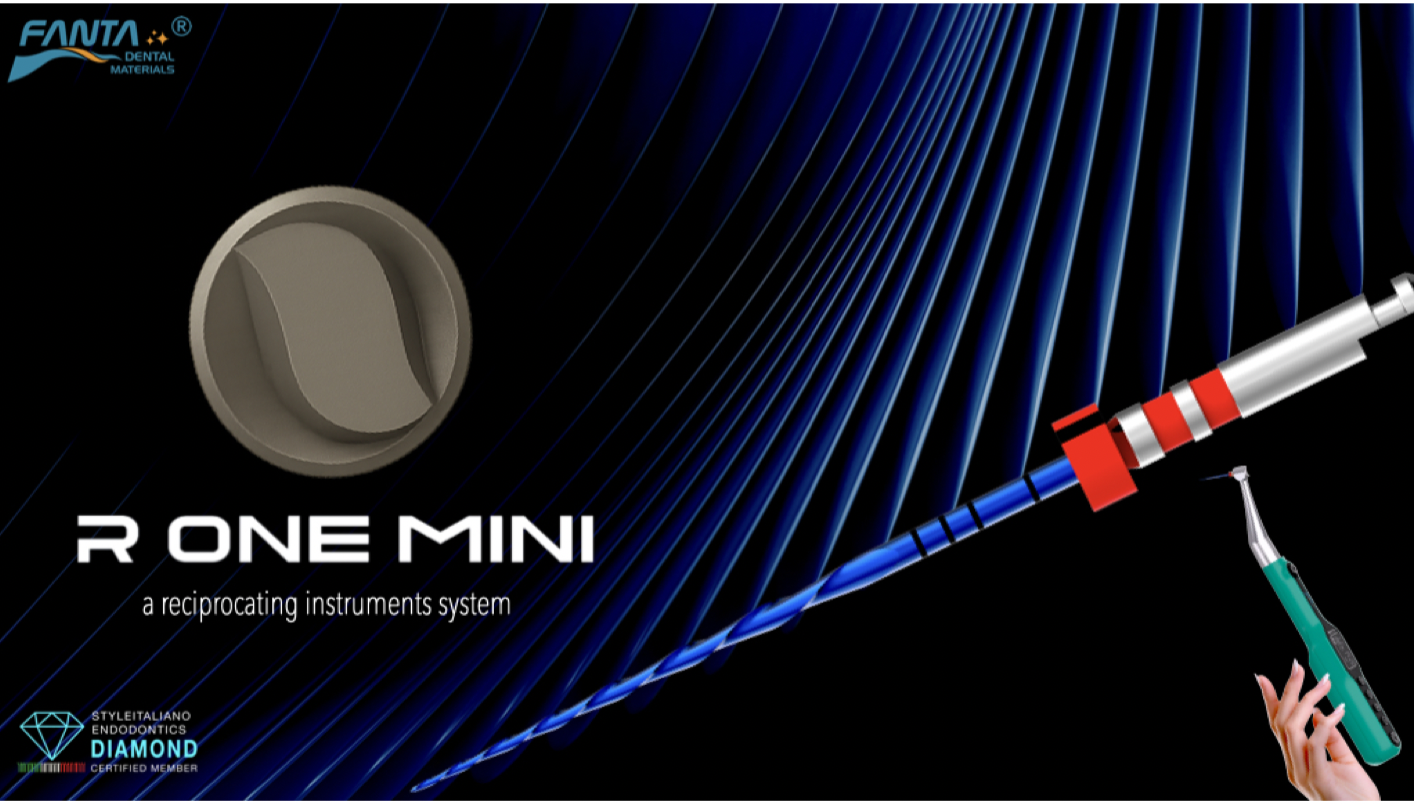
Fig. 21
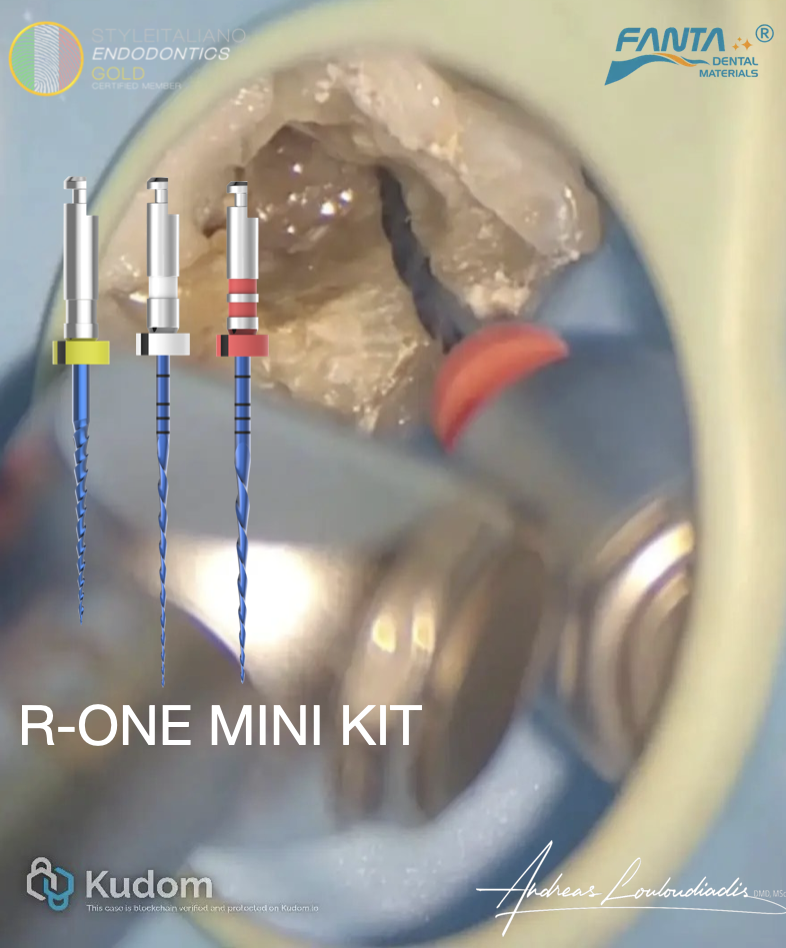
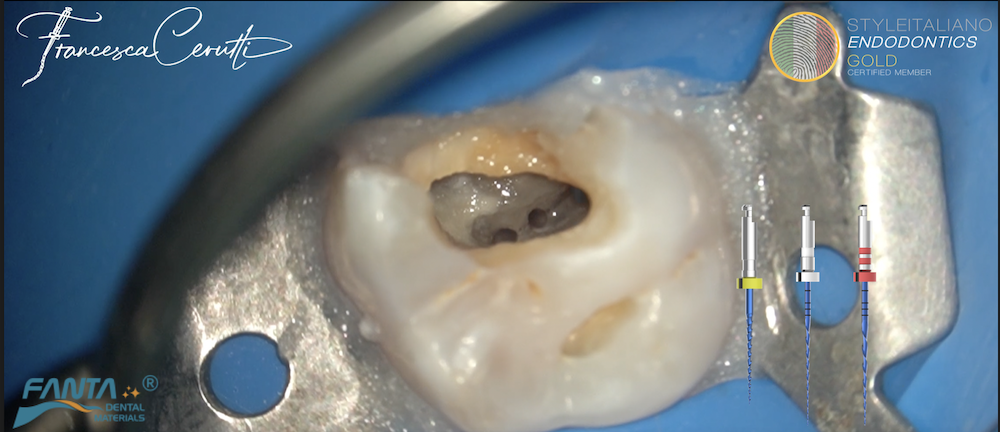
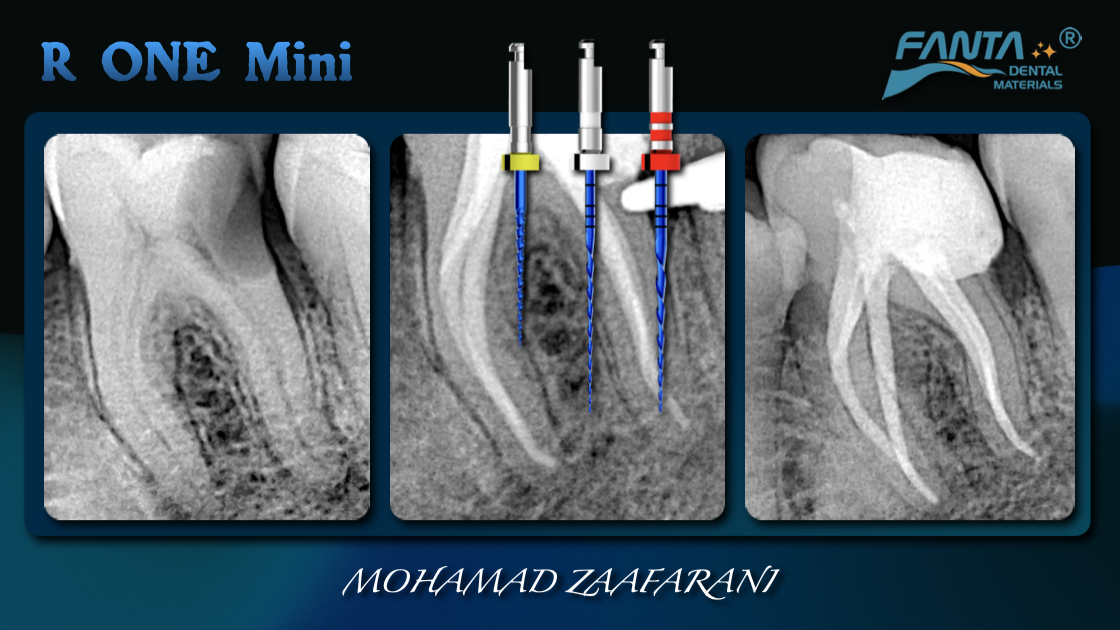
R One Mini from Fanta Dental that adapt reciprocation motion
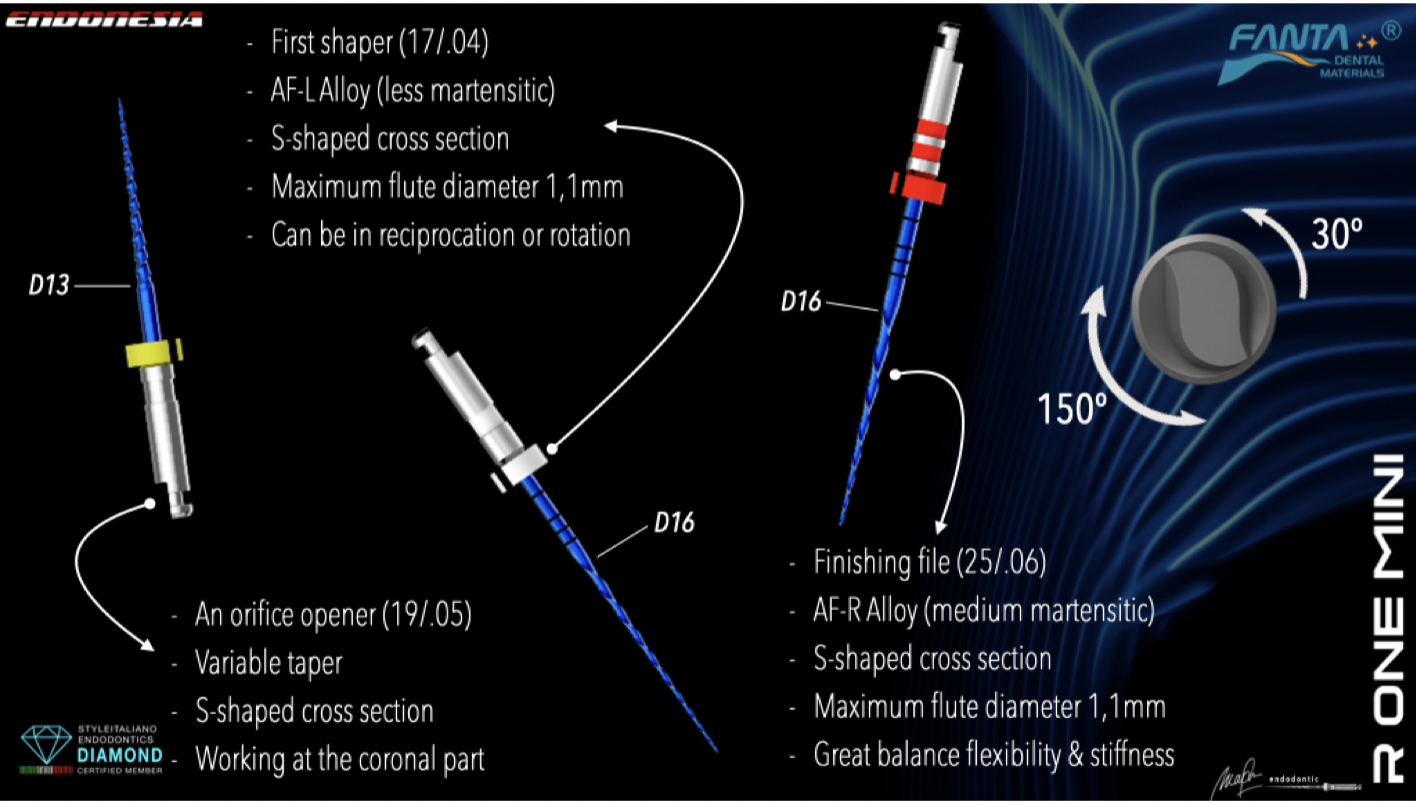
Fig. 22
R One Mini line up, cross section design and its sizes. The reciprocation movement is 30/150
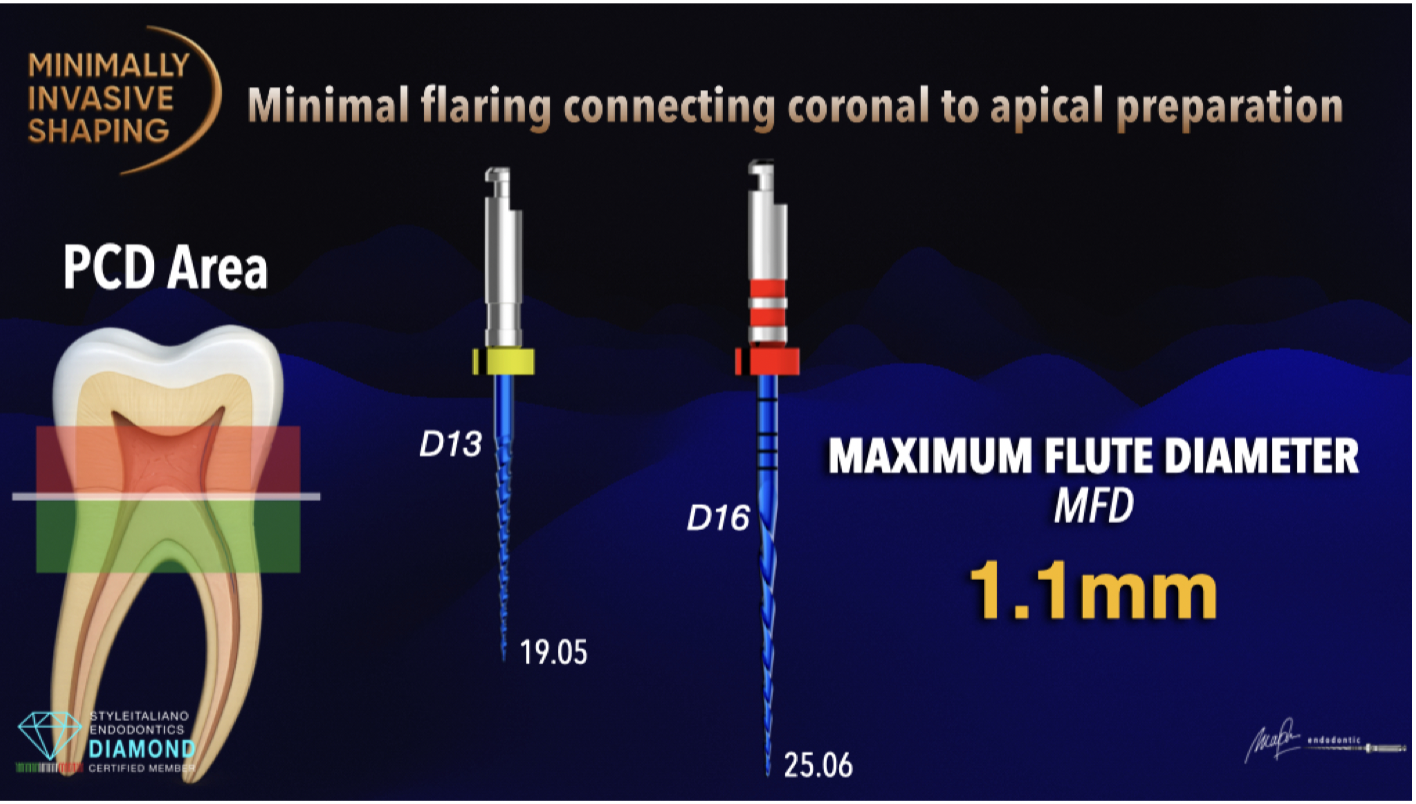
Fig. 23
With its concept of minimal flaring to preserve as much as practical the Peri Cervical Dentin area. Its maximum flute diameter is kept on 1,1mm
Conclusions
There are several motions of mechanical endodontic instruments. Each motion has its own characteristic and different handling. Reciprocation as one of the latest motion in endodontic instrumentation gave us advantages in complex cases. But there is also its disadvantages that we have to understand and be safe
R One Mini as one of the latest instrumentation system from Fanta Dental is adapting the reciprocation motion with its minimal flaring concept to maintain as much as practical Peri Cervical Dentin to improve tooth retention
Bibliography
- Yared G. Canal preparation using only one Ni-Ti rotary instrument: preliminary observations. International Endodontic Journal. 2008;41(4):339–344.
- Bürklein S, Hinschitza K, Dammaschke T, Schäfer E. Shaping ability and cleaning effectiveness of two single-file systems in severely curved root canals of extracted teeth: Reciproc and WaveOne versus Mtwo and ProTaper. International Endodontic Journal. 2012;45(5):449–461.
- Plotino G, Grande NM, Testarelli L, Gambarini G. Cyclic fatigue of Reciproc and WaveOne reciprocating instruments. International Endodontic Journal. 2012;45(7):614–618.
- De-Deus G, Moreira EJ, Lopes HP, Elias CN. Extended cyclic fatigue life of F2 ProTaper instruments used in reciprocating movement. International Endodontic Journal. 2010;43(12):1063–1068.
- Kim HC, Kwak SW, Cheung GS, Ko DH, Chung SM, Lee W. Cyclic fatigue and torsional resistance of two new nickel-titanium instruments used in reciprocation motion: Reciproc versus WaveOne. Journal of Endodontics. 2012;38(4):541–544.