Conservative Shaping of a Maxillary First Molar with Chameleon Dual Shaper
01/07/2026
Warning: Undefined variable $post in /home/styleendo/htdocs/styleitaliano-endodontics.org/wp-content/plugins/oxygen/component-framework/components/classes/code-block.class.php(133) : eval()'d code on line 2
Warning: Attempt to read property "ID" on null in /home/styleendo/htdocs/styleitaliano-endodontics.org/wp-content/plugins/oxygen/component-framework/components/classes/code-block.class.php(133) : eval()'d code on line 2
Modern endodontics increasingly demands instruments that combine efficient cutting with respect for dentine and canal anatomy, especially in complex maxillary molars. Chameleon Dual Shaper files by DENCO were developed to meet this need, offering heat‑activated NiTi metallurgy, enhanced surface hardness, and a dual‑shaper design that supports controlled, conservative canal preparation.
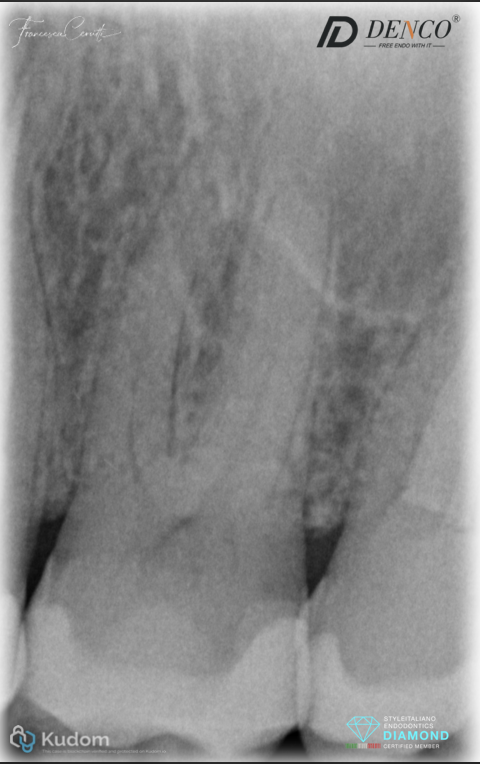
Fig. 1
Case selection and access
In the presented maxillary molar case, the tooth exhibited symptomatic irreversible pulpitis, with symptoms that appeared few days after cementing an indirect composite restoration. The pain was non subsiding and spontaneously started increasing day after day, so we scheduled the patient for endodontic treatment. Since the restoration was recent and properly fit, the request of the colleague who treated the patient in the first place was to do the endodontic treatment while preserving the onlay as much as possible.
Procedure
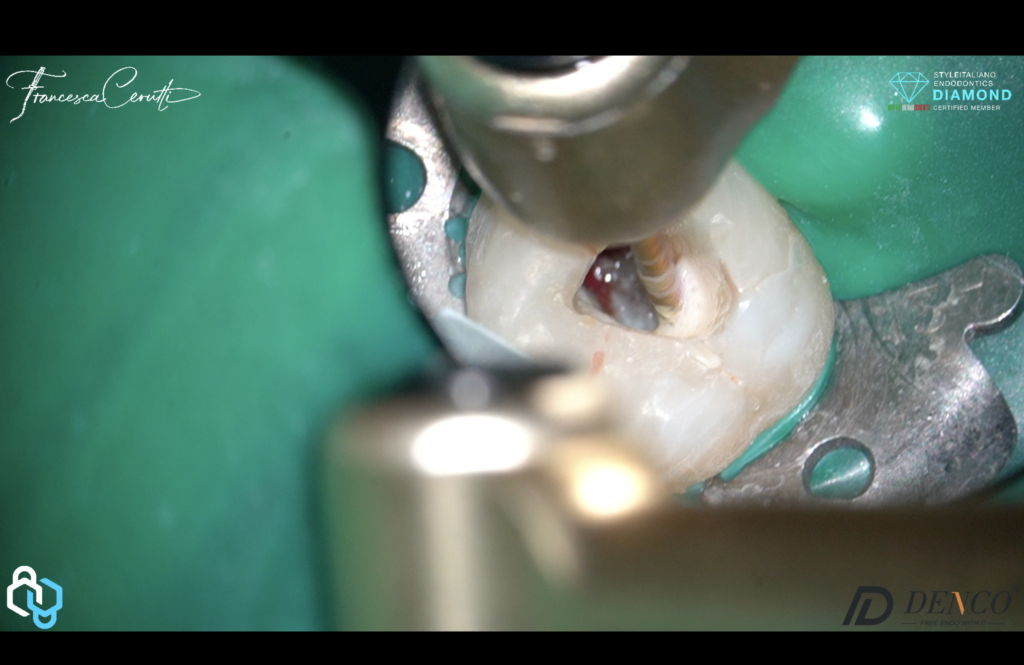
After local anesthesia and meticulous rubber dam isolation, the access cavity was designed, the pulp stone and the coronal pulp tissue were removed under magnification, and the canal orifices were identified. The reduced mouth opening of the patient led to the choice of flexible files with a good cutting efficiency. The treatment was performed following a manualless technique.
Due to the difficult access, it was mandatory to use heat treated files, whose capacity to be pre bent allowed me to access the root canal system safely.
An obsidian black mirror with great reflective properties by Denco was used during the whole procedure, thanks to its light-weight and its size that permits to fit it also in small areas of the mouth, therefore ensuring optimal view also in challenging situations.
The files used in this case were the Chameleon Dual Shaper by Denco, operated at 300 rpm and a torque of 2.5 N·cm, following manufacturer recommendations. Files were introduced in a gentle in‑and‑out motion allowing the instrument to adapt to canal curvature while progressively enlarging the preparation. In the MB canals, where curvatures were more pronounced, particular attention was paid to maintaining canal centering and avoiding excessive engagement of the blades
The Chameleon Dual‑Shaper design allows efficient shaping while maintaining a conservative approach to dentine removal, especially in the pericervical area, which is critical for long‑term tooth strength. Copious irrigation with NaOCl and EDTA accompanied each shaping step, enhancing removal of smear layer and debris transported coronally by the file’s design. The goal was to obtain a well‑tapered canal with sufficient apical enlargement for irrigation efficacy, without over‑instrumentation or unnecessary widening.
After completion of shaping and the irrigation protocol, the canals were dried and obturated with a warm vertical technique and calcium silicate based sealer. A composite adhesive coronal restoration was placed immediately to protect the endodontic seal. At follow‑up, the tooth remained asymptomatic, with normal function and radiographic evidence of healthy periapical tissues
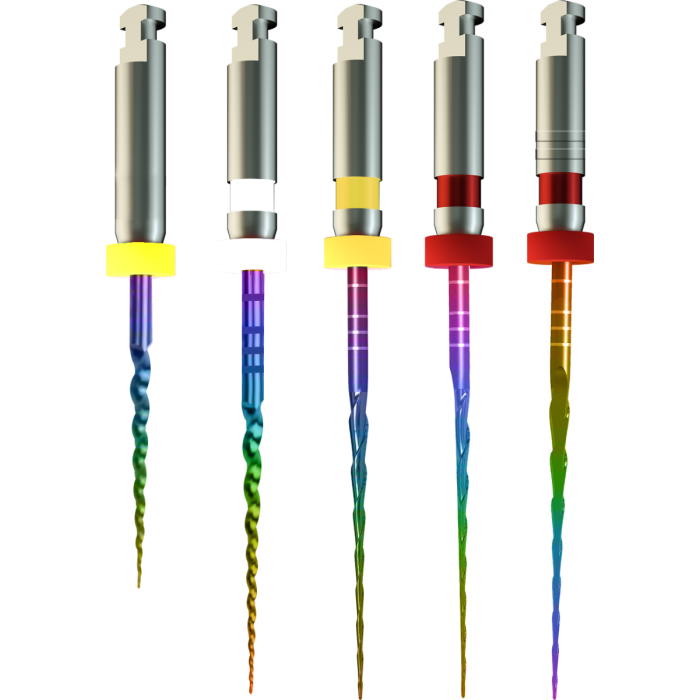
Fig. 2
Chameleon Dual Shaper files are heat‑activated NiTi instruments designed to balance flexibility, strength and cutting efficiency, making them suitable for dynamic shaping in curved canals. Their specialised dual‑shaper geometry and nano‑coated surface improve debris removal and torsional resistance, while a safe, non‑cutting tip helps reduce the risk of ledging and perforation.
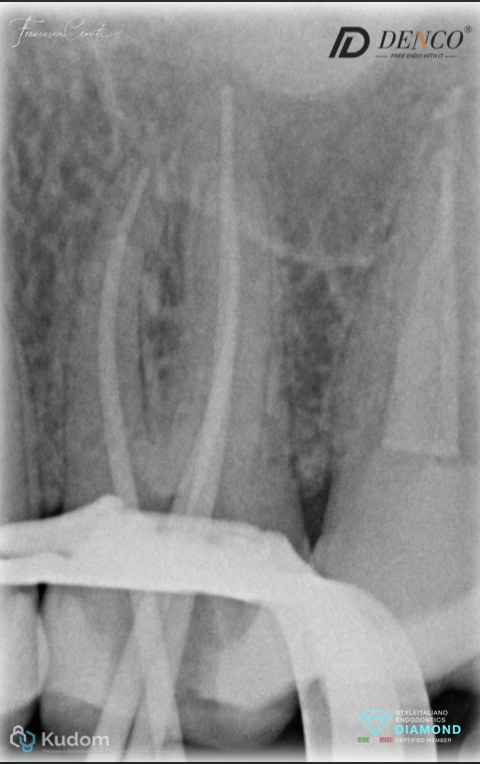
Fig. 3
Cone fit X-ray
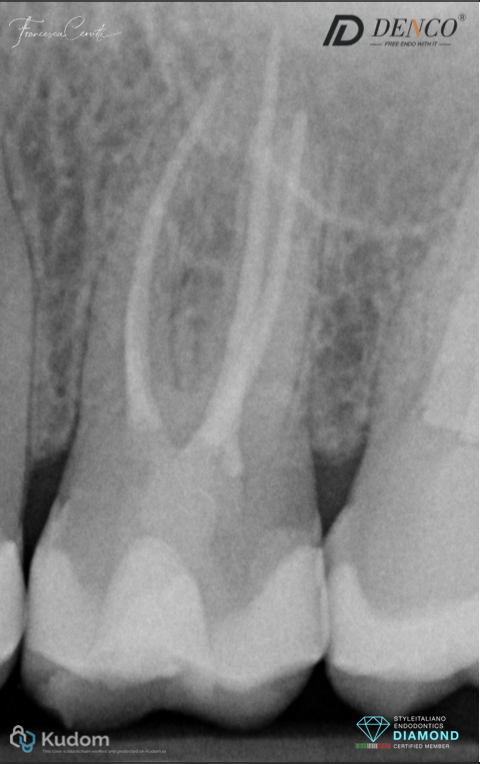
Fig. 4
Post operative.
By respecting the original canal curvature and limiting dentine removal, the Chameleon Dual Shaper system helped maintain structural integrity of the maxillary molar while still achieving adequate space for obturation
Conclusions
This case illustrates how Chameleon Dual Shaper files by DENCO can be integrated into the treatment of a maxillary molar to achieve controlled, conservative shaping. Their heat‑activated NiTi alloy, dual‑shaper geometry, and safe tip design make them particularly suitable for complex anatomies where flexibility, fatigue resistance and dentine preservation are critical
Bibliography
1. Arias A, Peters OA. Present status and future directions: Canal shaping. Int Endod J. 2022;55 Suppl 3(Suppl 3):637-55.
2. Ebihara A, Yahata Y, Miyara K, Nakano K, Hayashi Y, Suda H. Heat treatment of nickel-titanium rotary endodontic instruments: effects on bending properties and shaping abilities. Int Endod J. 2011;44(9):843-9.
3. Plotino G, Nagendrababu V, Bukiet F, Grande NM, Veettil SK, De-Deus G, et al. Influence of Negotiation, Glide Path, and Preflaring Procedures on Root Canal Shaping-Terminology, Basic Concepts, and a Systematic Review. J Endod. 2020;46(6):707-29.
4. Zuolo ML, Zaia AA, Belladonna FG, Silva E, Souza EM, Versiani MA, et al. Micro-CT assessment of the shaping ability of four root canal instrumentation systems in oval-shaped canals. Int Endod J. 2018;51(5):564-71.