Rising files in the treatment of an upper premolar
26/02/2026
Warning: Undefined variable $post in /home/styleendo/htdocs/styleitaliano-endodontics.org/wp-content/plugins/oxygen/component-framework/components/classes/code-block.class.php(133) : eval()'d code on line 2
Warning: Attempt to read property "ID" on null in /home/styleendo/htdocs/styleitaliano-endodontics.org/wp-content/plugins/oxygen/component-framework/components/classes/code-block.class.php(133) : eval()'d code on line 2
In daily dental practice, we frequently witness the late failure of restorative procedures that were originally intended to preserve pulp vitality. Over time, the dental pulp may undergo irreversible inflammation and progress to necrosis, eventually leading to the development of an apical lesion that can become symptomatic even many years after the initial treatment. In these situations, the diagnosis is usually straightforward, as the clinical signs and radiographic findings are often clearly consistent with pulpal necrosis and post‑treatment apical periodontitis.
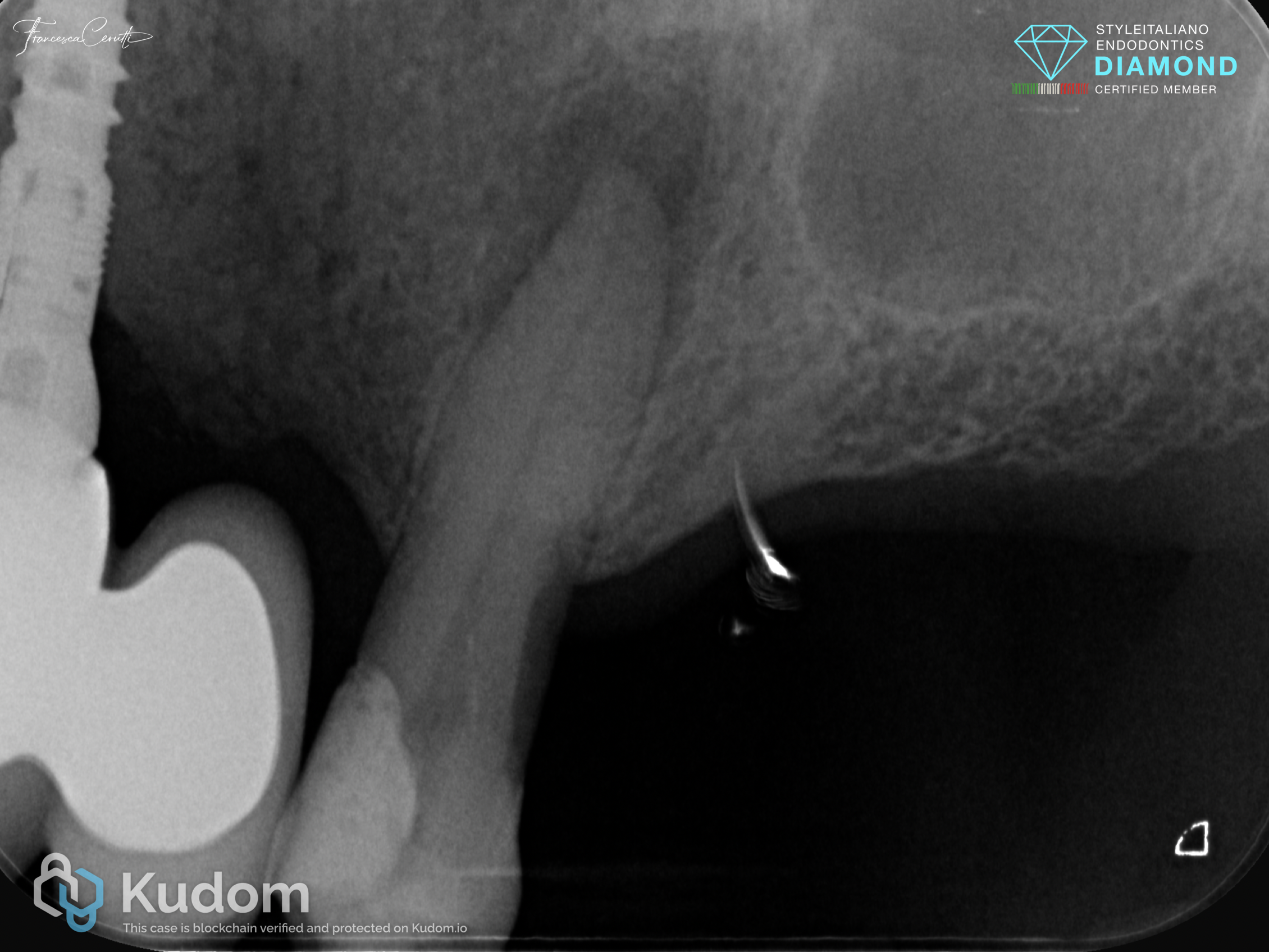
Fig. 1
A patient came to my attention complaining of pain to percussion on tooth 2.5. A large restoration was present. The periodontal status of the tooth was normal, without deep probing, and the tooth was not responding to pulp sensibility tests.
The pre operative X-ray showed the presence of a large lesion, thus the diagnosis of symtpomatic apical periodontitis in a tooth with necrotic pulp was easily made.
The treatment planning involved endodontic treatment and post endodontic restoration in the same appointment.
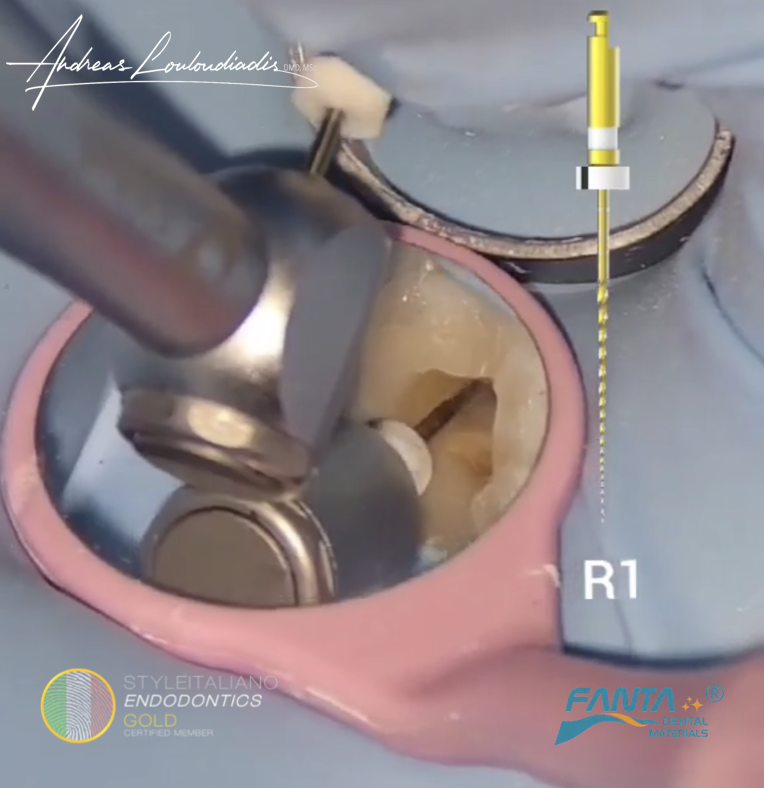
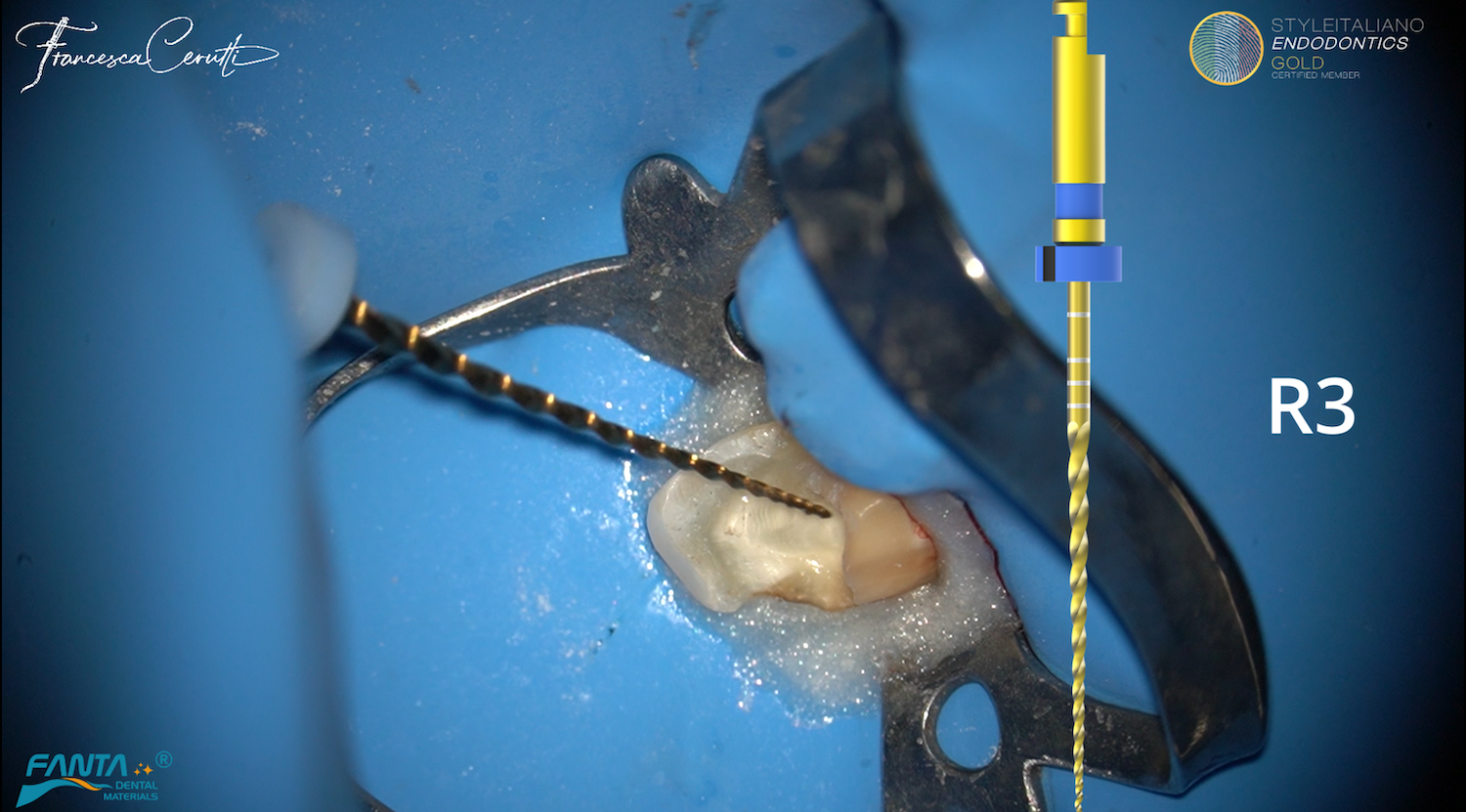
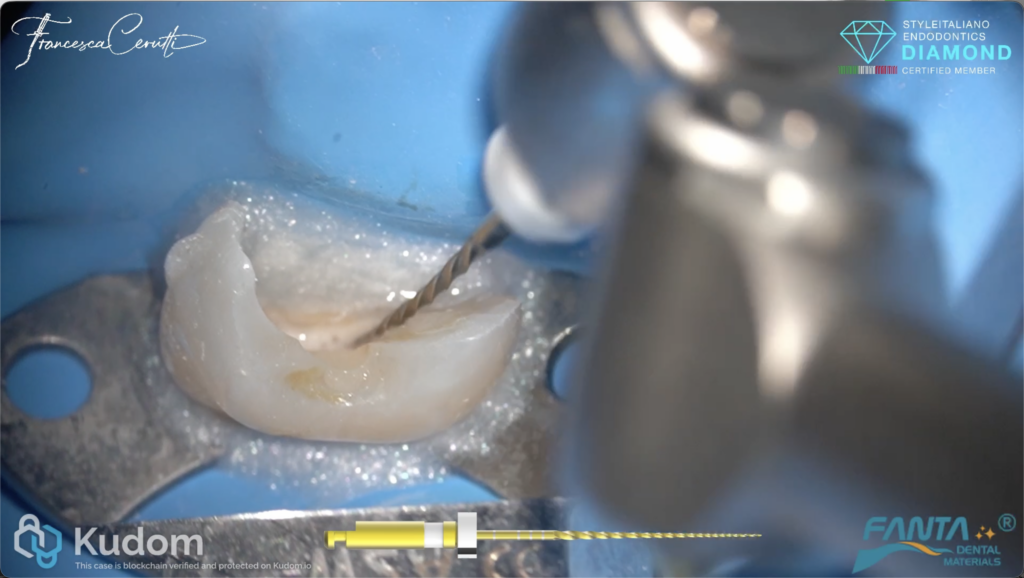
The video of the procedure shows the use of the Rising sequence in the treatment of the premolar. After removing completely the restoration, the RR was used to enlarge the orifices, then the sequence from R1 to R3 was used to shape the root canal system.
After the apical gauging, the irrigation was carried out and the tooth was finally filled with the modified warm vertical compaction with hydraulic sealer and guttapercha.
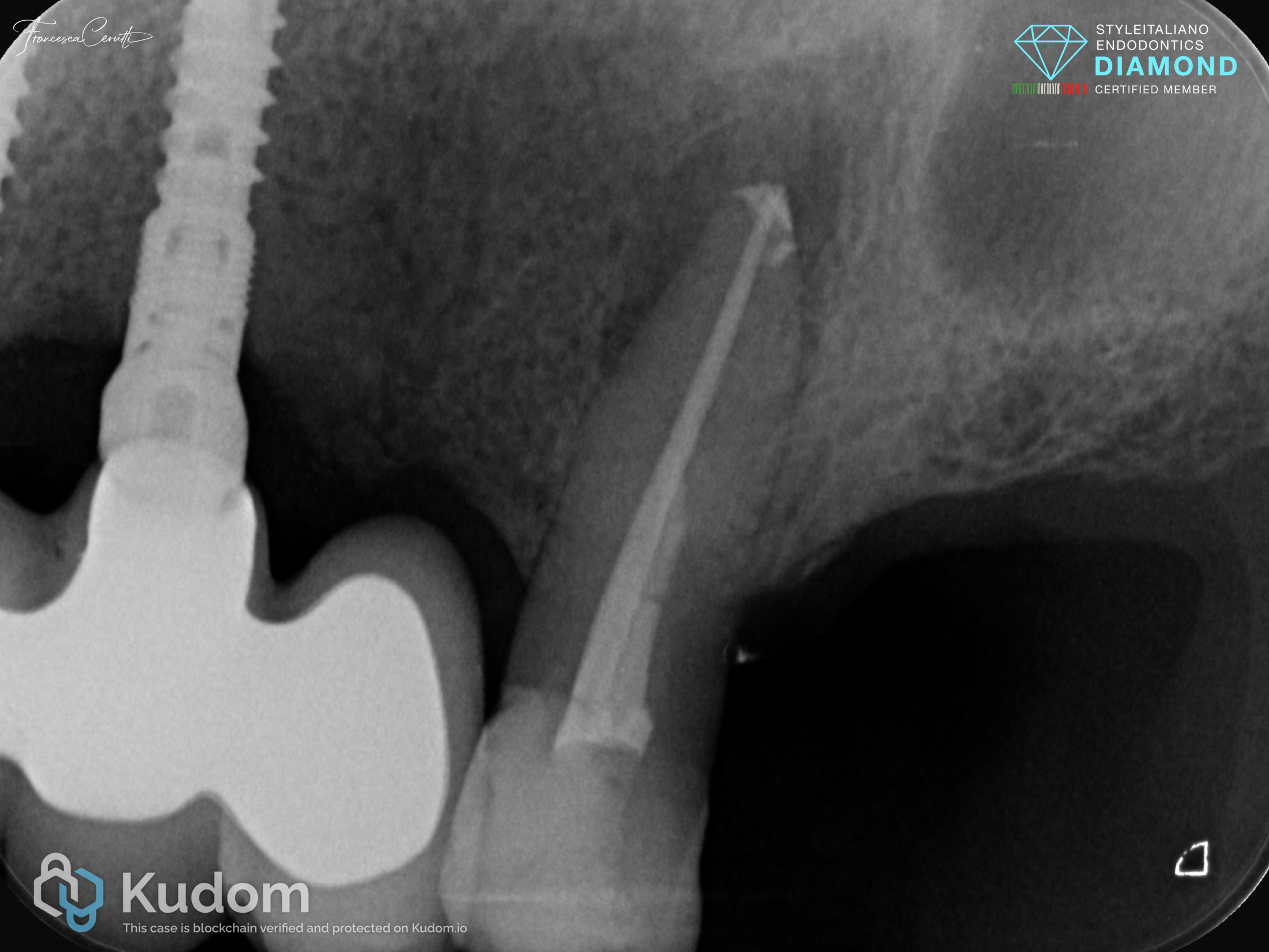
Fig. 2
Post operative X-ray.
Follow ups were scheduled at 6 and 12 months.
Conclusions
The rising system allows to shape safely and quickly the root canal system, by maintaining the sound tooth structure.
Bibliography
Arias A, Peters OA. Present status and future directions: Canal shaping. Int Endod J. 2022;55 Suppl 3(Suppl 3):637-55.
Celikten B, Uzuntas CF, Orhan AI, Orhan K, Tufenkci P, Kursun S, et al. Evaluation of root canal sealer filling quality using a single-cone technique in oval shaped canals: an in vitro Micro-CT study. Scanning. 2016;38:133-40.
Bicakci H, Capar ID, Genc S, Ihtiyar A, Sutcu R. Influence of Rotary Instrumentation with Continuous Irrigation on Pain and Neuropeptide Release Levels: A Randomized Clinical Trial. J Endod. 2016;42(11):1613-9.