R One Mini in a narrow and calcified upper first premolar
02/03/2026
Warning: Undefined variable $post in /home/styleendo/htdocs/styleitaliano-endodontics.org/wp-content/plugins/oxygen/component-framework/components/classes/code-block.class.php(133) : eval()'d code on line 2
Warning: Attempt to read property "ID" on null in /home/styleendo/htdocs/styleitaliano-endodontics.org/wp-content/plugins/oxygen/component-framework/components/classes/code-block.class.php(133) : eval()'d code on line 2
R One Mini reciprocating file system by Fanta is an excellent file system to be used in different scenarios like narrow and calcified canals. It is an easy system (two files), safe, and minimal invasive approach due to variable taper.
A 47 years old male been referred by a colleague for RCT UR4. The RD already did the emergency access.
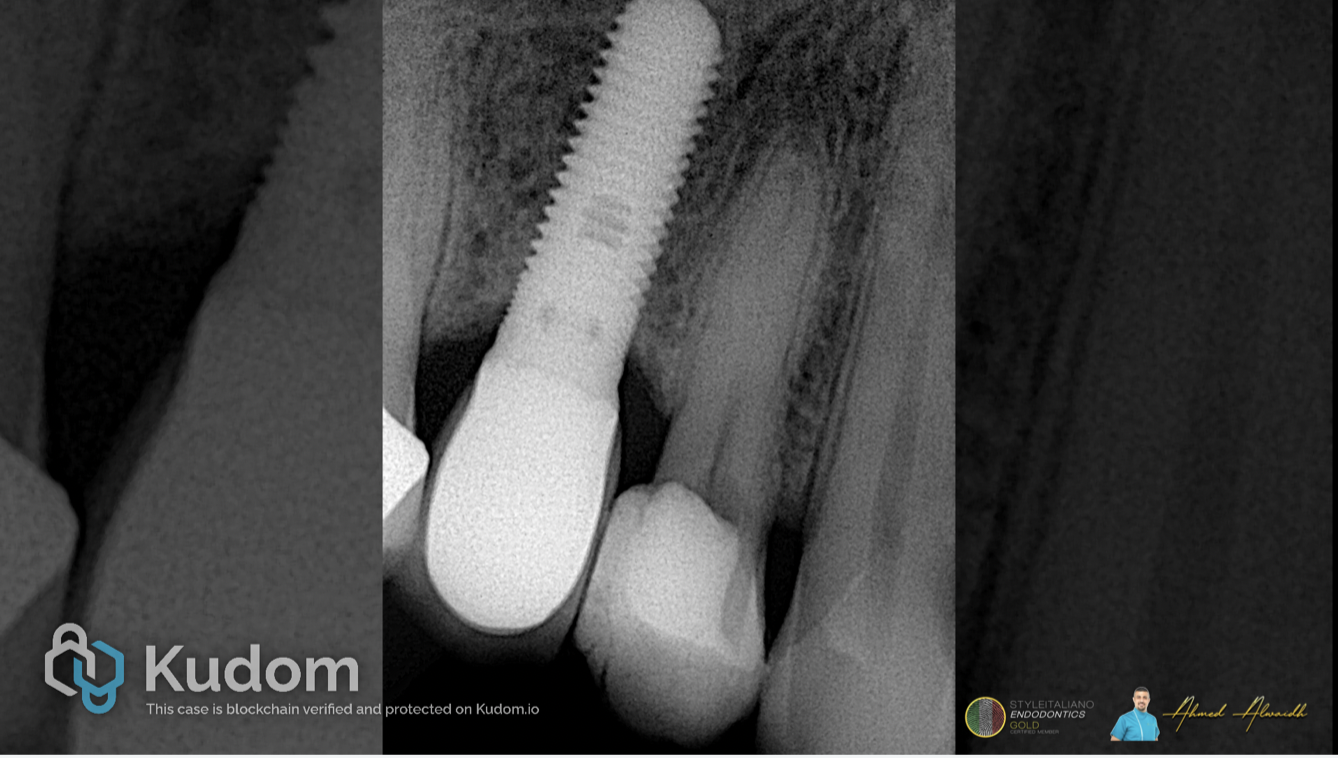
Fig. 1
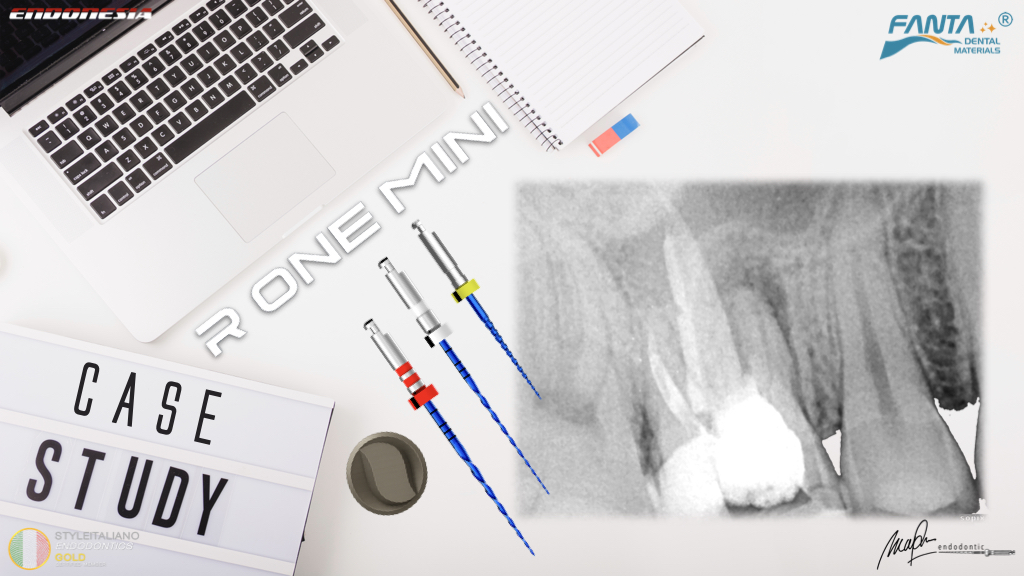
Pre-operative IOPA showed narrow and calcified canals
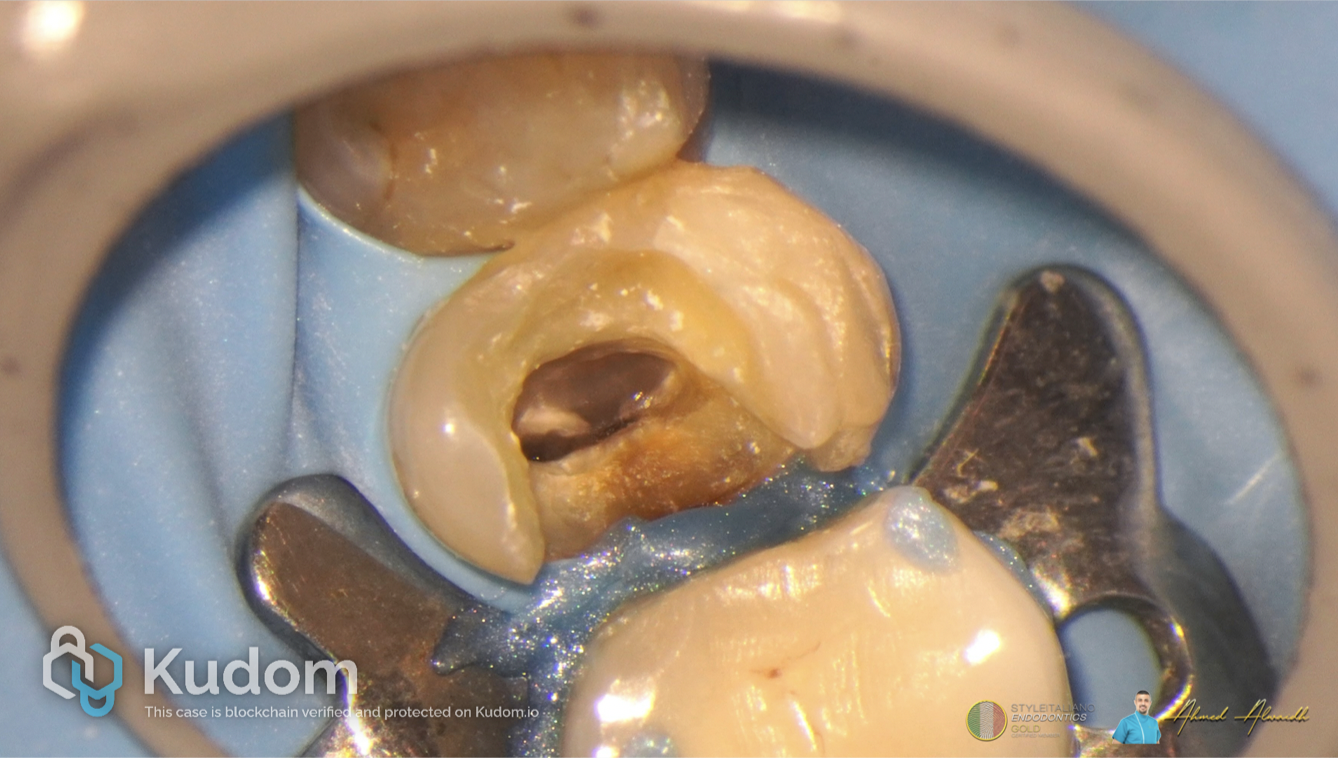
Fig. 2
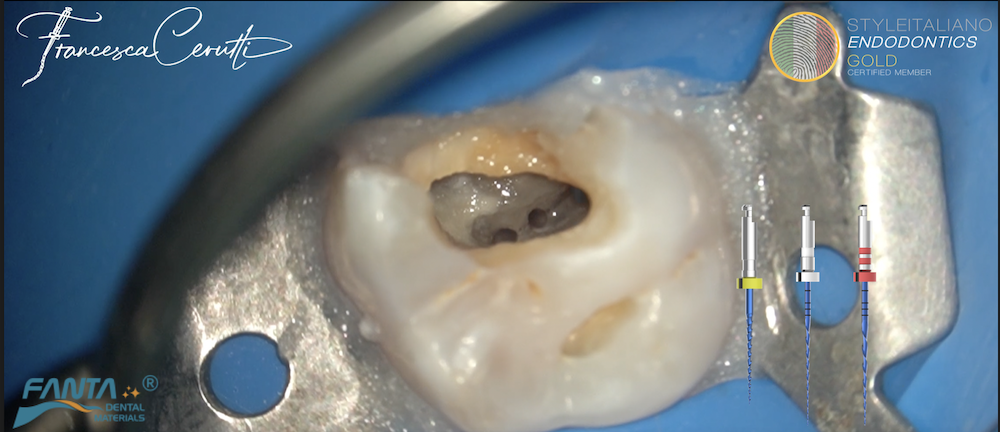
After rubber dam isolation and removing the temporary filling, access cavity needed refinement
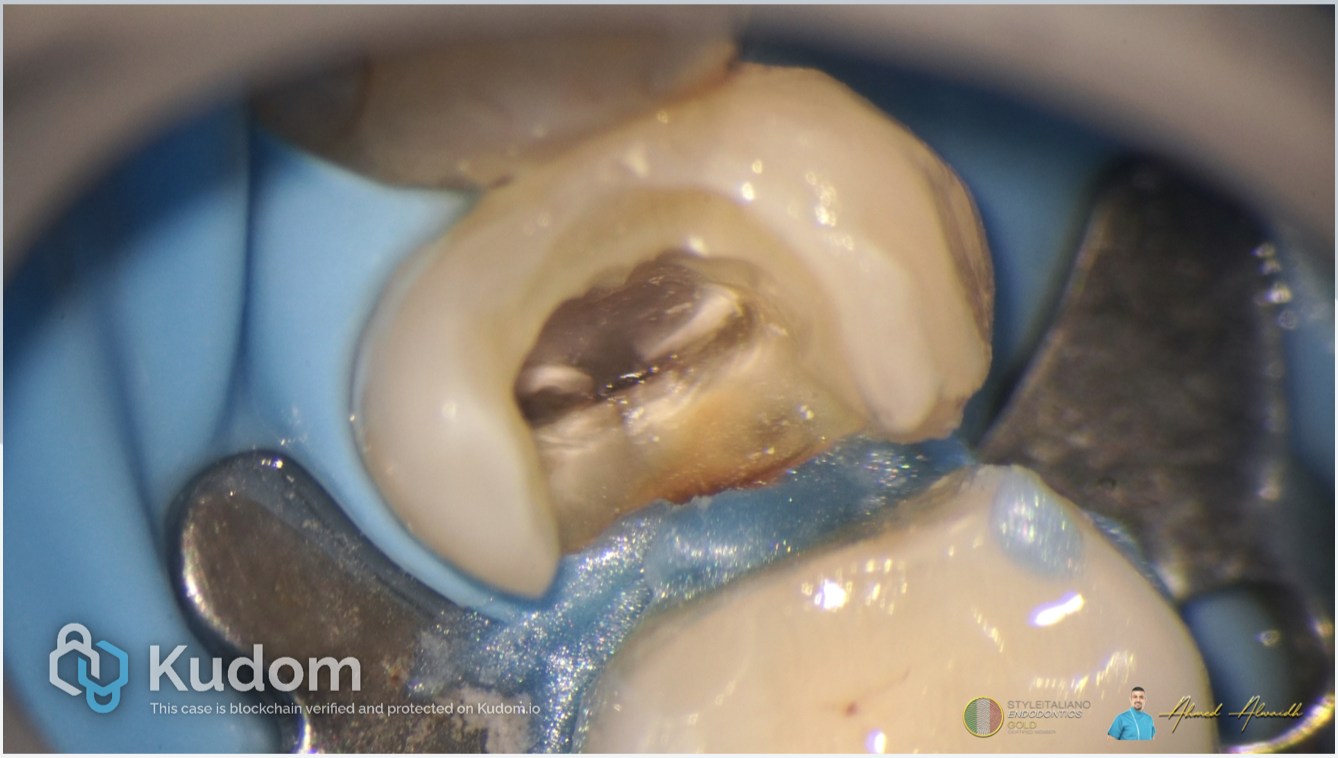
Fig. 3
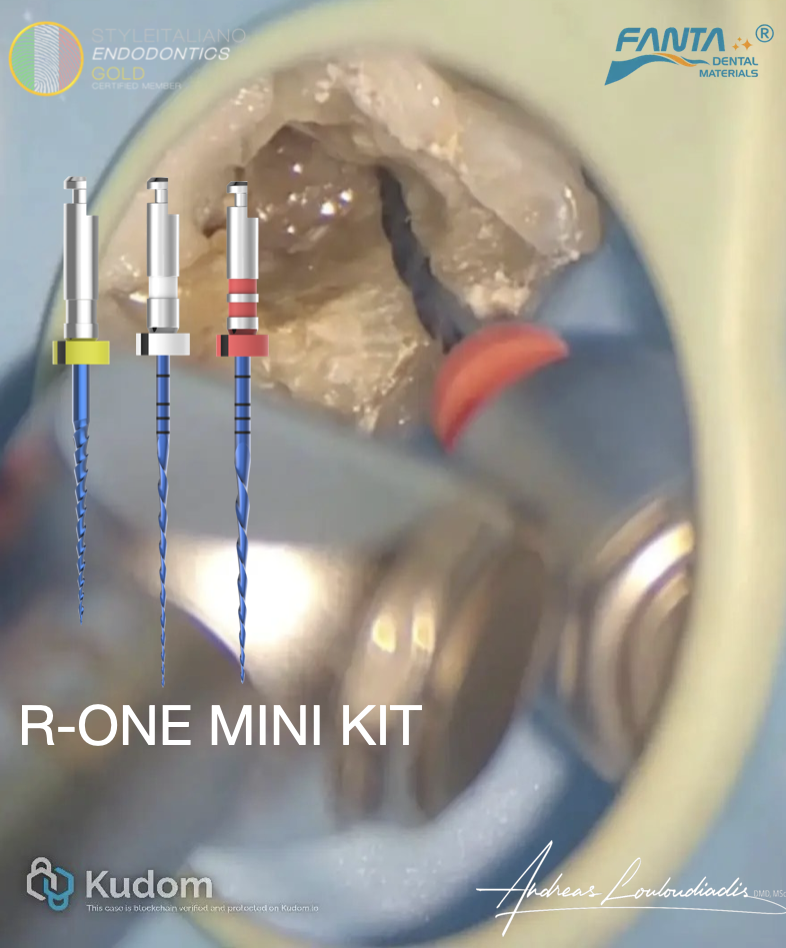
After refinement, buccal orifice was calcified and not easy to be negotiated with K #10 file
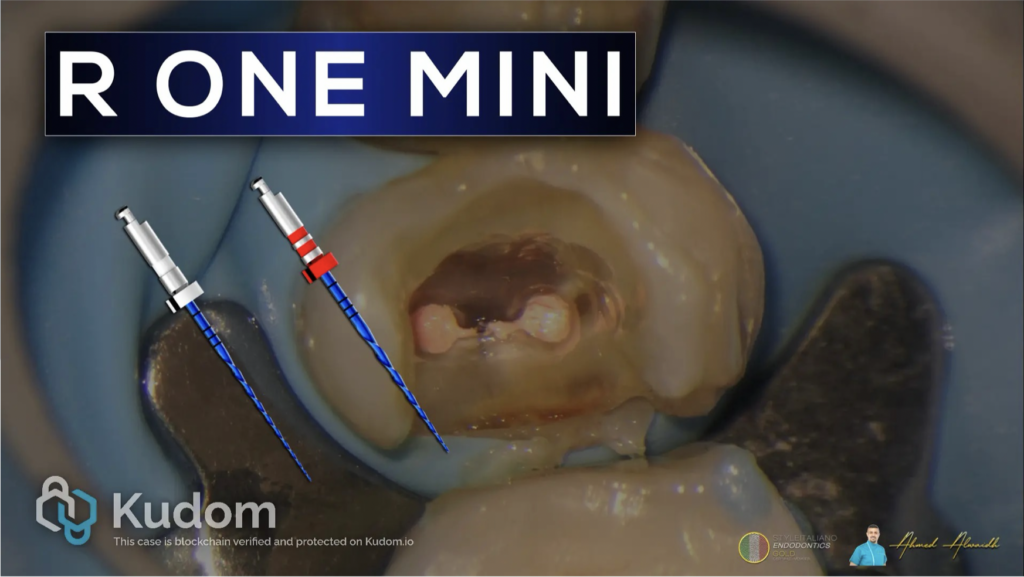
Two canals been prepared easily with reciprocating two file system R One Mini by Fanta. Two canals merging at the apical third
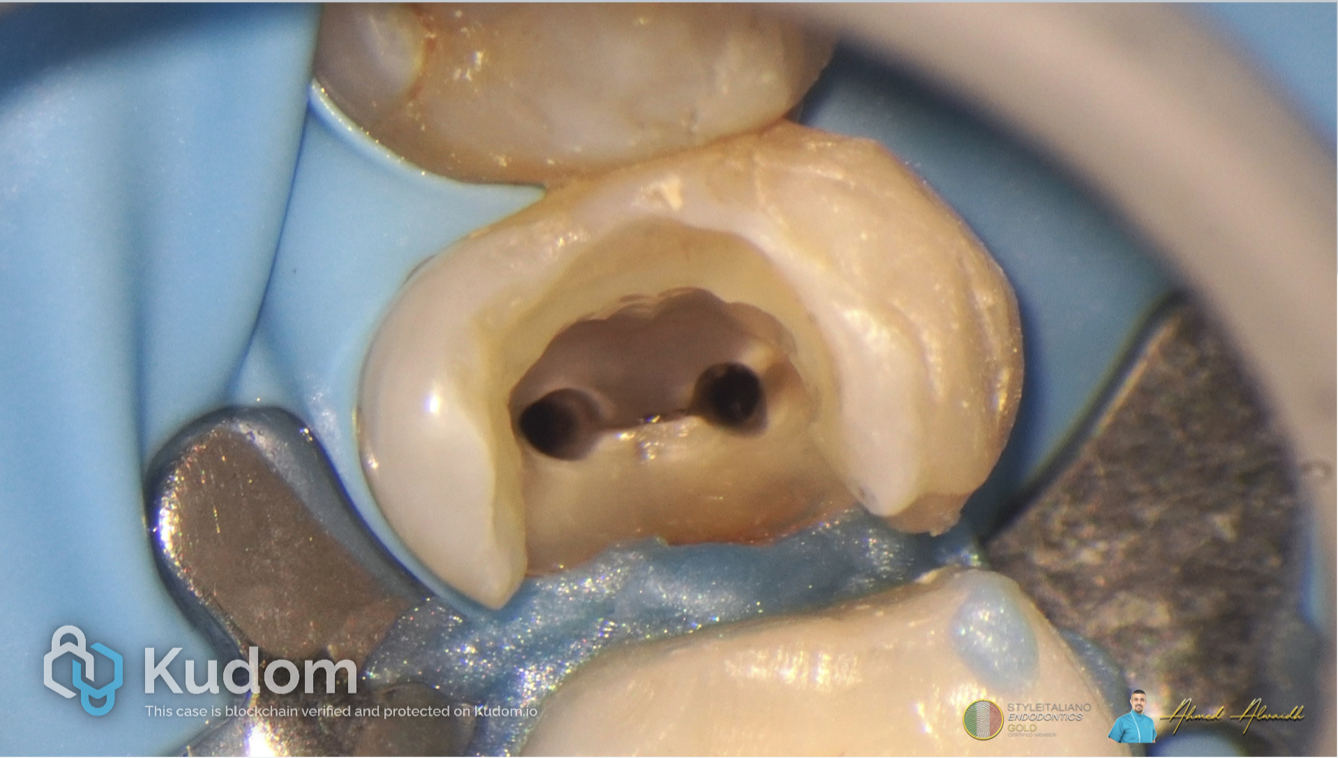
Fig. 4
NaOCl 3%, EDTA 17%, PUI
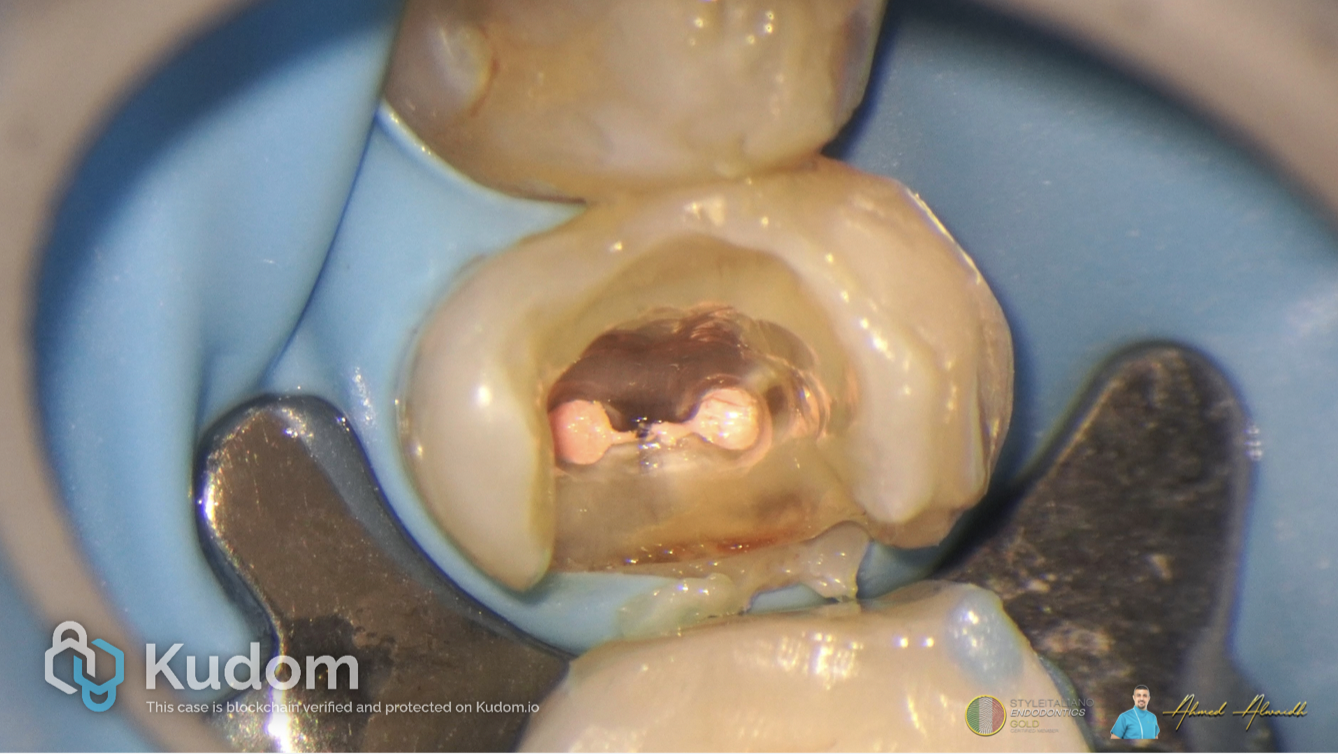
Fig. 5
UR4 been obturated with hydraulic obturation with premixed BC cement
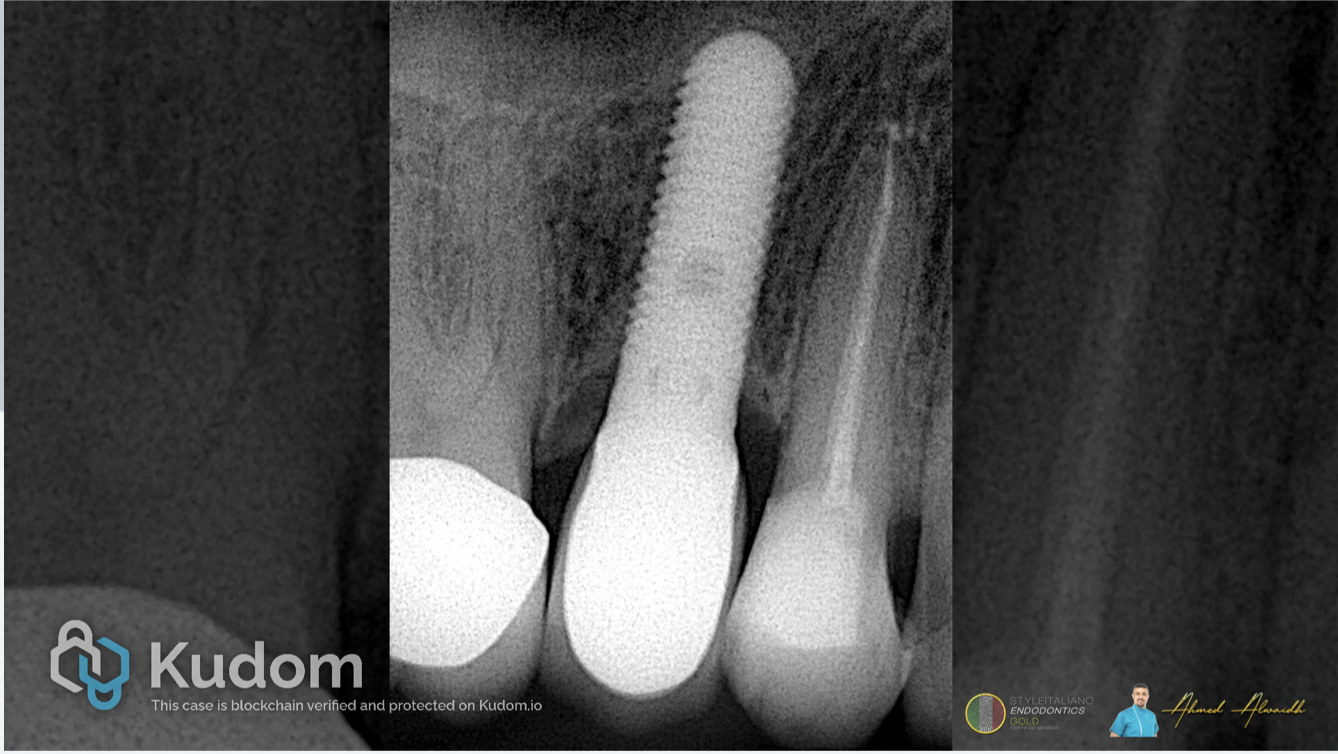
Fig. 6
Post-operative IOPA. The patient been sent for his RD for definite cuspal coverage
Conclusions
Since the concept of reciprocating files been introduced first (Yared 2008), many debates have accompanied the use of reciprocating files including (not limited to) cracks formation (De-Deus et al. 2014), invasive approach (Clark and Khademi 2010), safety, … etc.
With recent advancements and technologies related to the types of NiTi, treatment of alloys (Karataş et al. 2015, Miguéns-Vila et al. 2017), and design of NiTi files (Zhou et al. 2015) , reciprocating files nowadays are a great asset in endodontic treatment and can be considered as rotary files, having their pros and cons, depending on the file system and not to the type of motion. Many studies showed that even rotary files can produce cracks and sometimes as same as reciprocating files (Bier et al. 2009, Kim et al. 2010, Berutti et al. 2012, Harandi et al. 2017, Shantiaee et al. 2019).
R One Mini reciprocating file system (Fanta Dental, Shanghai), is a great choice of reciprocation; as it consists of two files, minimal invasive as the maximum diameter of the file at D16 is 1.1mm, high cutting due is the S shape cross section and variable tapers, and offers safety due to reciprocation motion
Bibliography
- Berutti E, Paolino D S, Chiandussi G, Alovisi M, Cantatore G, Castellucci A, Pasqualini D (2012) Root canal anatomy preservation of WaveOne reciprocating files with or without glide path. Journal of endodontics 38(1),101-104.
- Bier C A S, Shemesh H, Tanomaru-Filho M, Wesselink P R, Wu M K (2009) The ability of different nickel-titanium rotary instruments to induce dentinal damage during canal preparation. Journal of endodontics 35(2), 236-238.
- Clark D and Khademi J A (2010) Case studies in modern molar endodontic access and directed dentin conservation. Dental Clinics 54(2), 275-289.
- De-Deus G, Silva, E J N L, Marins J, Souza E, de Almeida Neves A, Belladonna F G, Alves H, Lopes R T, Versiani M A (2014) Lack of causal relationship between dentinal microcracks and root canal preparation with reciprocation systems. Journal of Endodontics 40(9), 1447-1450.
- Harandi A, Mirzaeerad S, Mehrabani M, Mahmoudi E, Bijani A (2017) Incidence of dentinal crack after root canal preparation by ProTaper universal, Neolix and SafeSider systems. Iranian endodontic journal 12(4), 432.
- Karataş E, Gündüz H A, Kırıcı D Ö, Arslan H, Topçu M Ç, Yeter K Y (2015) Dentinal crack formation during root canal preparations by the twisted file adaptive, ProTaper Next, ProTaper Universal, and WaveOne instruments. Journal of endodontics 41(2), 261-264.
- Kim H C, Lee M H, Yum J, Versluis A, Lee C J, Kim B M (2010) Potential relationship between design of nickel-titanium rotary instruments and vertical root fracture. Journal of endodontics 36(7), 1195-1199.
- Miguéns-Vila R, Martín-Biedma B, Varela-Patiño P, Ruíz-Piñón M, Castelo-Baz P (2017) Vertical Root Fracture initiation in curved roots after root canal preparation: A dentinal micro-crack analysis with LED transillumination. Journal of Clinical and Experimental Dentistry 9(10), 1218.
- Shantiaee Y, Dianat O, Mosayebi G, Namdari M, Tordik P (2019) Effect of root canal preparation techniques on crack formation in root dentin. Journal of endodontics 45(4), 447-452.
- Yared G (2008) Canal preparation using only one Ni‐Ti rotary instrument: preliminary observations. International endodontic journal 41(4), 339-344.
- Zhou X, Jiang S, Wang X, Wang S, Zhu X, Zhang C (2015) Comparison of dentinal and apical crack formation caused by four different nickel-titanium rotary and reciprocating systems in large and small canals. Dental materials journal 34(6), 903-909.