Oval Canal Reconstruction: The Hi-Rem Polygon Post Efficiency
29/04/2026
Warning: Undefined variable $post in /home/styleendo/htdocs/styleitaliano-endodontics.org/wp-content/plugins/oxygen/component-framework/components/classes/code-block.class.php(133) : eval()'d code on line 2
Warning: Attempt to read property "ID" on null in /home/styleendo/htdocs/styleitaliano-endodontics.org/wp-content/plugins/oxygen/component-framework/components/classes/code-block.class.php(133) : eval()'d code on line 2
The restorative management of endodontically treated premolars often presents a biomechanical challenge due to the prevalence of oval-shaped root canals. Traditional circular fiber posts frequently result in an excessive thickness of the cement layer or unnecessary removal of sound radicular dentin. This case analyzes the clinical integration of Hi-Rem Polygon Post (non-circular glass fiber posts) and OverCEM SA (dual-curing self-adhesive resin cement) as a conservative and high-performance protocol for post-endodontic reconstruction.
Introduction
The primary goal of post-endodontic restoration is to provide adequate retention for the coronal build-up while preserving the structural integrity of the root. In single-rooted teeth, particularly premolars, the canal anatomy is often non-circular. Standardizing these canals to fit cylindrical or conical posts leads to the "circularization" of the preparation, which weakens the root walls and increases the risk of vertical fractures.
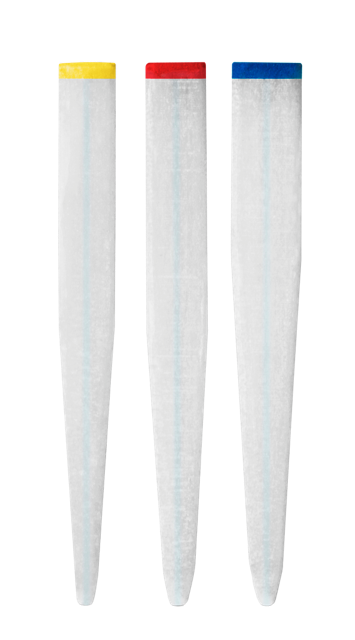
Fig. 1
Geometric and Material Optimization
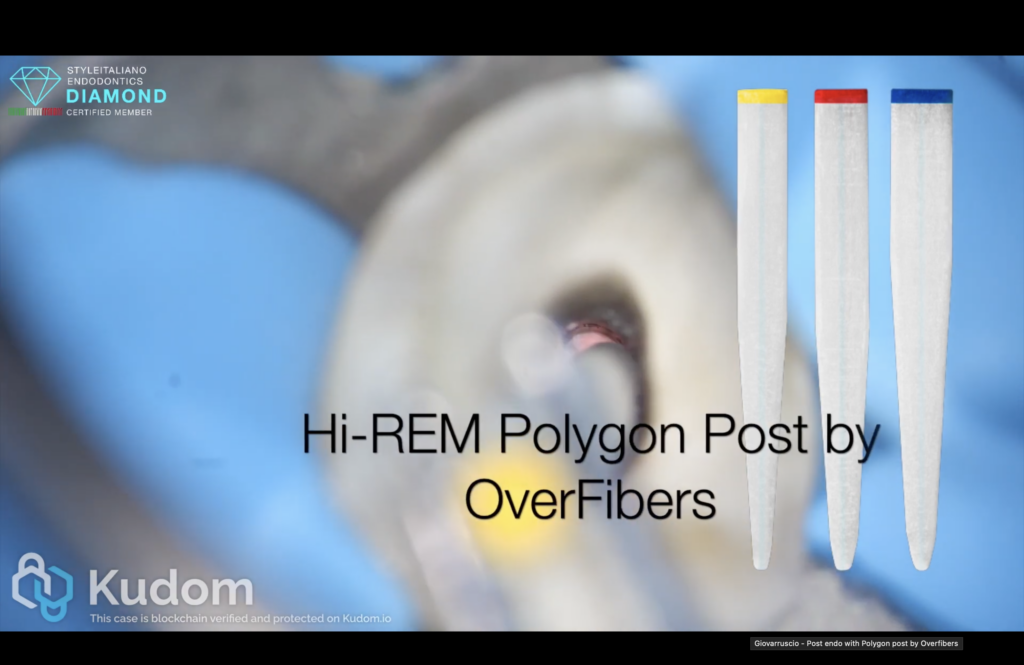
Hi-Rem Polygon Post
The Hi-Rem Polygon Post represents a shift in fiber post design, featuring a non-circular cross-section. This morphology allows:
- Anatomical Mapping: Superior adaptation to the buccolingual extension typical of oval canals.
- Dentin Preservation: By avoiding over-enlargement of the canal, it maintains a higher "ferrule effect" and critical root thickness.
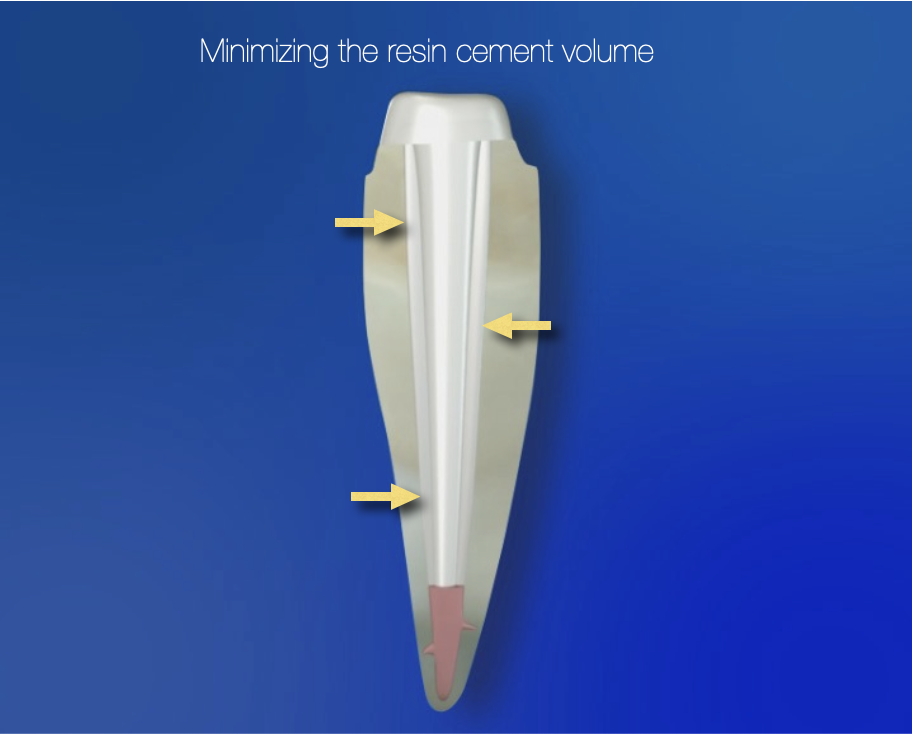
Fig. 2
- Stress Distribution: By maximizing the post’s resistant section and minimizing the resin cement volume, the system achieves a more homogeneous stress distribution under occlusal loading.
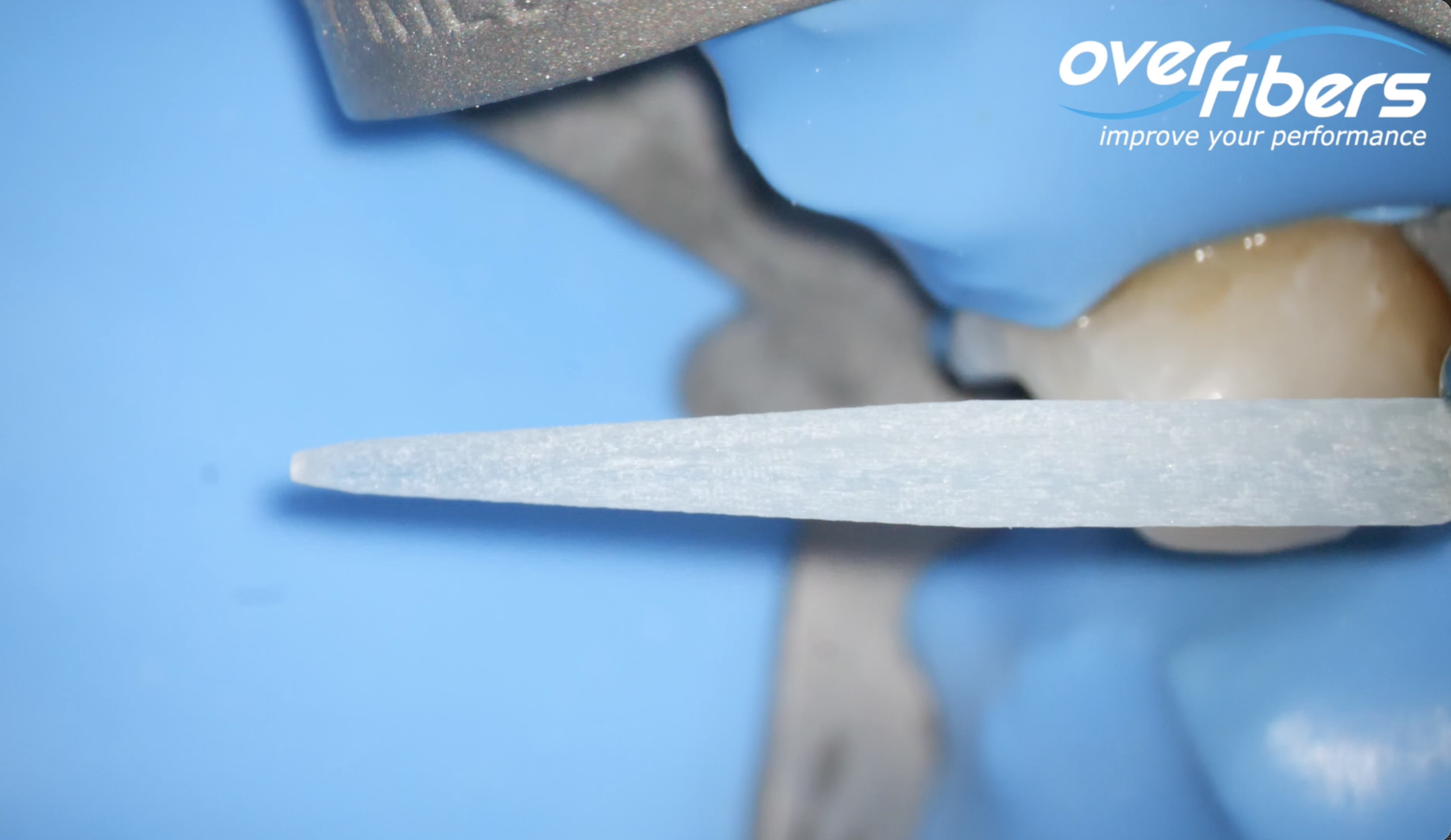
Fig. 3
Safety Protocols: The Hi-Rem Technology
A critical factor in long-term success is the feasibility of retreatment. The Hi-Rem Polygon Post incorporates a longitudinal blue polymer macro-fiber located in the neutral axis. This serves as a visual and mechanical guide for ultrasonic or rotary removal, significantly reducing the risk of root perforation or heat generation during decommissioning.
Luting Interface: OverCEM SA
The chemical interaction between the post and the dentin is managed by OverCEM SA, a dual-curing self-adhesive resin cement.
- Adhesion Mechanism: The cement eliminates phosphoric acid etching and bonding steps, reducing technique sensitivity and the risk of enzymatic degradation of the hybrid layer.
- Surface Micromorphology: The inherent high surface roughness of Overfibers posts enhances mechanical interlocking, rendering silanization an optional procedural step.
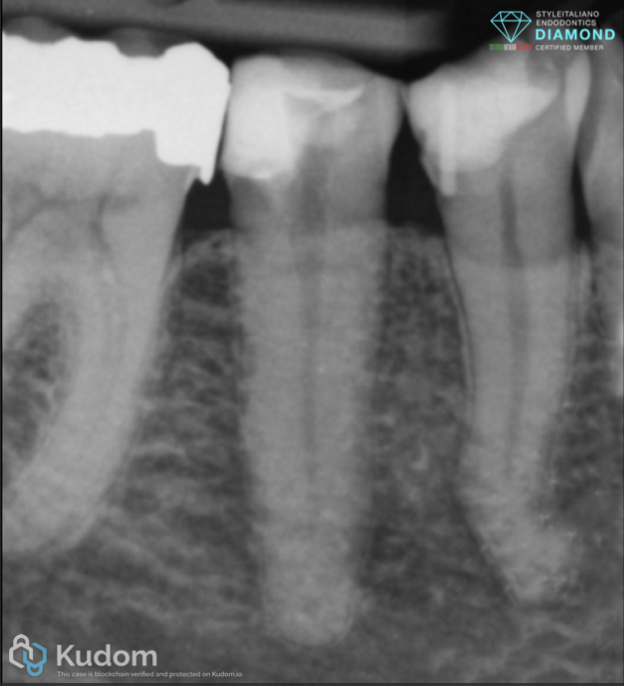
Fig. 4
Case Report
Clinical Presentation & Diagnostic Assessment
A patient presented with a symptomatic mandibular second premolar requiring endodontic treatment. Post-endodontic evaluation revealed significant loss of dental tissue, with wall thickness deemed insufficient to support a direct restoration without reinforcement. Radiographic and clinical probing confirmed a markedly oval cross-section of the canal orifice.
Treatment Planning
To maximize the "ferrule effect" and protect the thin residual walls, a conservative approach was selected:
- Placement of a non-circular Hi-Rem Polygon Post to match the natural anatomy.
- Luting with OverCEM SA dual-cure self-adhesive cement.
- Final restoration via an indirect restoration (Onlay/Crown) to ensure cusp protection.
Clinical Procedure
- Post Space Preparation: The canal was prepared conservatively. The Hi-Rem Polygon Post allowed for a precise fit within the buccolingual extension, preventing the need for "circularizing" the preparation, which would have dangerously thinned the mesiodistal walls.
- Post Selection: A translucent Polygon post was selected for its high resistance and light-conducting properties.
- Luting & Polymerization: The canal was cleaned and dried; OverCEM SA was delivered directly into the space. The post was seated without additional bonding agents. The dual-cure nature of the cement, aided by the post's translucency, ensured a complete degree of conversion (DC%) even in the apical regions.
Outcome
The use of a non-circular section provided an optimal "friction fit" and minimized cement thickness, creating a stable foundation. The tooth was successfully prepared for the final prosthetic phase, having preserved the maximum amount of sound tissue possible.
The use of translucent fiber posts facilitates light transmission in the apical thirds, ensuring the activation of dual-cure cements where light intensity is usually attenuated. The combination of an anatomically-shaped post and a self-adhesive luting agent minimizes the polymerization shrinkage stress (specifically the C-factor within the root canal), as the volume of the cement is kept to a functional minimum.
Conclusions
The synergy between Hi-Rem Polygon Post and OverCEM SA offers a predictable and conservative approach for the restoration of stressed abutments and teeth with non-circular morphologies. This protocol prioritizes the preservation of dental tissue and simplifies clinical workflows without compromising the mechanical stability of the tooth-restoration complex.