Mini Sequence - Mega Performance: That’s R One Mini
11/12/2025
Mohamad Zaafrany
Warning: Undefined variable $post in /home/styleendo/htdocs/styleitaliano-endodontics.org/wp-content/plugins/oxygen/component-framework/components/classes/code-block.class.php(133) : eval()'d code on line 2
Warning: Attempt to read property "ID" on null in /home/styleendo/htdocs/styleitaliano-endodontics.org/wp-content/plugins/oxygen/component-framework/components/classes/code-block.class.php(133) : eval()'d code on line 2
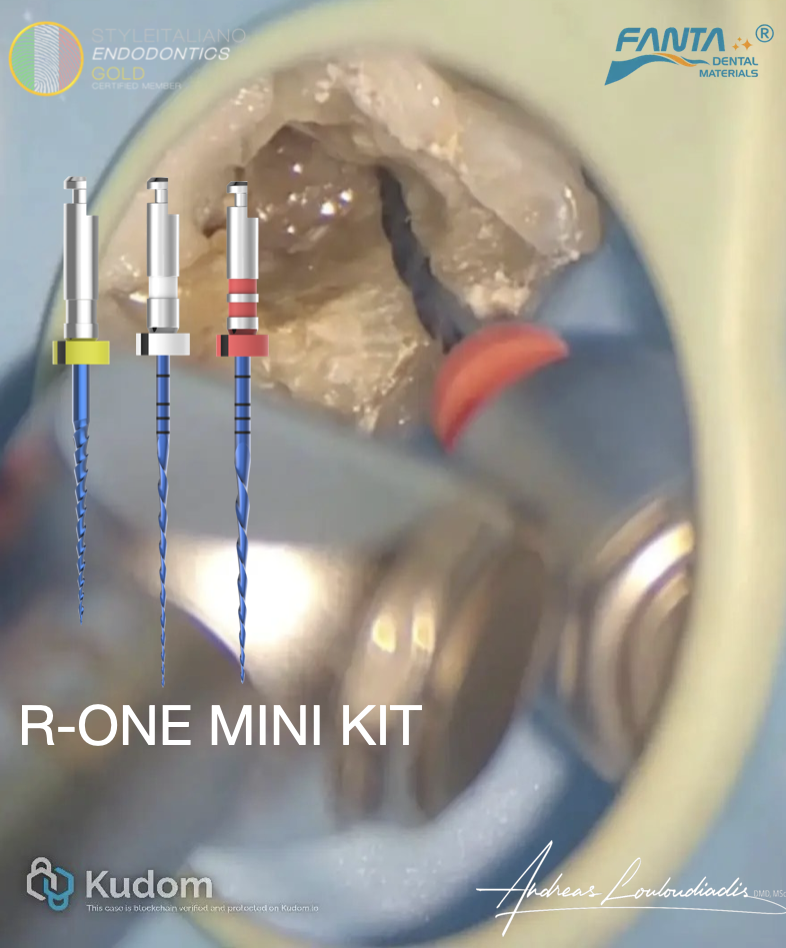
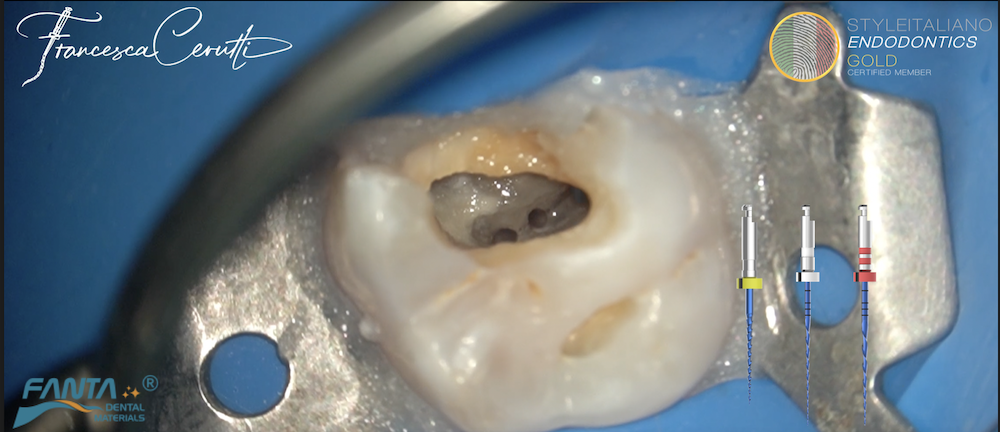
Some lower molar canals stretch like fine capillaries, slim and quietly curved, shaping them could be quite challenging that require a smart shaping system that should be as efficient and safe while performing inside the canal
The R1 Mini reciprocating fire system embodies this idea through a minimal shaping protocol with a gentle regressive taper helps preserve anatomy specially at the periceervical dentin zone .
With the Double S cross section and reciprocating motion it should be a good selection for treating such kind of cases.
However in this case we used the file in rotary motion in counter clock wise direction on OTR mode to combine both efficiency and safety
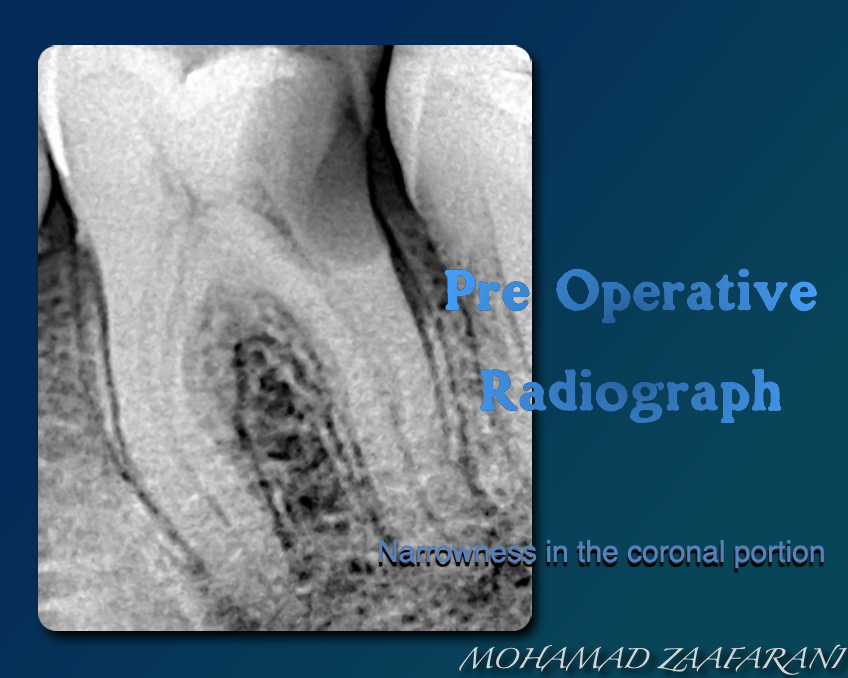
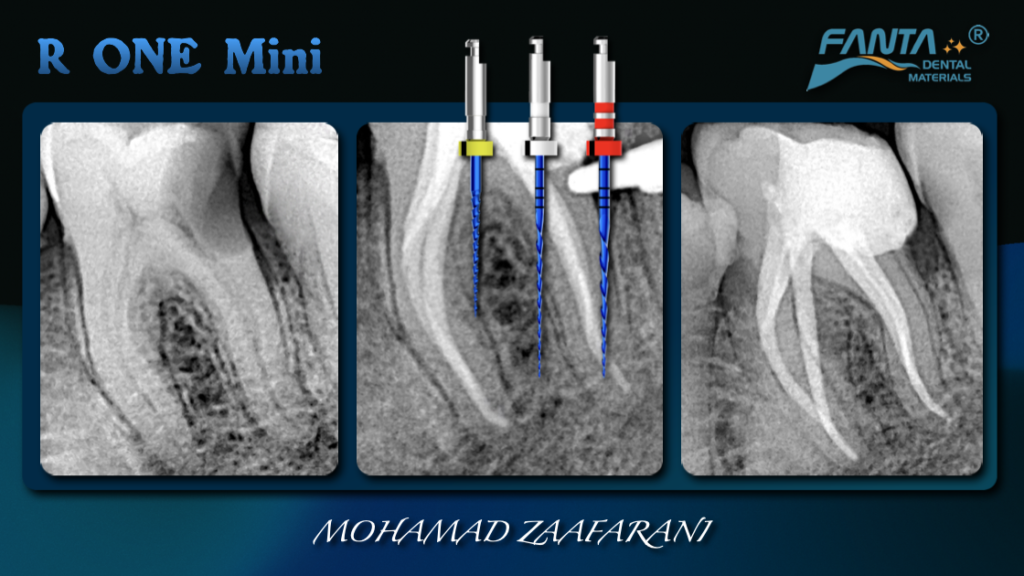
Fig. 1
Preoperative radiograph
Tooth no. 36 was diagnosed as Necrotic tooth with Chronic Apical Periodontitis
From preoperative radiograph it was evident the presence of deep distal caries exposing the pulp that requires a pre endodontic build up for more control over irrigant solutions and isolation.
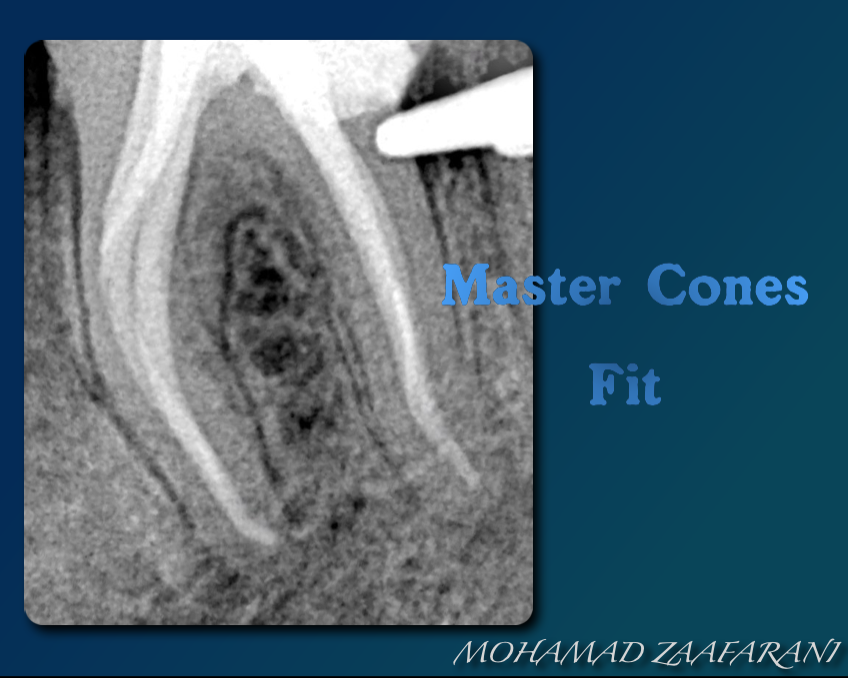
Fig. 2
Master cone fit and working length radiograph!
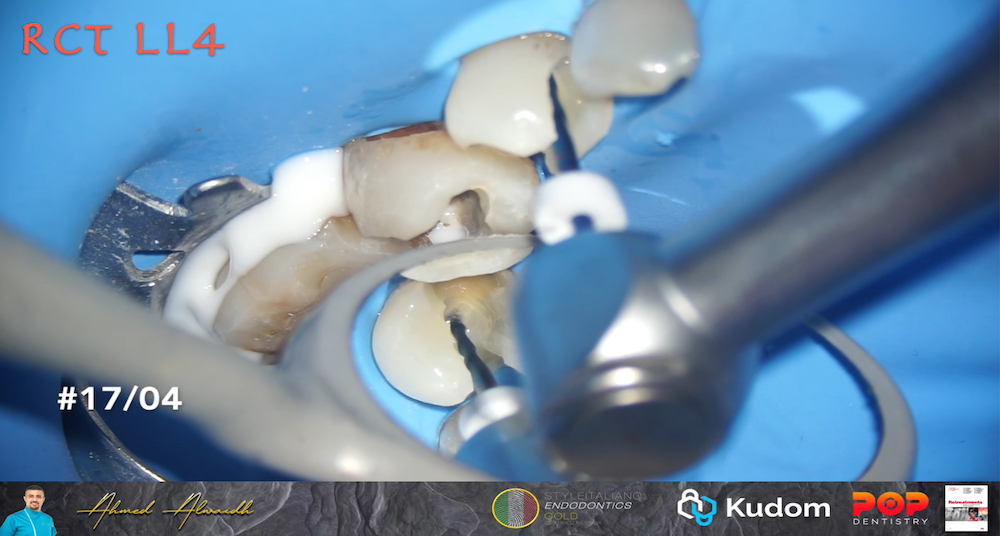
A conservative preparation was done using R1 mini system in rotary motion in counter clock wise direction with OTR function on for more safe canals shaping
Two files only used from the MINI sequence
The orifice shaper with diameter of 19.05 followed by manual glide path. Then shaping file of size 25.06 with a regressive taper design and maximum flutes diameter of 1.1mm to maintain a conservative shaping specially at the pericervical region
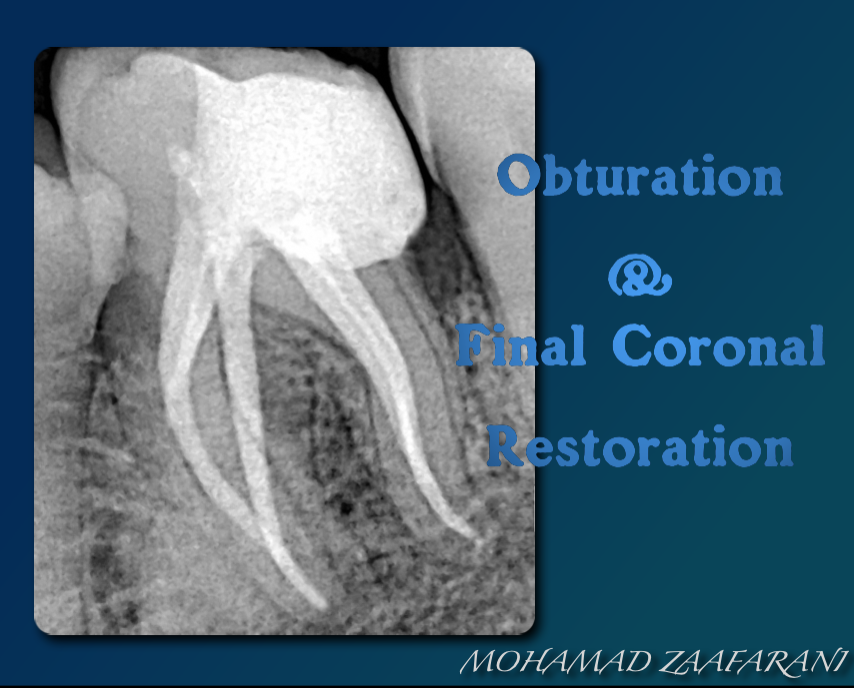
Fig. 3
Post operative radiograph showing obturation using modified heat technique and bioceramic sealer in mesial canals and passive hydraulic multiple cones obturation with BC sealer in Distal canal.
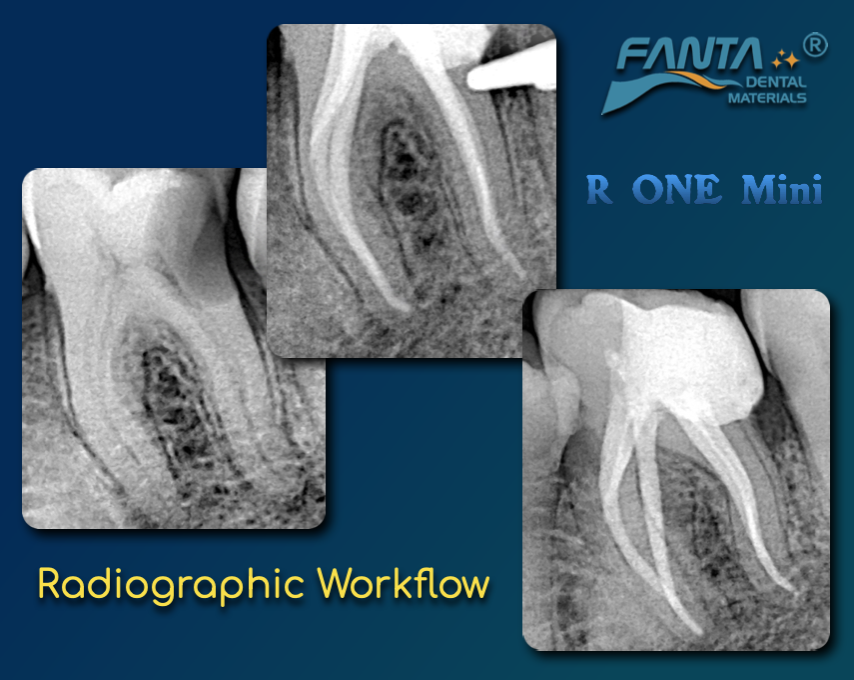
Fig. 4
Radiographic workflow
Video of the procedure
Conclusions
In conclusion, managing long and narrow canals demands an instrument that can deliver accuracy without compromising safety. The R1 Mini system provides this balance through its minimal sequence, regressive taper, and Double-S cross-section, enabling clinicians to respect the natural shape while maintaining pericervical strength. Although the file is designed for reciprocation, its performance in rotary counter-clockwise OTR mode in this case demonstrated a valuable fusion of efficiency and control. This adaptability highlights the versatility of the R1 Mini and reinforces its suitability for shaping delicate, narrow canals in lower molars.
Bibliography
Yared G. Canal preparation using only one Ni-Ti rotary instrument: preliminary observations. Int Endod J 2008;41:339-344
The endodontic Glidepath: "Secret to rotary safety”. John D West Dent Today 2010 Sep;29(9):86, 88, 90-3.
Manual versus mechanical endodontic glide path. John D West Dent Today 2011 Jan;30(1):136, 138, 140
You SY, Bae KS, Baek SH, Kum KY, Shon WJ, Lee W. Lifespan of one nickel-titanium rotary file with reciprocating motion in curved root canals. J Endod 2010;36:1991-1994.
Wan J, Rasimick BJ, Musikant BL, Deutsch AS. A comparison of cyclic fatigue resistance in reciprocating and rotary nickel-titanium instruments. Aust Endod J 2011;37: 122-127.