Endodontics as a Strategy to Postpone Implant Placement: A Seven-Year Follow-Up of Two Maxillary Incisors Affected by Root Resorption
07/11/2026
Warning: Undefined variable $post in /home/styleendo/htdocs/styleitaliano-endodontics.org/wp-content/plugins/oxygen/component-framework/components/classes/code-block.class.php(133) : eval()'d code on line 2
Warning: Attempt to read property "ID" on null in /home/styleendo/htdocs/styleitaliano-endodontics.org/wp-content/plugins/oxygen/component-framework/components/classes/code-block.class.php(133) : eval()'d code on line 2
A Longitudinal Clinical Case Report
Introduction
Pathological root resorption is an odontoclast-mediated process that can progressively compromise radicular integrity and tooth prognosis. Its management requires accurate diagnosis, assessment of remaining dental structure, and individualized treatment planning [1].
The contemporary therapeutic paradigm should not regard endodontics and implantology as competing disciplines. Instead, they represent complementary interventions within a sequential, biologically oriented treatment strategy.
Current evidence indicates that appropriately treated and restored endodontically compromised teeth can demonstrate favorable long-term survival. Furthermore, systematic reviews have not established consistent superiority of implant-supported restorations over preserved natural teeth across all clinical scenarios [2,3].
Clinical Case
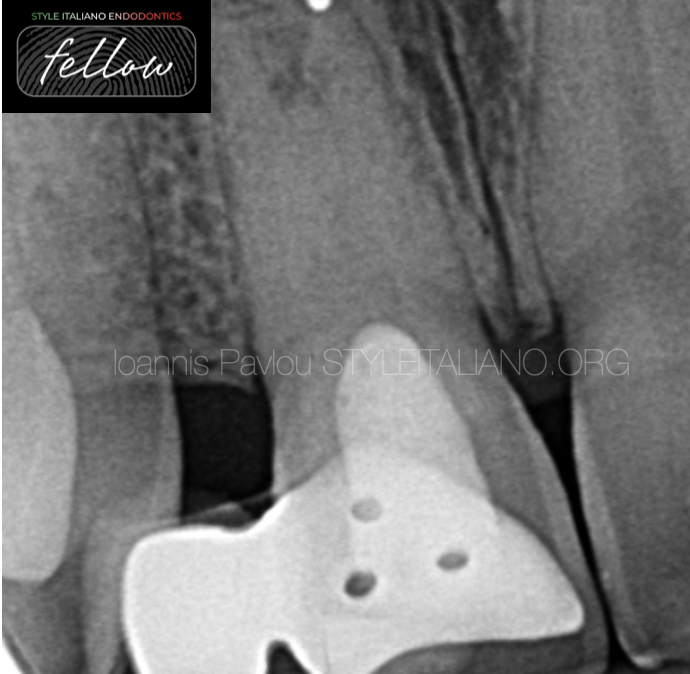
In 2018, a 26-year-old female patient presented with two maxillary central incisors affected by root resorption and a compromised long-term prognosis.
Despite the structural limitations, a tooth-preserving endodontic strategy was selected rather than immediate extraction and implant placement.
Longitudinal radiographic documentation demonstrated the subsequent clinical course, with preservation of the natural dentition for approximately seven years.
In 2025, tooth 11 developed a vertical root fracture, representing a decisive change in its prognosis. Given the compromised structural integrity, extraction and implant-supported rehabilitation became the preferred treatment option.
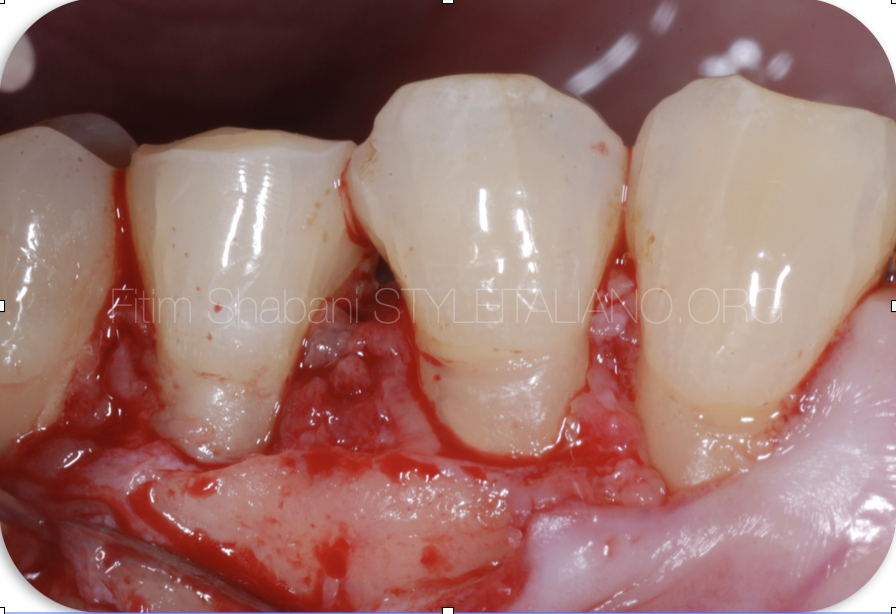
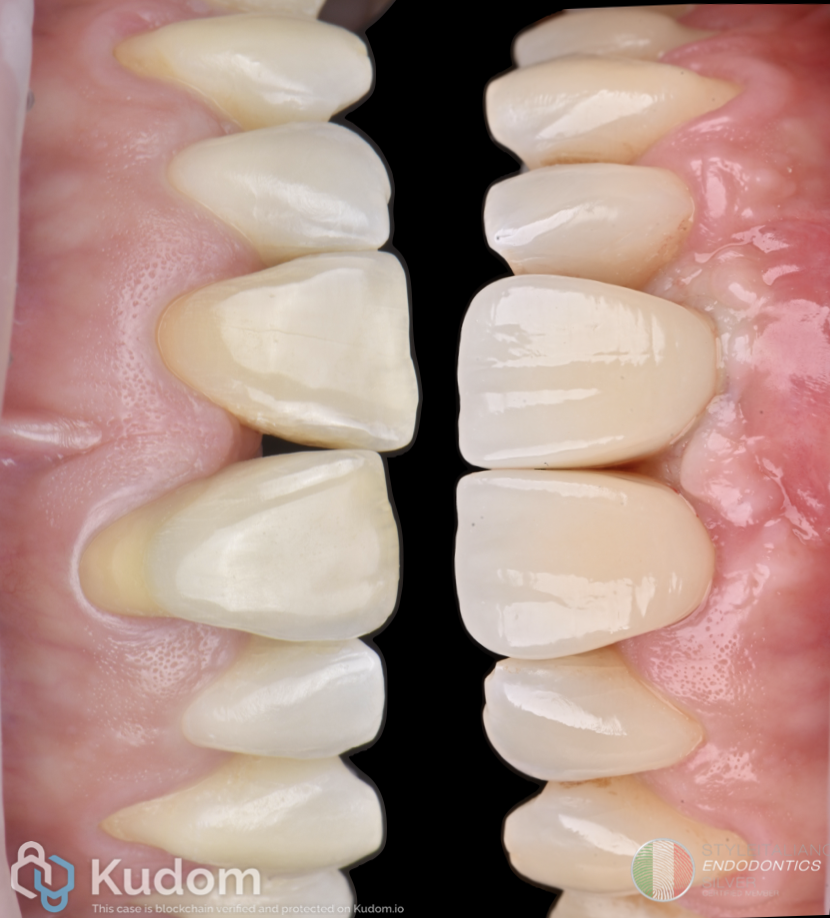
In 2026, the missing incisor was rehabilitated with a dental implant and a definitive prosthetic restoration, while tooth 21 remained preserved.
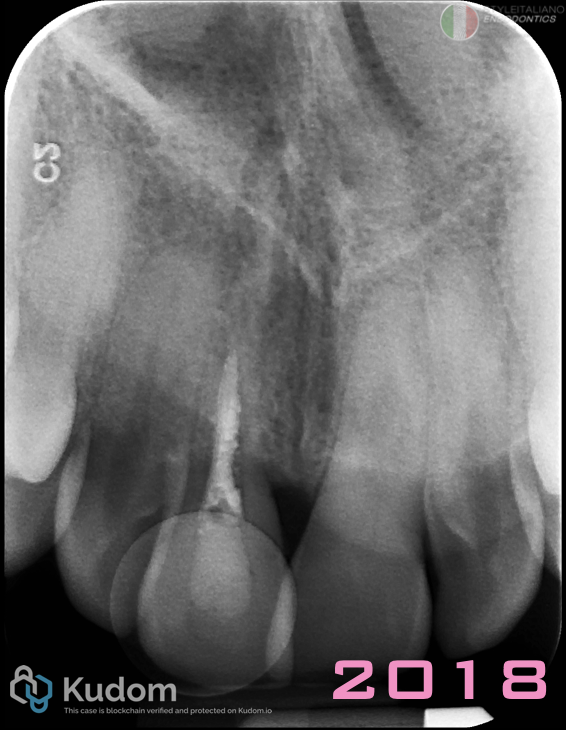
Fig. 1
Pre op rx
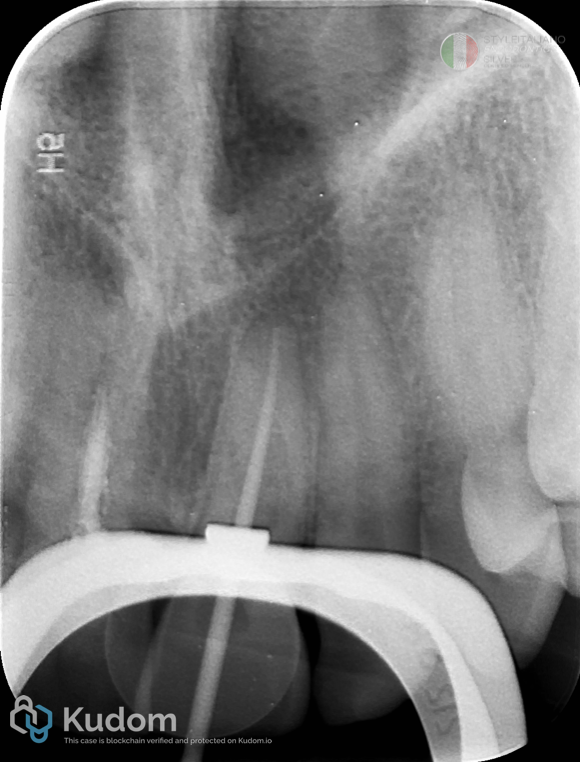
Fig. 2
Cone fit
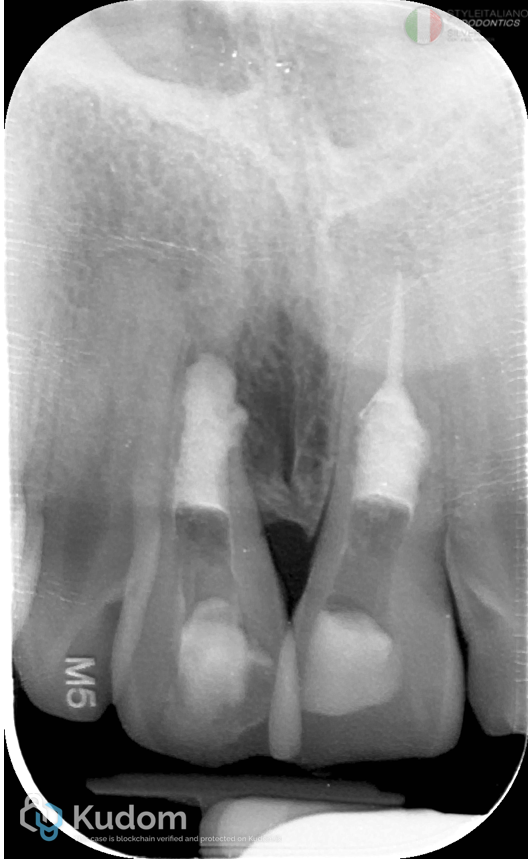
Fig. 3
Post op
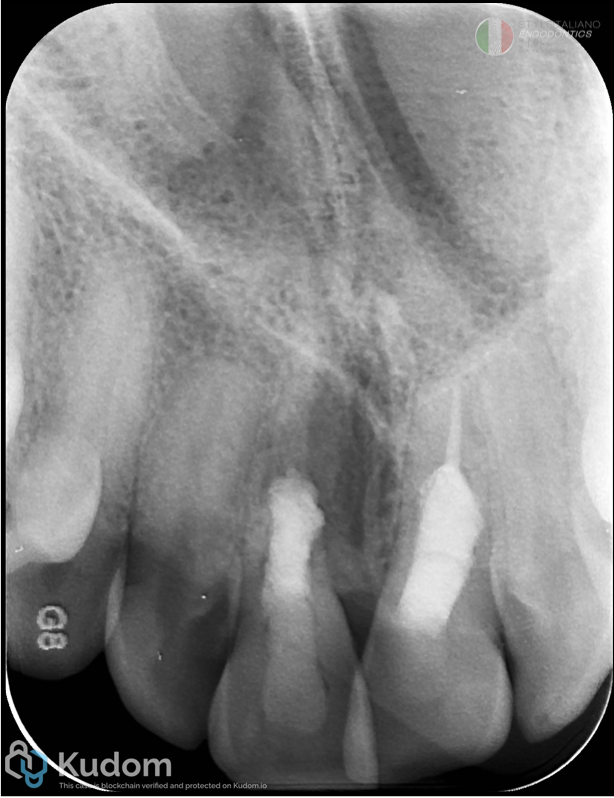
Fig. 4
7 years follow up
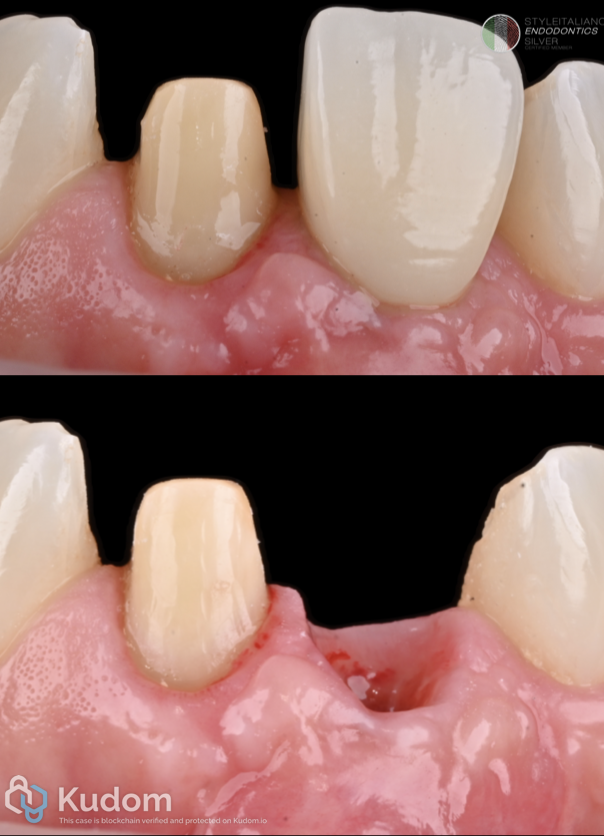
Fig. 5
Extraction
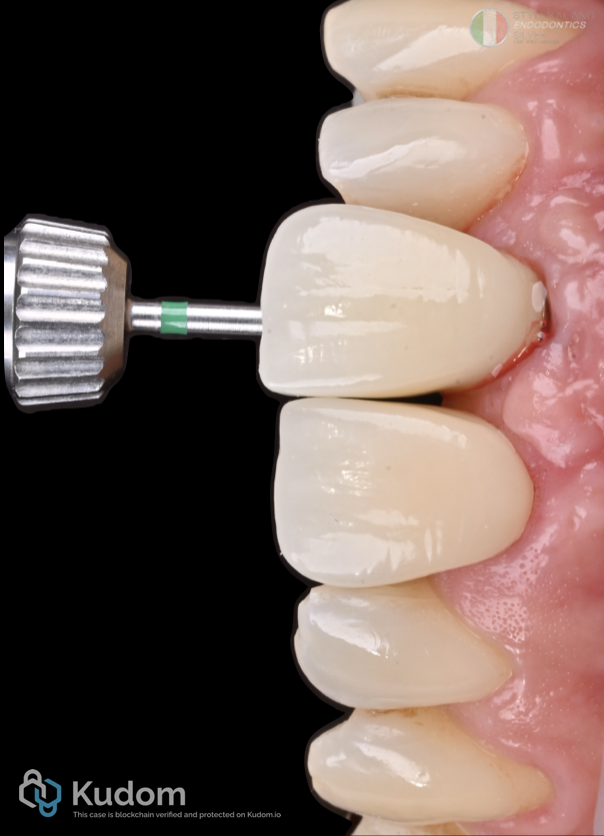
Fig. 6
Implant placement
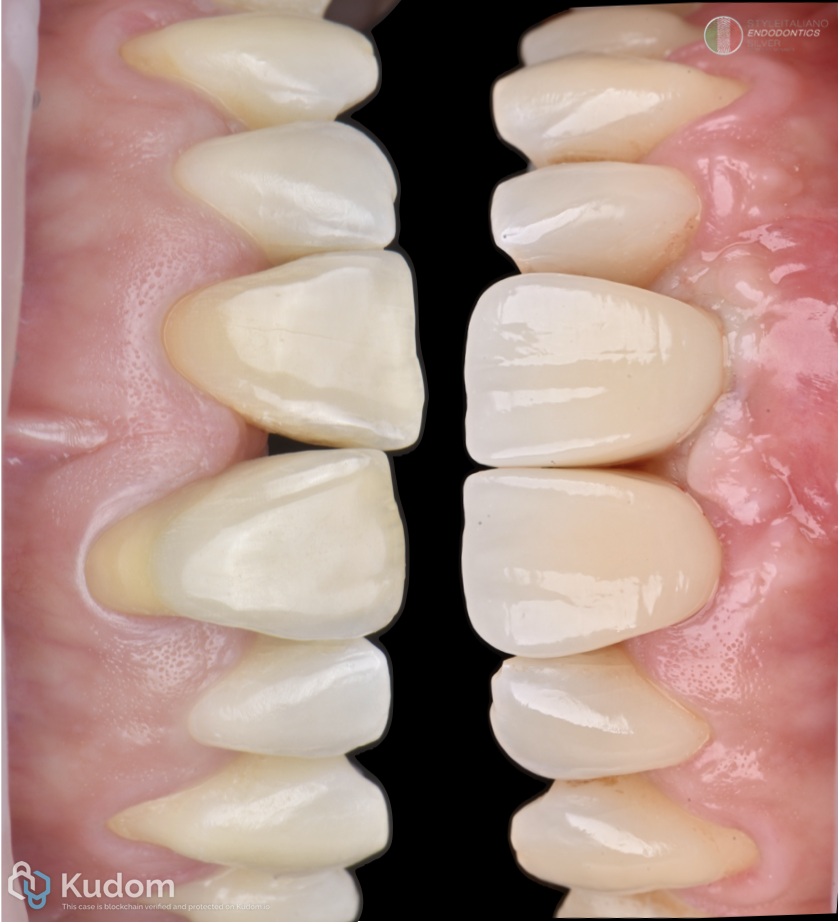
Fig. 7
Pre and post op
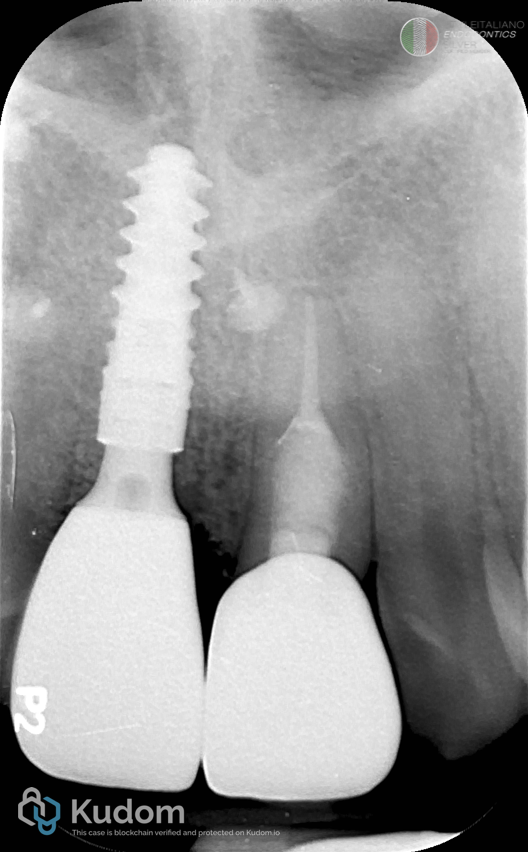
Fig. 8
8 years follow up on 21
Follow upl implant 11
Discussion
The most significant aspect of this case is not the eventual loss of tooth 11, but the seven-year interval of natural tooth preservation achieved before implant placement became necessary.
Vertical root fractures are recognized causes of tooth loss in endodontically treated teeth. Their occurrence may reflect a complex interaction of pre-existing structural compromise, mechanical loading, and remaining dentinal architecture [4]. Importantly, the subsequent development of a fracture does not, by itself, demonstrate failure of the original clinical decision to preserve the tooth.
Tooth survival, biological healing, and functional longevity represent distinct outcome measures and should be evaluated independently.
In young patients, treatment planning should additionally consider the anticipated lifetime of restorative interventions. Extraction is irreversible, whereas successful tooth preservation may defer the need for implant surgery and subsequent implant-related maintenance.
Levin and Halperin-Sternfeld [5] emphasized that implant survival does not necessarily exceed that of adequately treated and maintained natural teeth. More recent systematic evidence confirms that both approaches provide favorable outcomes, although comparative long-term superiority remains uncertain [3].
Thus, implant-free survival time may represent a clinically relevant additional endpoint when evaluating conservative treatment in teeth with a guarded prognosis.
Conclusions
This longitudinal case highlights a fundamental principle of contemporary endodontics: preserving a compromised natural tooth may remain a successful therapeutic decision even when extraction eventually becomes unavoidable.
Seven additional years of function represent a meaningful clinical outcome, particularly in a young patient facing decades of future dental maintenance.
Implant placement should therefore be considered when tooth preservation is no longer biologically or structurally reasonable, rather than as an automatic alternative to technically challenging endodontic treatment.
The ultimate objective of endodontics is not necessarily to prevent implant placement forever, but to preserve the natural tooth for as long as its maintenance remains clinically justified.
Bibliography
- Patel S, Krastl G, Weiger R, et al. ESE position statement on root resorption. International Endodontic Journal. 2023;56(7):792–801. DOI: 10.1111/iej.13916. PMID: 36942472.
- Ng YL, Mann V, Gulabivala K. Tooth survival following non-surgical root canal treatment: a systematic review of the literature. International Endodontic Journal. 2010;43(3):171–189. DOI: 10.1111/j.1365-2591.2009.01671.x. PMID: 20158529.
- Sinsareekul C, Saengthong-Aram P, Limpuangthip N. Survival, complications, and patient-reported outcomes of endodontically treated teeth versus dental implant-supported prostheses: A systematic review. Journal of Prosthetic Dentistry. 2025;133(3):669–676. DOI: 10.1016/j.prosdent.2024.02.007. PMID: 38443242.
- Patel S, Bhuva B, Bose R. Present status and future directions: vertical root fractures in root filled teeth. International Endodontic Journal. 2022;55(Suppl 3):804–826. DOI: 10.1111/iej.13737. PMID: 35338655.
- Levin L, Halperin-Sternfeld M. Tooth preservation or implant placement: a systematic review of long-term tooth and implant survival rates. Journal of the American Dental Association. 2013;144(10):1119–1133. DOI: 10.14219/jada.archive.2013.0030. PMID: 24080928.