Curvatures, calcifications, long roots: one solution many challenges.
29/06/2026
Fellow
Warning: Undefined variable $post in /home/styleendo/htdocs/styleitaliano-endodontics.org/wp-content/plugins/oxygen/component-framework/components/classes/code-block.class.php(133) : eval()'d code on line 2
Warning: Attempt to read property "ID" on null in /home/styleendo/htdocs/styleitaliano-endodontics.org/wp-content/plugins/oxygen/component-framework/components/classes/code-block.class.php(133) : eval()'d code on line 2
Canal curvatures is a difficult anatomical variation. Calcifications as well. Long roots make treatment complicated. What if all these challenges coincide. We need a simple, feasible and effective protocol to manage such cases. In this article I will try to explain it step by step.
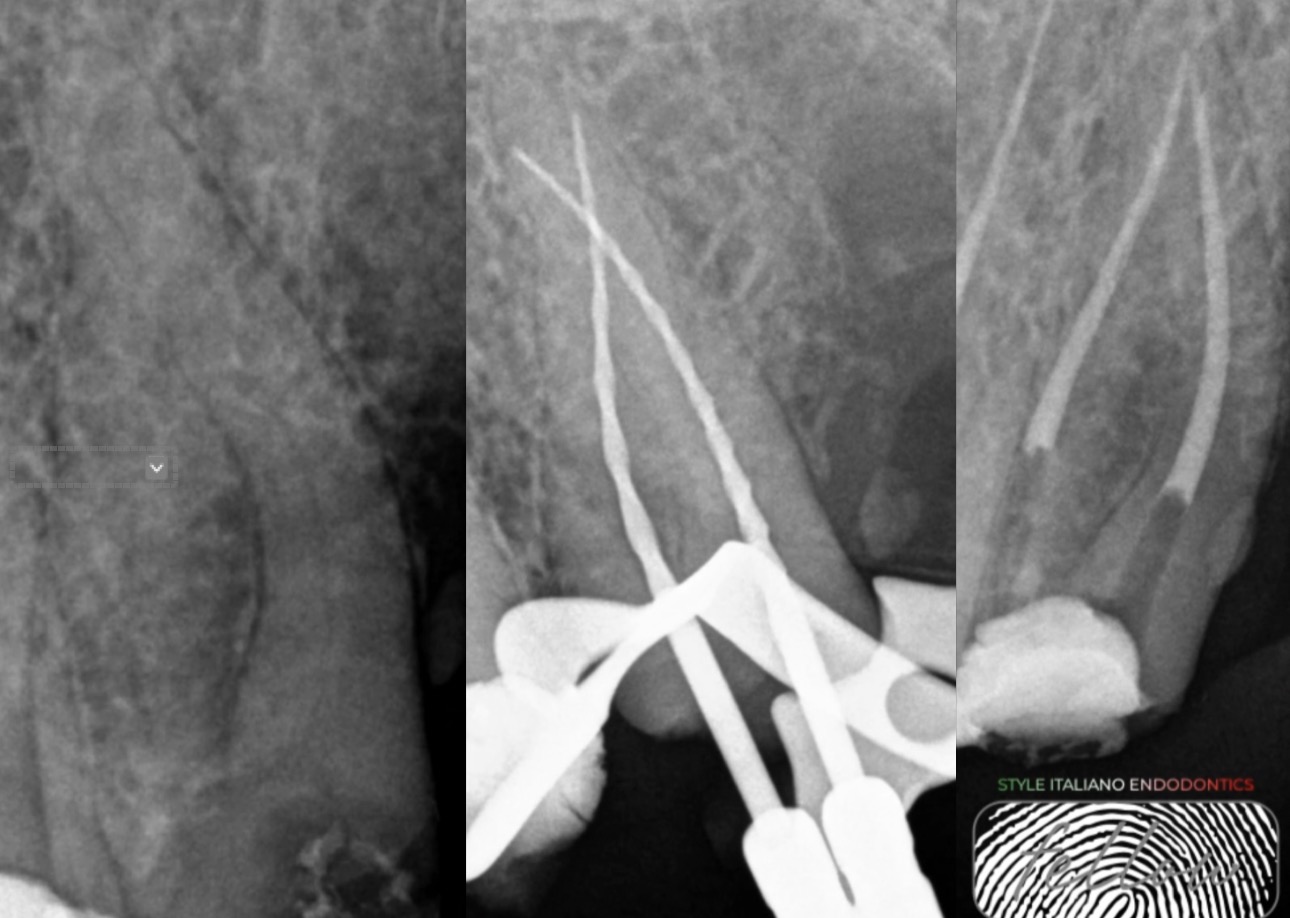
Fig. 1
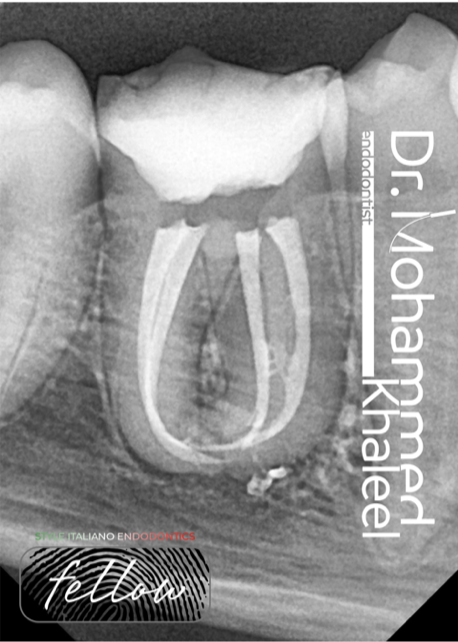
Maxillary premolar #24 with heavily destroyed crown and symptoms of pulpitis.
After caries removal, the tooth was deemed restorable.
The first step, was as always coronal preflaring in order to remove coronal obstructions.
Then I used a reciprocationg instrument 20.04 with a flat side in up to last 6mm, in order to effectively remove debris, minimizing the chance of separation.
After 2-3 mm, I remove the instrument, irrigate, scout with a #10 file and repeat.
As you can appreciate in the final result, the canal anatomy was respected, the working length was reached safely and the shaping was quite conservative in the coronal area.
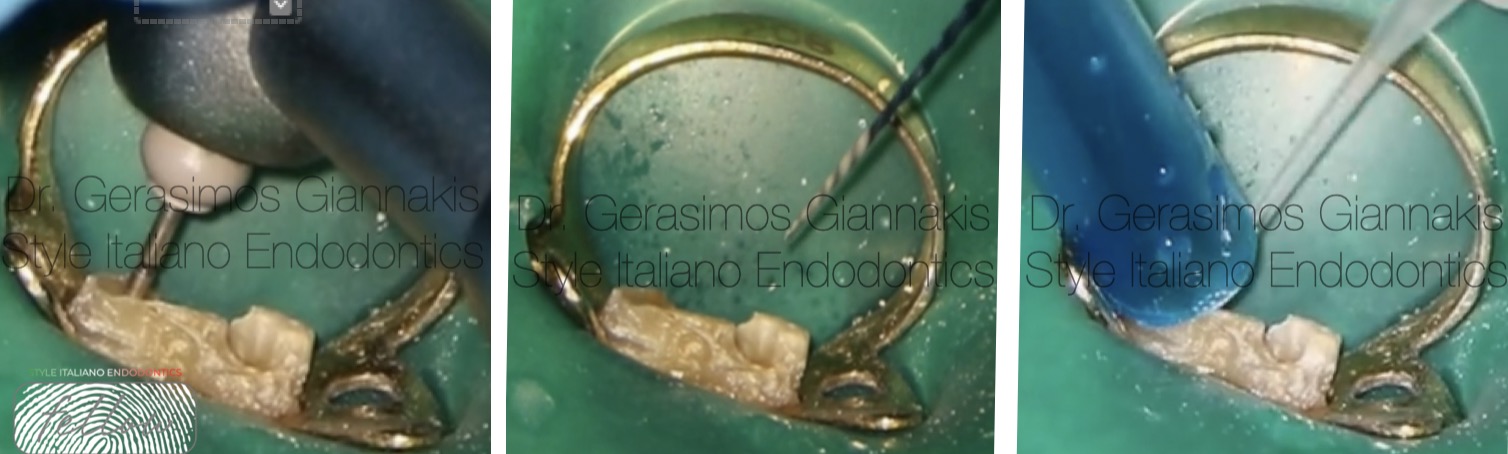
Fig. 2
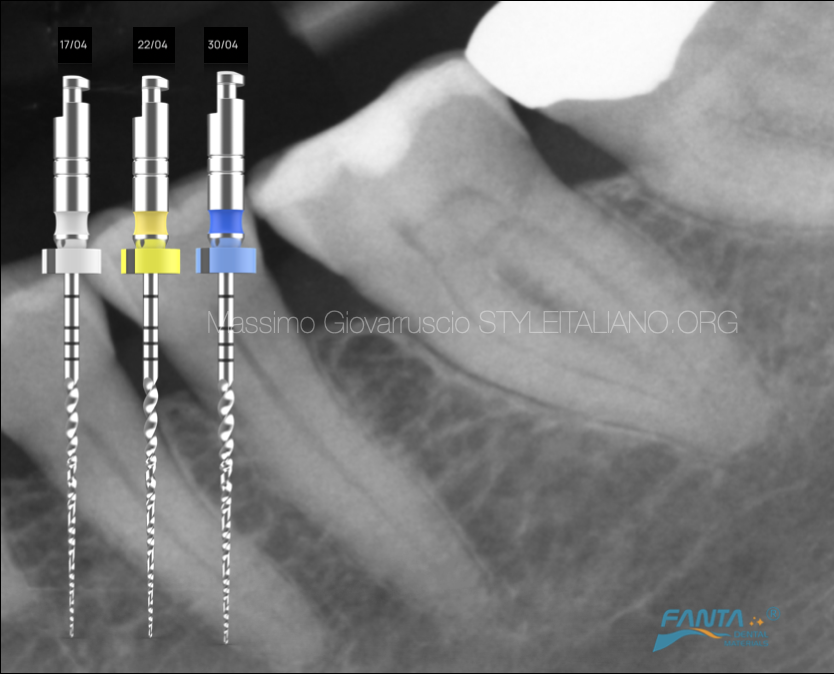
In this picture I show you the protocol. Scouting with hand file, reach that point with mechanical files, irrigate, repeat.
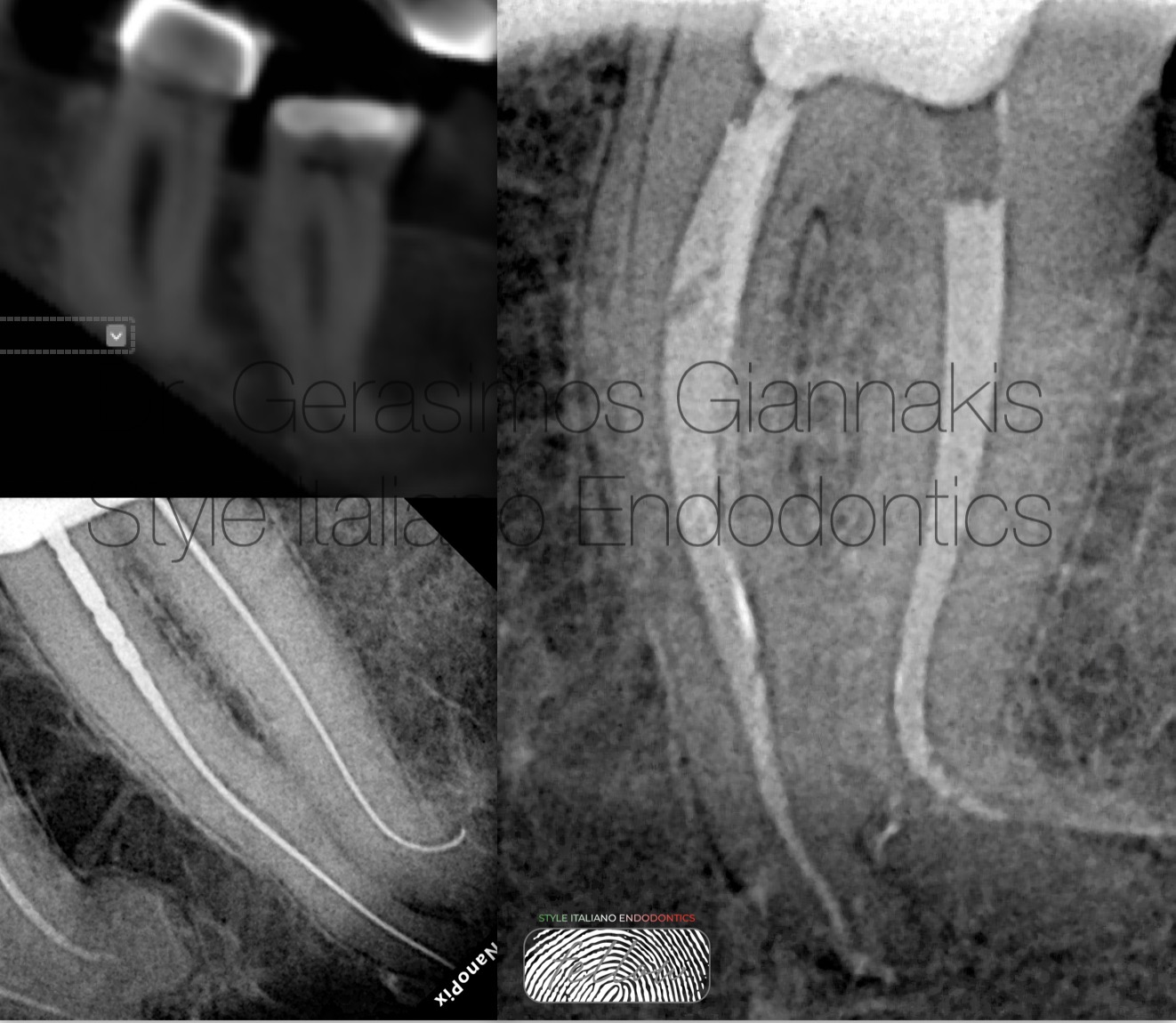
Fig. 3
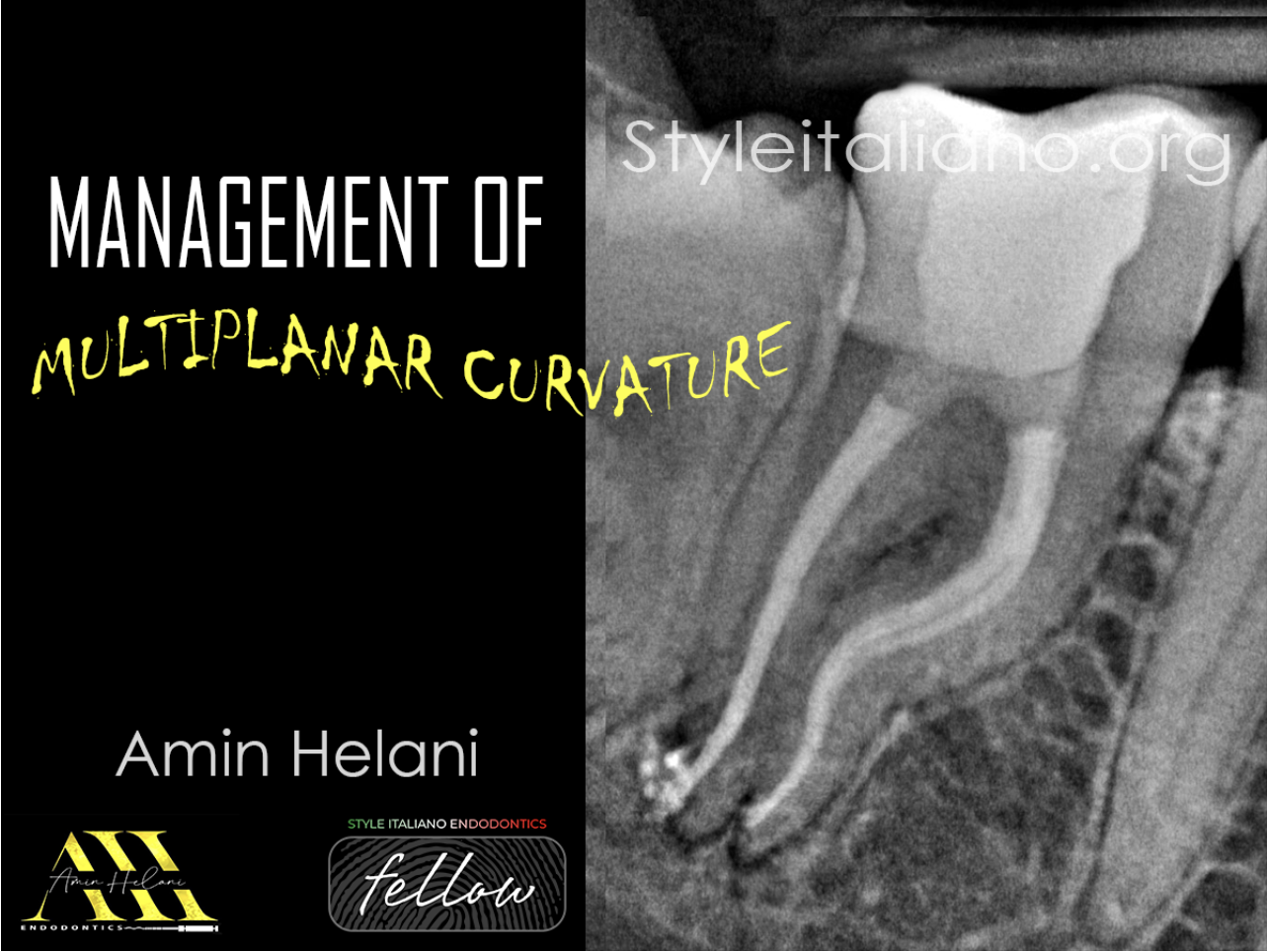
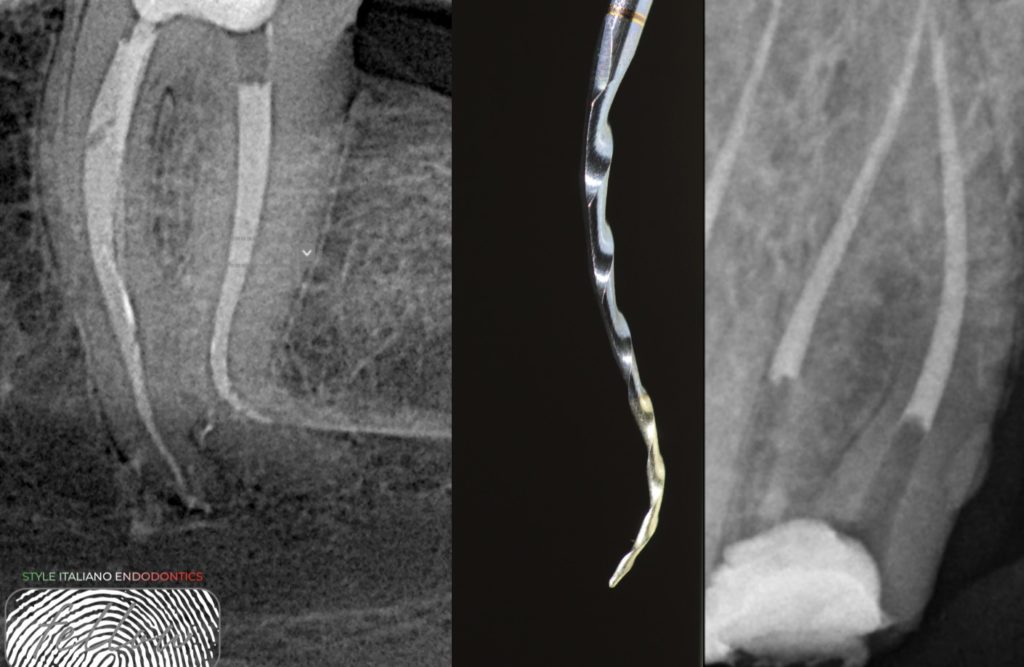
Mandibular molar with heavily destroyed crown. Symptoms of pulpitis. In this case, I wanted a CBCT in order to have clear understanding of the endodontic anatomy. As you can see, we have long roots (31mm), heavily calcified and curved.
The protocol however remains the same.
Coronal preflaring, crown-down, glidepath and combination of rotating and reciprocating files.
Irrigation between each instrument, recapitulation, and activation.
Fig. 4
Gerasimos Giannakis
Gerasimos Giannakis received the Doctor of Dental Surgery degree from the University of Athens in 2018.
He has special interest in the field of endodontics, restorative dentistry and microsurgical techniques.
Since then has completed
STYLE ITALIANO Daily menu 40th edition , Milan 2020
TOOTH WEAR MASTER COURSE, by Didier Dietschi 2021
EXPERT COURSE IN MASTERING SOFT TISSUE SURGERY,
In cooperation with the University of Cologne 2022
MICROSCOPE SIMULATION COURSE ON CANAL BLOCKAGE MANAGEMENT by Chaniotis, Sousa Dias, 2020
He is working as an endodontics associate in a clinic, responsible also for the restoration of endodontically treated teeth.
Working exclusively under the microscope and rubber dam, has the opportunity to document the cases.
In the Style Italiano Congress in Greece 2023, was part of the bootcamp and became fellow of the Style Italiano Endodontics community.
Conclusions
If we evaluate the root canal anatomy, prepare an appropriate approach and respect the basic principles, the result should be repeatable, safe and feasible.
The most common mistakes we do is underestimate the difficulty of tooth and rush to the working length immediately.
Bibliography
Present status and future directions: Management of curved and calcified root canals
Antonis Chaniotis, Ronald Ordinola-Zapata.
Microcomputed tomography analysis of curved root canal preparation when coronal flaring and glide path files used with heat-treated nickel titanium rotary files
Ammar AbuMostafa, Mohammed M Alrefaie, Nedal Abu-Mostafa, Fahda N Algahtani
Negotiation of Calcified Canals
Antonis Chaniotis, Hugo Sousa Dias, Anastasia Chanioti