Demystifying vertical root fractures
19/10/2026
Warning: Undefined variable $post in /home/styleendo/htdocs/styleitaliano-endodontics.org/wp-content/plugins/oxygen/component-framework/components/classes/code-block.class.php(133) : eval()'d code on line 2
Warning: Attempt to read property "ID" on null in /home/styleendo/htdocs/styleitaliano-endodontics.org/wp-content/plugins/oxygen/component-framework/components/classes/code-block.class.php(133) : eval()'d code on line 2
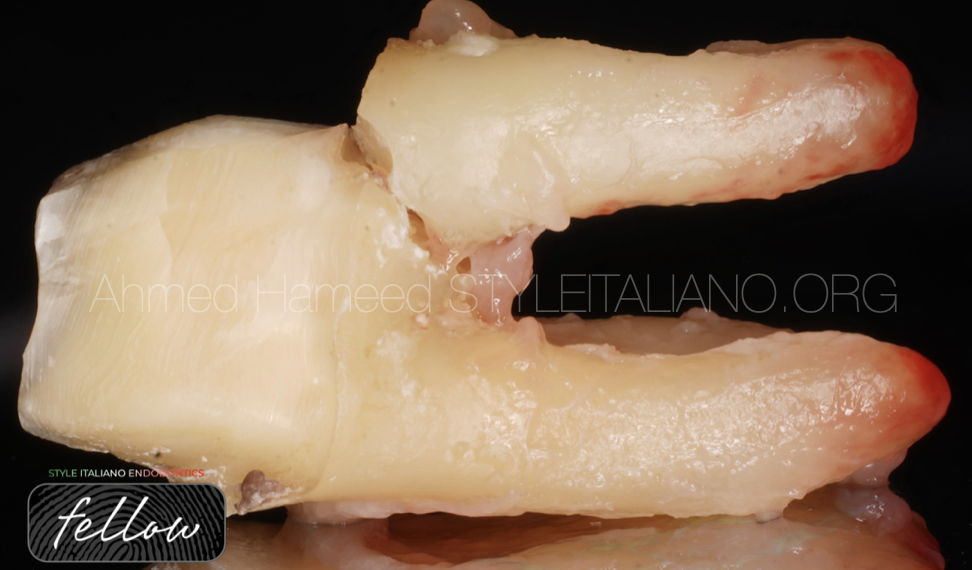
One of the challenges in endodontics is diagnosing a tooth with a vertical root fracture. These fractures are often difficult to diagnose radiographically, and the only pathognomonic clinical sign that confirms their presence is direct visual identification of the fracture.
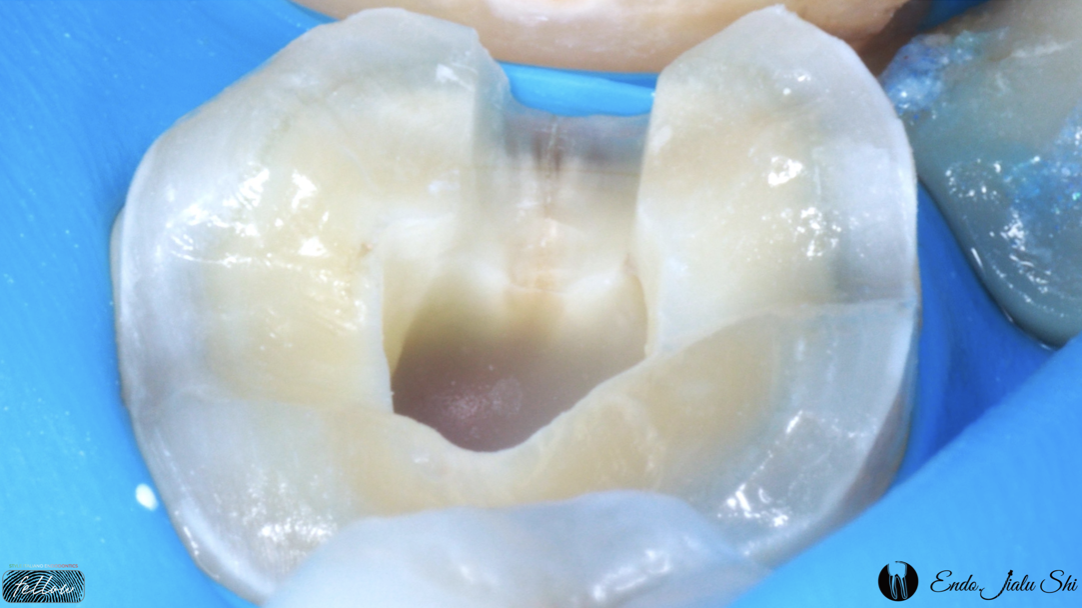
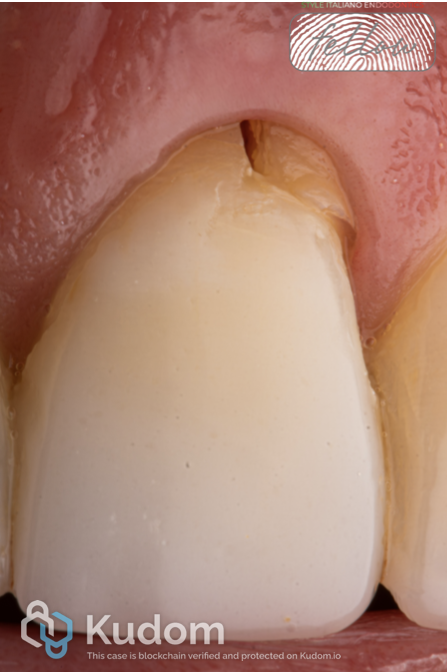
Sometimes, the fracture can be seen at the gingival margin, although magnification is usually required. However, since these fractures are often located in the root, it is usually necessary to look for them internally in the wall of the root, using an high magnification and illumination or through exploratory surgery to confirm the diagnosis.
Clinical signs that may raise suspicion of a vertical root fracture include an isolated deep periodontal probing defect, a J-shaped radiolucency, a sinus tract near the gingival margin, or a furcation lesion.
However, these clinical findings can also occur in teeth without vertical root fractures. Therefore, they should be considered signs of suspicion rather than pathognomonic signs.
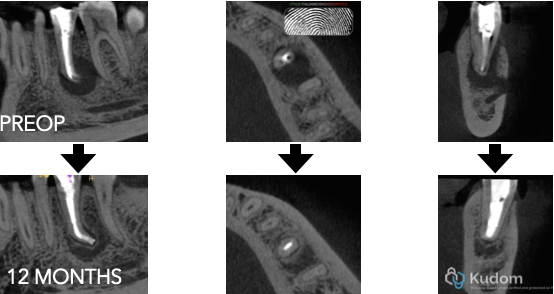
Fig. 1
Here we can see a previously root canal-treated tooth with an isolated deep periodontal probing defect, raising suspicion of a vertical root fracture. However, the defect was caused by an endodontic infection draining through the gingival sulcus. After root canal retreatment, the deep probing defect resolved, confirming that the tooth did not have a vertical root fracture.
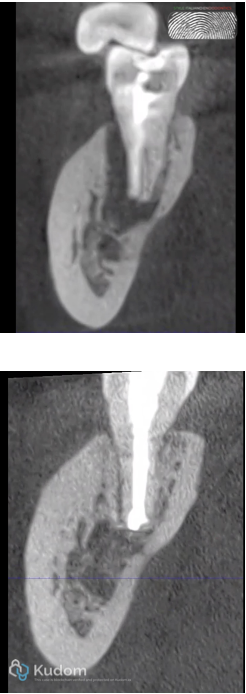
Fig. 2
A J-shaped radiolucency is also a sign that may raise suspicion of a vertical root fracture, but it is not pathognomonic, as demonstrated in this case, where the lesion resolved following root canal retreatment.
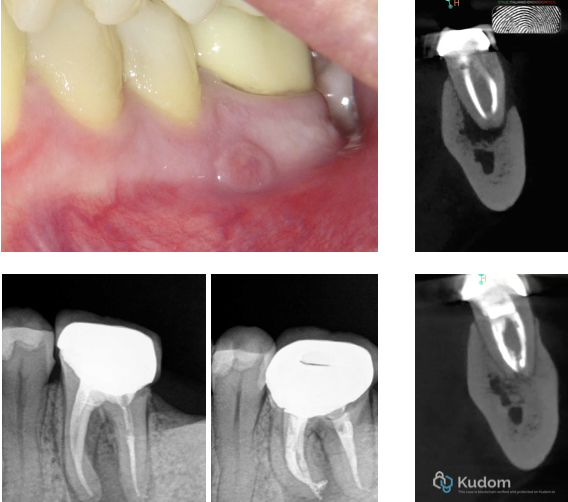
Fig. 3
A sinus tract near the gingival margin may also raise suspicion of a vertical root fracture. However, the diagnosis must be confirmed by direct visualization of the fracture, since endodontic or periodontal lesions can also present with a sinus tract near the gingival margin, as shown in this case.
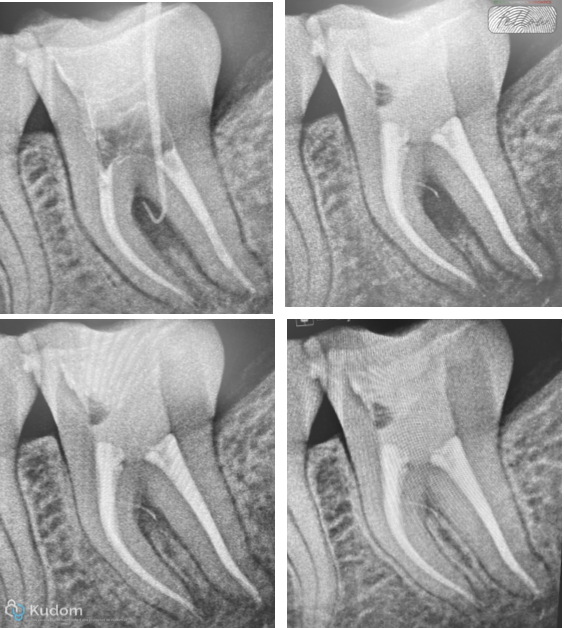
Fig. 4
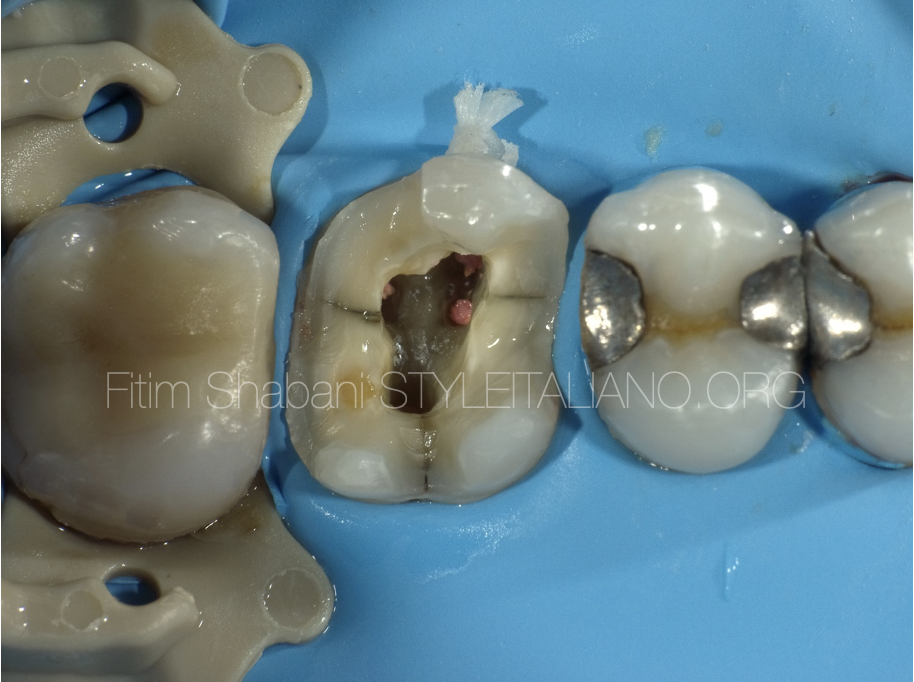
A furcation lesion is not pathognomonic of a vertical root fracture either, as demonstrated in this case
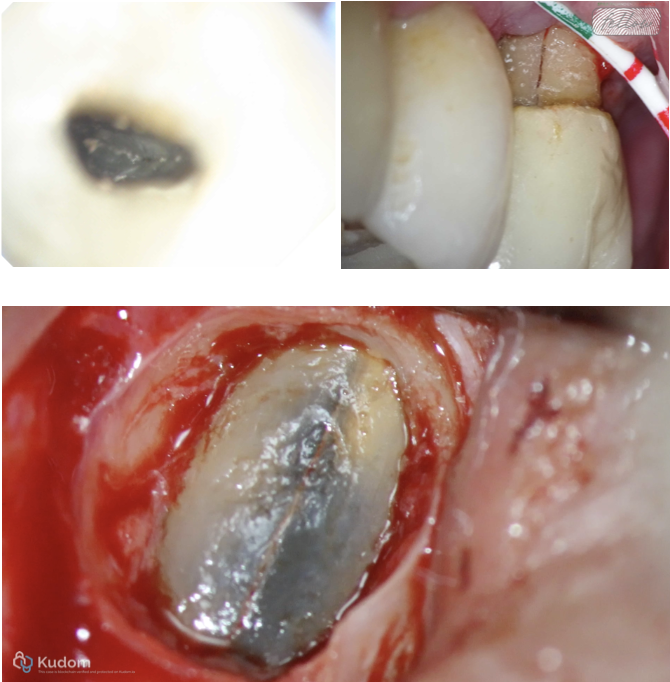
Fig. 5
The only sing that confirm us a vertical root fracture is the visualization of the fracture, through the external or the internal surface of the root.

Fig. 6
About the author:
Alberto Morales Cuellar
Degree in dentistry at the Complutense University of Madrid, 2013
Master in Advanced Endodontics at Rey Juan Carlos University, 2017
Master Periodontics and soft tissue management at CEU Cardenal Herrera, 2020
Professor of Master of Microscopic Endodontics and Apical Surgery (URJC)
Opinion leader of Zarc4Endo
Style Italiano Endodontics Fellow member
Full member of the Spanish Association of Endodontics.
Member of the American Association of Endodontists.
Winner of the Best Training Presentation of the College of Dentists of Madrid
Conclusions
In conclusion, although several clinical signs may raise suspicion of a vertical root fracture, the only way to confirm the diagnosis with certainty is through direct visualization of the fracture. Therefore, the use of magnification is highly recommended for this type of diagnosis.
Bibliography
1. Tsesis I, Rosen E, Tamse A, Taschieri S, Kfir A. Diagnosis of vertical root fractures in endodontically treated teeth based on clinical and radiographic indices: a systematic review. J Endod. 2010;36(9):1455-8. doi: 10.1016/j.joen.2010.05.003.
2. Haupt F, Wiegand A, Kanzow P. Risk factors for and clinical presentations indicative of vertical root fracture in endodontically treated teeth: a systematic review and meta-analysis. J Endod. 2023;49(8):940-52. doi: 10.1016/j.joen.2023.06.004.
3. Chang E, Lam E, Shah P, Azarpazhooh A. Cone-beam computed tomography for detecting vertical root fractures in endodontically treated teeth: a systematic review. J Endod. 2016;42(2):177-85. doi: 10.1016/j.joen.2015.10.005.
4. PradeepKumar AR, Shemesh H, Nivedhitha MS, Hashir MMJ, Arockiam S, Maheswari TNU, et al. Diagnosis of vertical root fractures by cone-beam computed tomography in root-filled teeth with confirmation by direct visualization: a systematic review and meta-analysis. J Endod. 2021;47(8):1198-1214. doi: 10.1016/j.joen.2021.04.022.