Impossible is possible with the right protocol
31/08/2026
Warning: Undefined variable $post in /home/styleendo/htdocs/styleitaliano-endodontics.org/wp-content/plugins/oxygen/component-framework/components/classes/code-block.class.php(133) : eval()'d code on line 2
Warning: Attempt to read property "ID" on null in /home/styleendo/htdocs/styleitaliano-endodontics.org/wp-content/plugins/oxygen/component-framework/components/classes/code-block.class.php(133) : eval()'d code on line 2
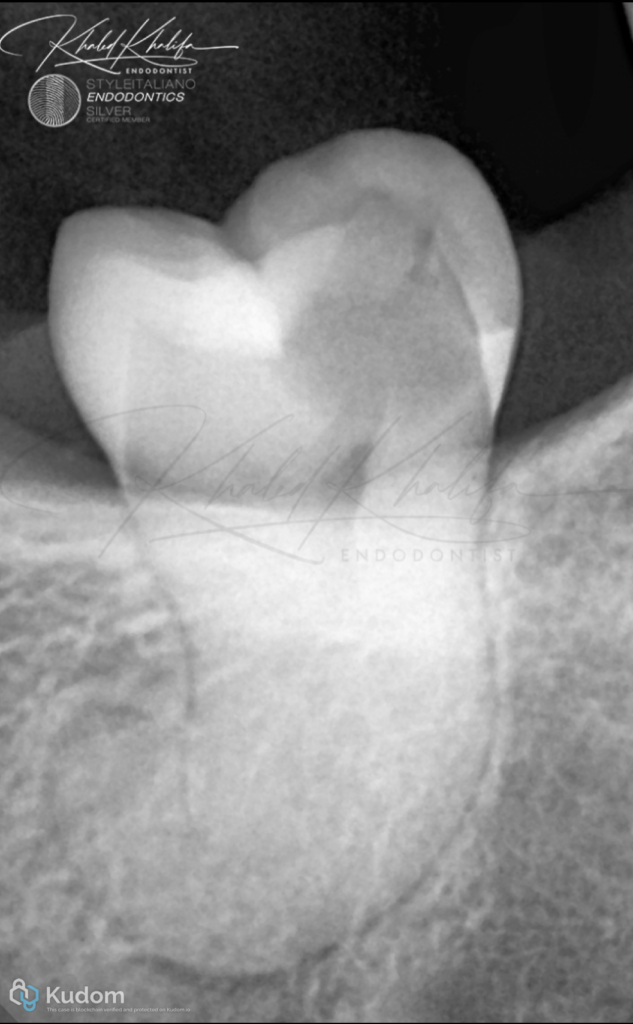
Lower wisdom drifted and in occlusion.
Patient on immunosuppressive drugs and in severe pain and she cant extract now she has to wait for 6 months.
X-ray showing dilacerated roots and CBCT is showing multiplaner curvature and very high risk case.
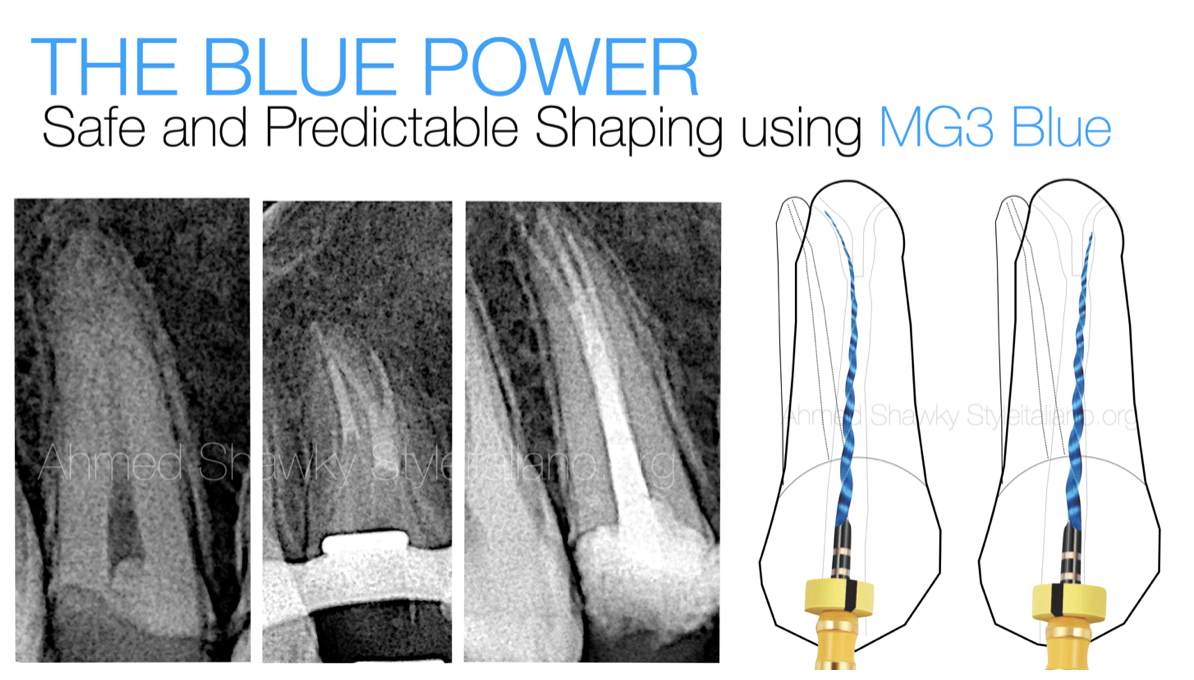
Protocol depending on reproducible glidepath and conservative shaping has been developed in a case like this to achieve the best results.
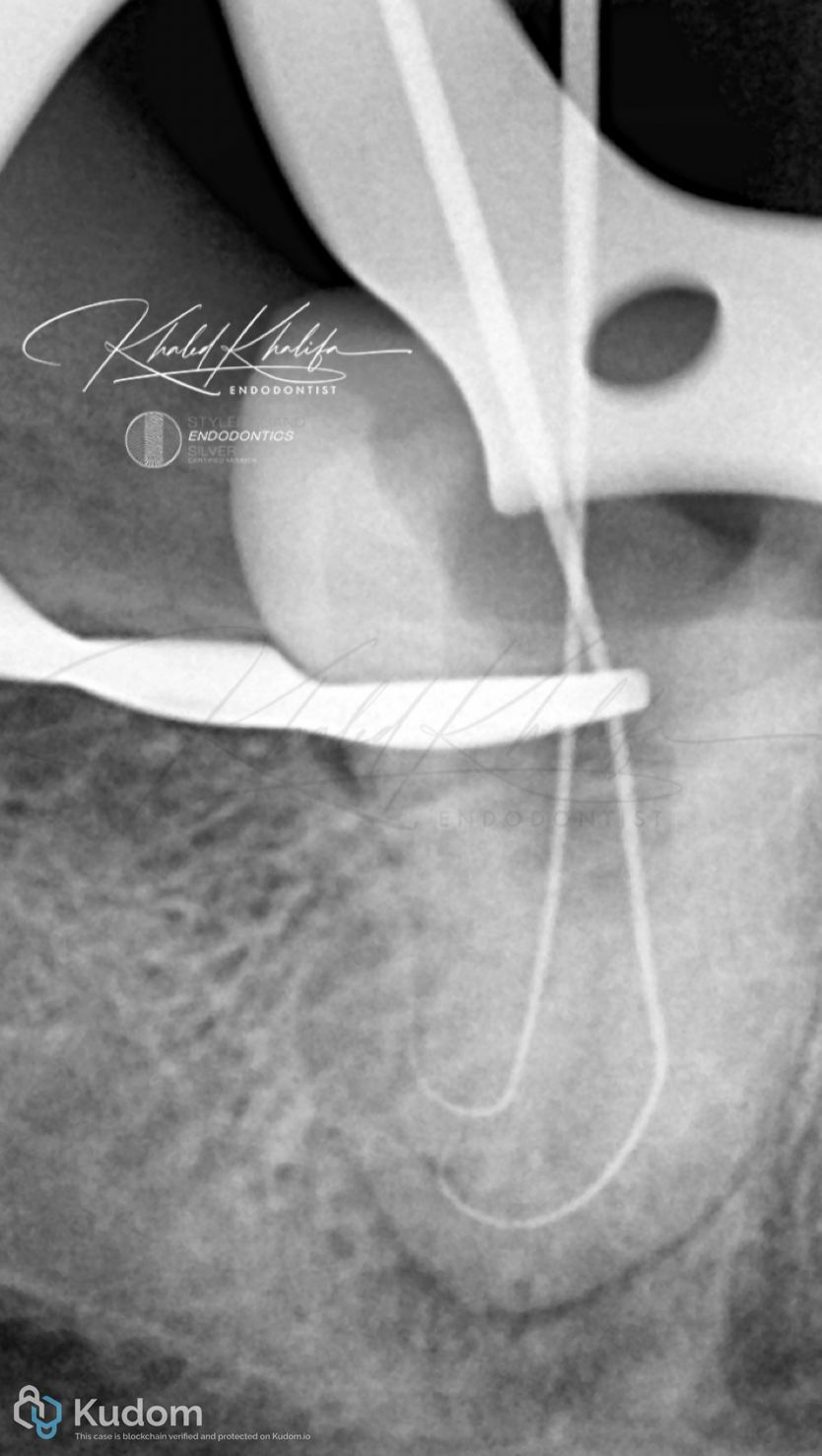
Fig. 1
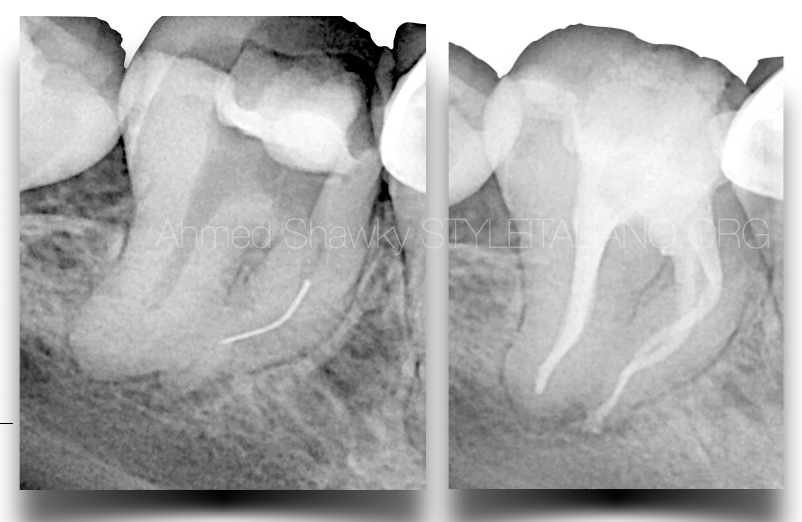
After access cavity preparation and straight line access.
Proceeded in the canals using D Finder file #10 and K Files #8 and #10 in simple watch winding motion with irrigation to see the maximum can reach !
However I couldn’t reach the apex cause I got stuck in the curvature and I decided to apply zone technique to enlarge above the curve using Gliders files size 10 taper 5% and 13 Taper 4%
Then enter again using TCA to reach FULLW.L
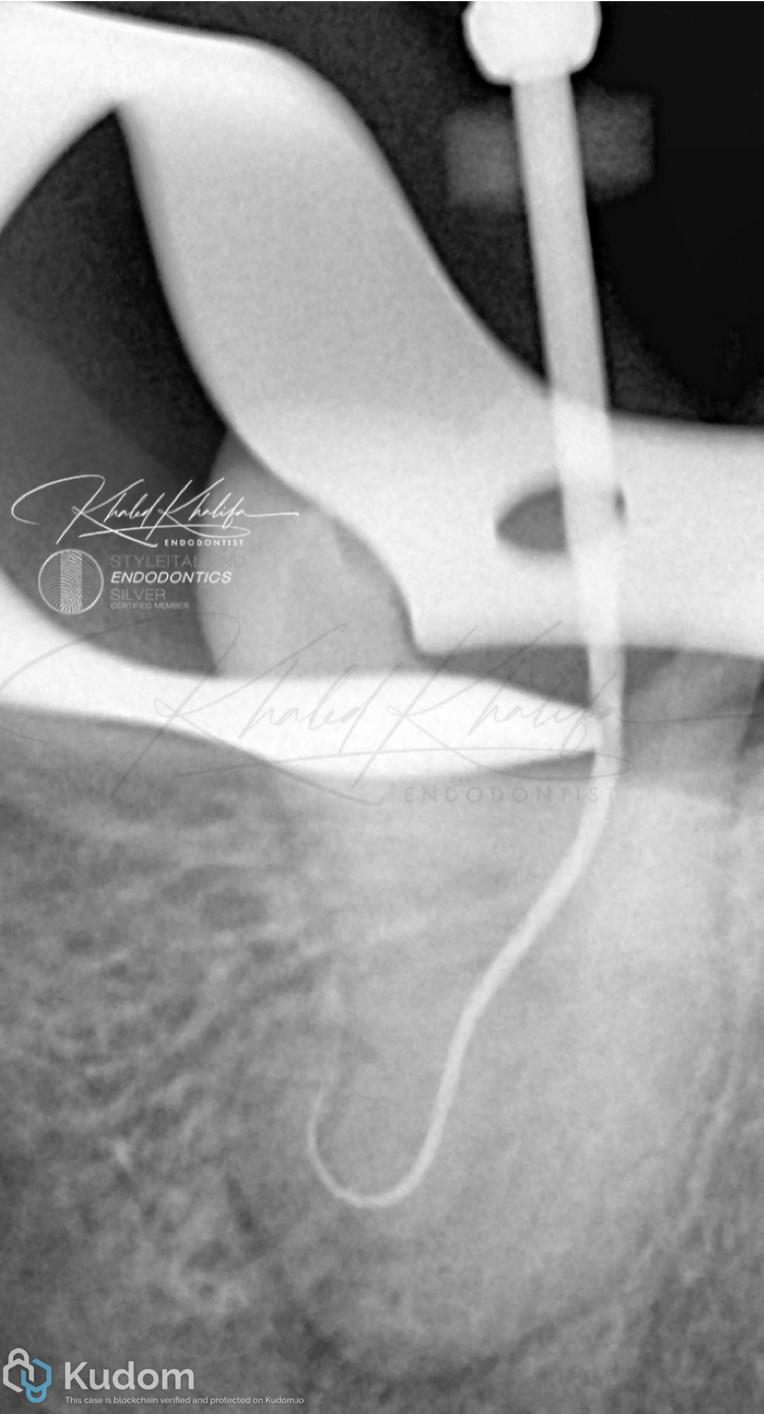
Fig. 2
Here after
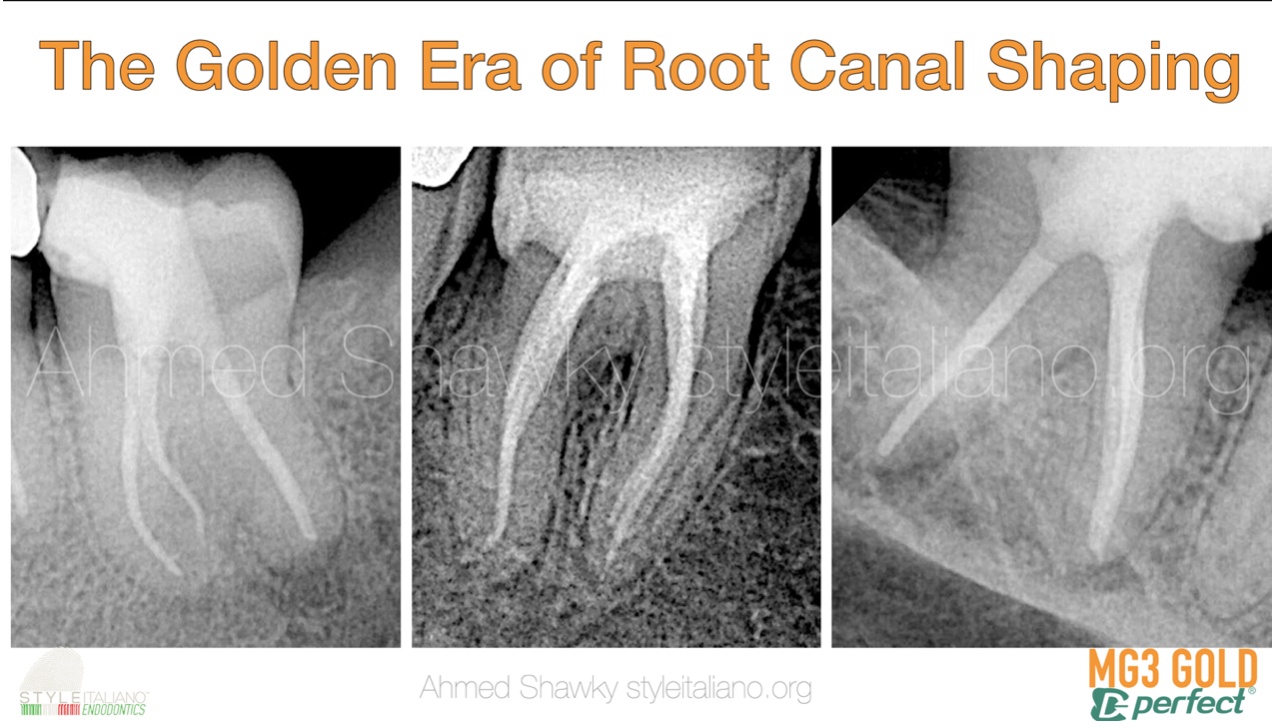
Achieving full WL using gliders on SGGP motion.
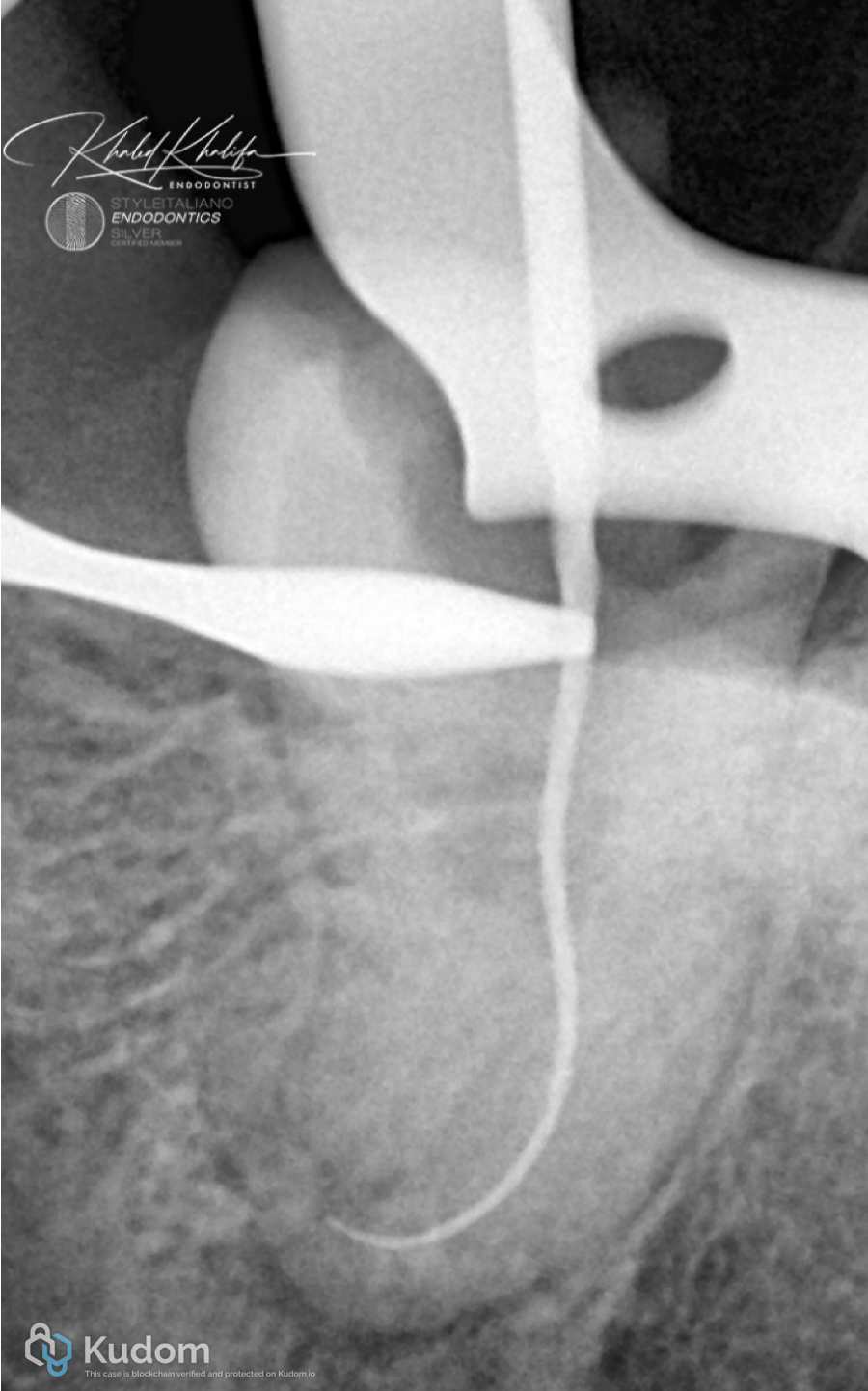
Fig. 3
And here as well I achieved FULL W.L in mesial root
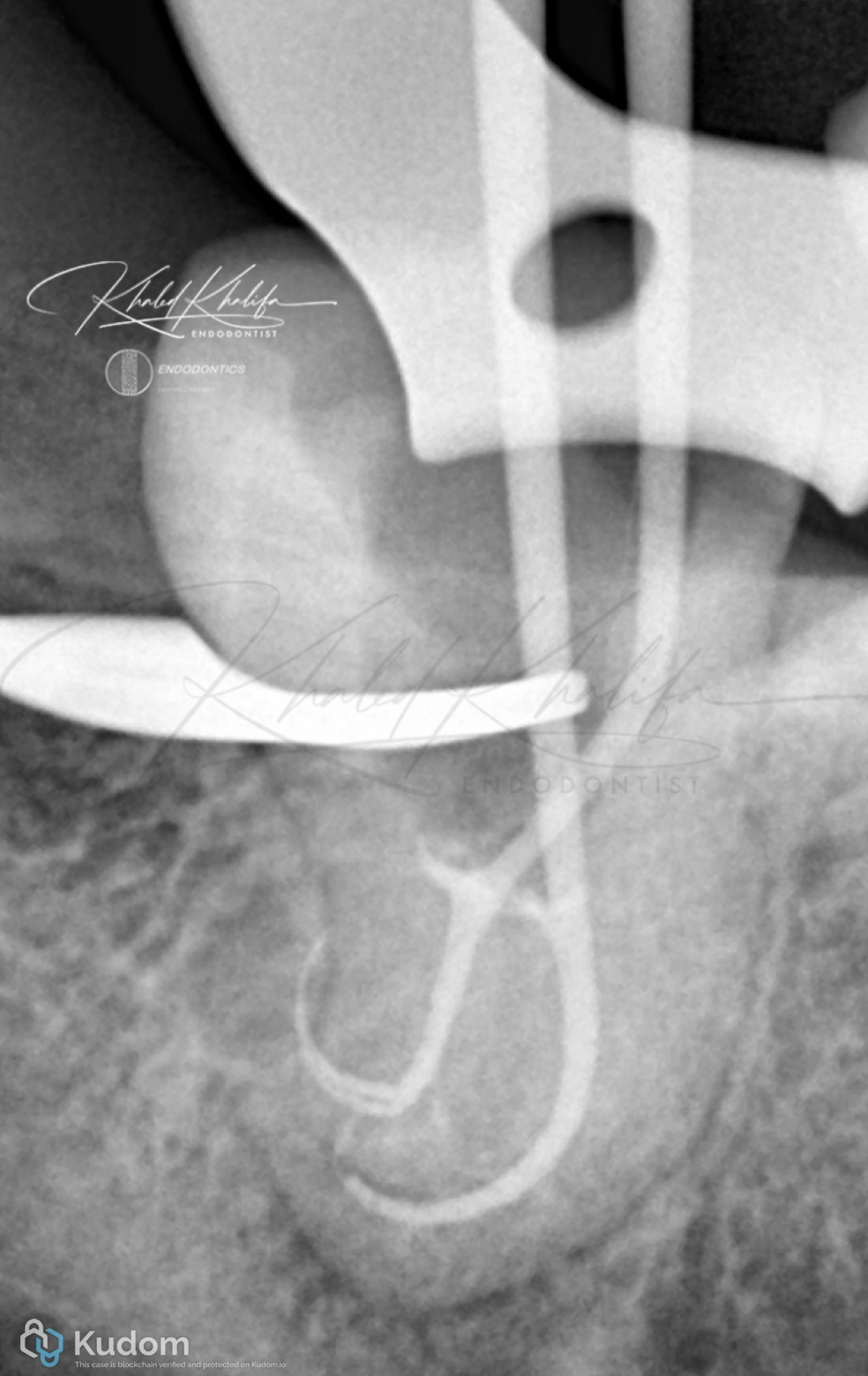
Fig. 4
The master cones were reaching working length but however still they needed a push so I decided to apply Hot Modified Technique obturation so I can be able to push the GP apically further.
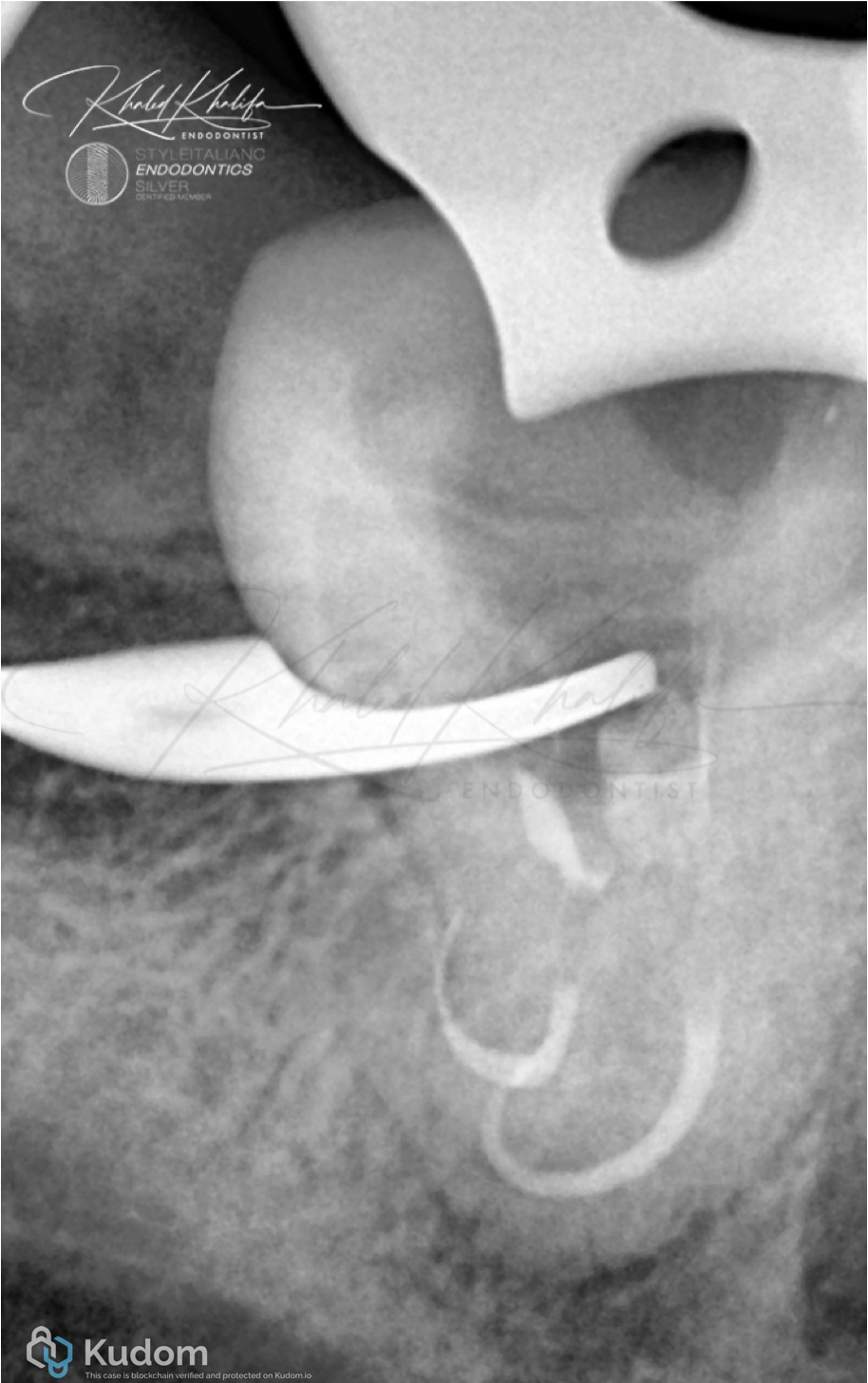
Fig. 5
Here afer the downpack you can see it reached full working length
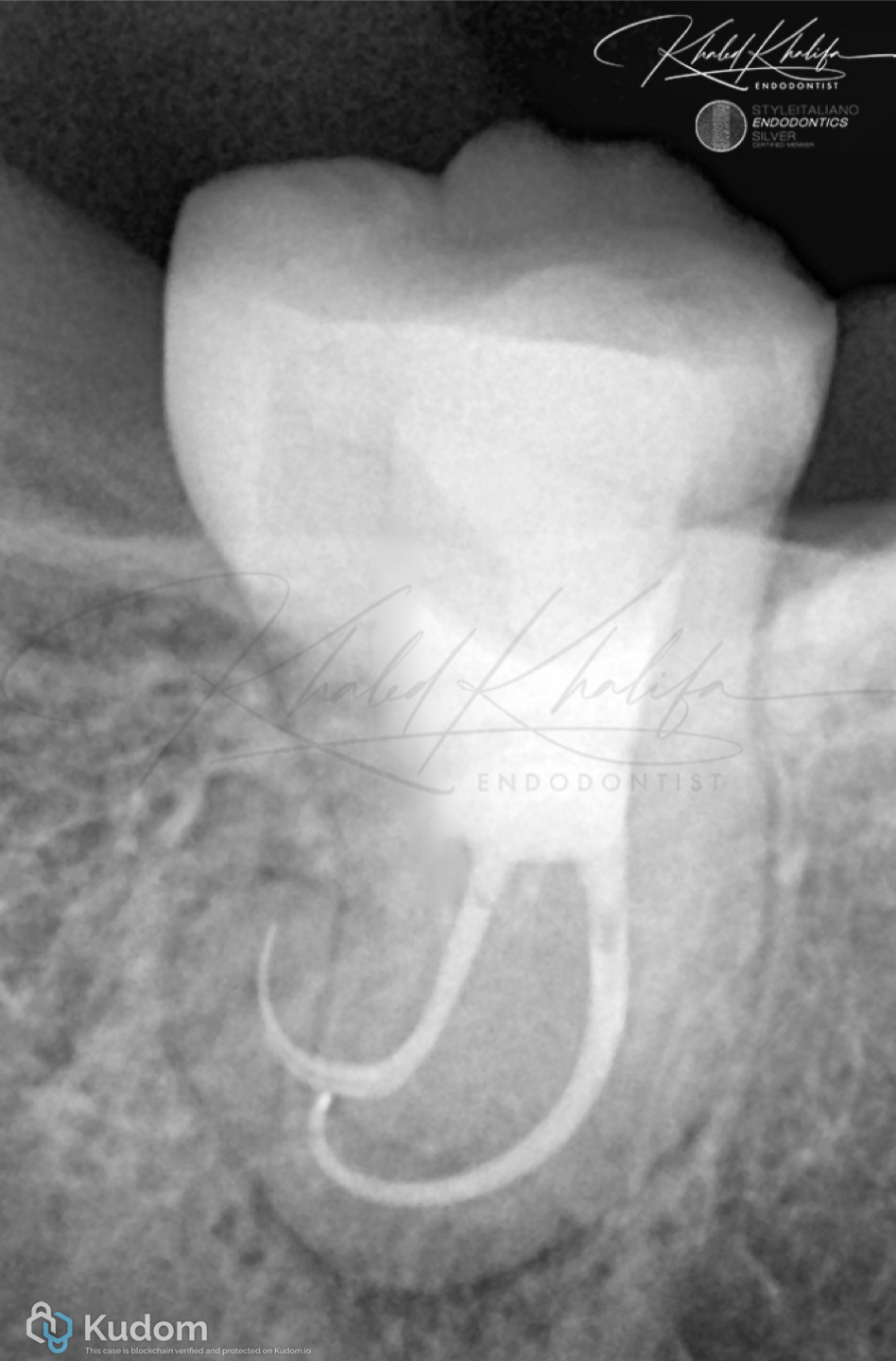
Fig. 6
Full obturation with final coronal restoration.
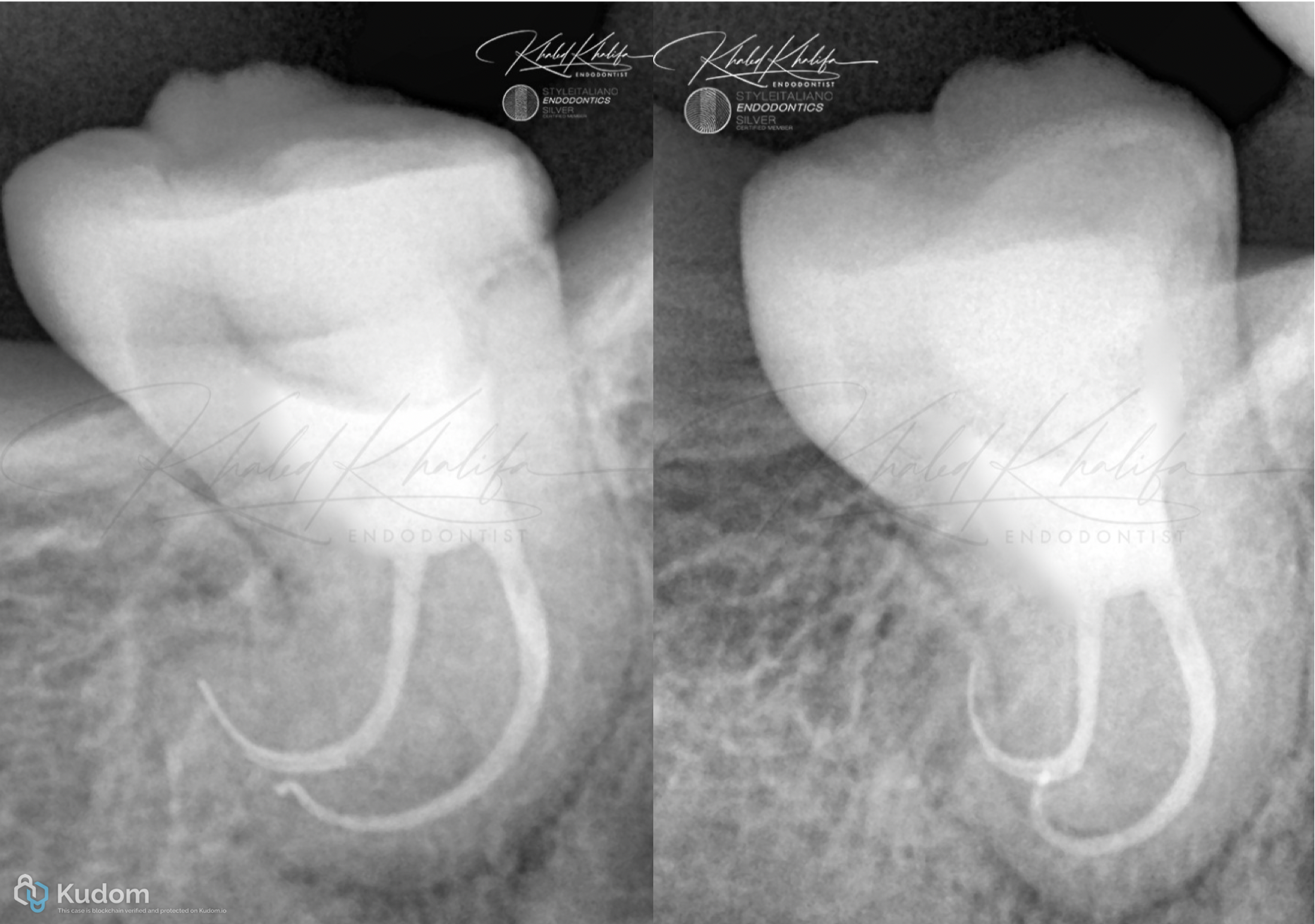
Fig. 7
Postoperative pictures with shifts
Conclusions
The right approach and a careful pre operative evaluation can help solving even complex cases
Bibliography
- 1. Schilder H. Cleaning and shaping the root canal. Dent Clin North Am. 1974;18(2):269–296
- .2. Peters OA. Current challenges and concepts in the preparation of root canal systems: a review. J Endod. 2004;30(8):559–567. doi:10.1097/01.DON.0000129039.59003.9D.
- 3. Hülsmann M, Peters OA, Dummer PMH. Mechanical preparation of root canals: shaping goals, techniques and means. Endod Topics. 2005;10(1):30–76. doi:10.1111/j.1601-1546.2005.00152.x.
- 4. Berutti E, Cantatore G, Castellucci A, et al. Use of nickel-titanium rotary PathFile to create the glide path: comparison with manual preflaring in simulated root canals. J Endod. 2009;35(3):408–412. doi:10.1016/j.joen.2008.11.021.
- 5. Coelho MS, Fontana CE, Kato AS, et al. Effectiveness of a manual glide path on the preparation of curved root canals by using Mtwo rotary instruments. J Endod. 2009;35(5):699–702. doi:10.1016/j.joen.2009.02.001.