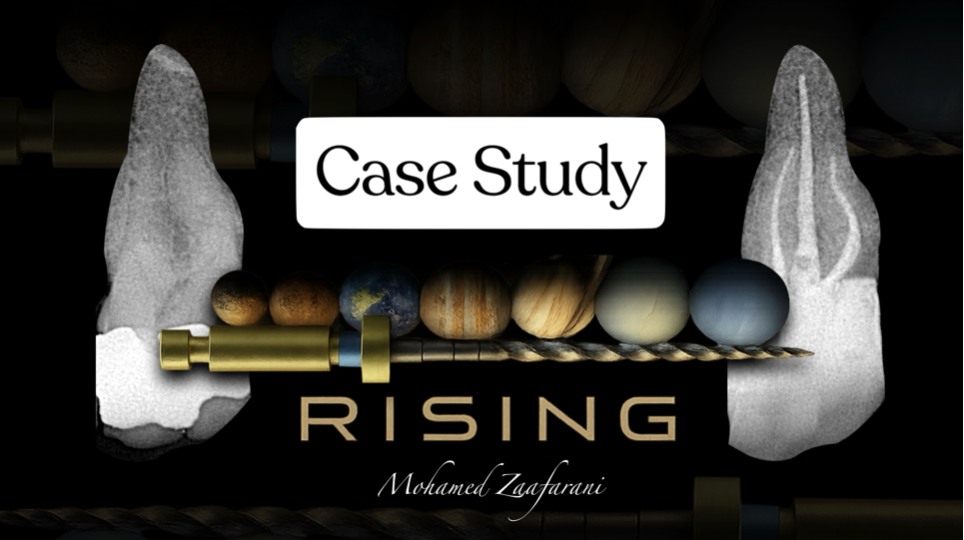
Fanta rising files: Mastering long, ultra-narrow canals with confidence
27/06/2026
Warning: Undefined variable $post in /home/styleendo/htdocs/styleitaliano-endodontics.org/wp-content/plugins/oxygen/component-framework/components/classes/code-block.class.php(133) : eval()'d code on line 2
Warning: Attempt to read property "ID" on null in /home/styleendo/htdocs/styleitaliano-endodontics.org/wp-content/plugins/oxygen/component-framework/components/classes/code-block.class.php(133) : eval()'d code on line 2
Introduction
Management of long narrow canals remains one of the greatest challenges in modern endodontics.
The combination of calcification, reduced canal diameter and limited visibility significantly increases the risk of:
• Canal deviation
• Ledge formation
• Excessive dentine removal
• Instrument separation
• Failure to reach the original canal anatomy
The introduction of CBCT imaging, operating microscopes and advanced nickel-titanium instruments has dramatically improved our ability to manage these cases predictably.
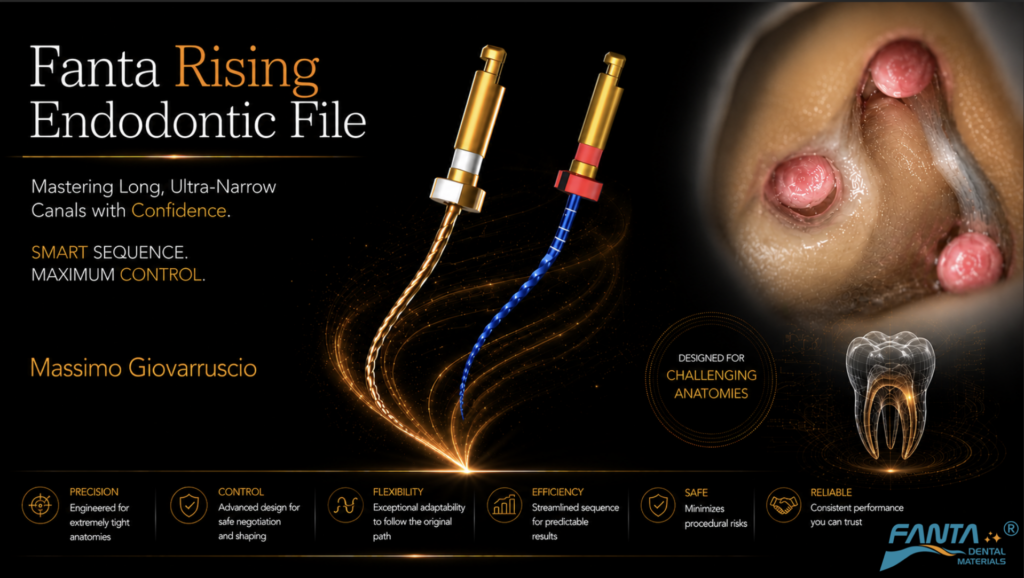
The Fanta Rising file system has been designed to negotiate long narrow canals while maintaining canal anatomy and minimising procedural errors.
This article presents the clinical application of the Fanta Rising file in the management of challenging long narrow canals
The challenge is not finding the canal. The challenge is reaching the apex without losing it
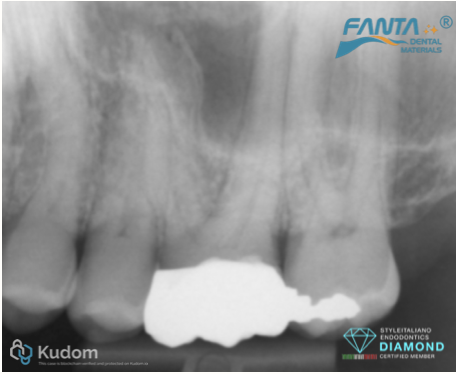
Fig. 1
Long narrow canals remain one of the most demanding situations in endodontics.
Challenges include:
• Reduced canal diameter
• Difficult negotiation and scouting
• Increased risk of ledge formation
• Canal transportation
• Excessive dentine removal
• Instrument separation
Modern endodontics relies on the combination of:
✓ CBCT imaging
✓ Magnification
✓ Ultrasonics
✓ Flexible NiTi instruments
to achieve predictable and conservative canal negotiation.
The Fanta Rising file was developed to improve the management of long narrow canals while preserving the original canal anatomy.
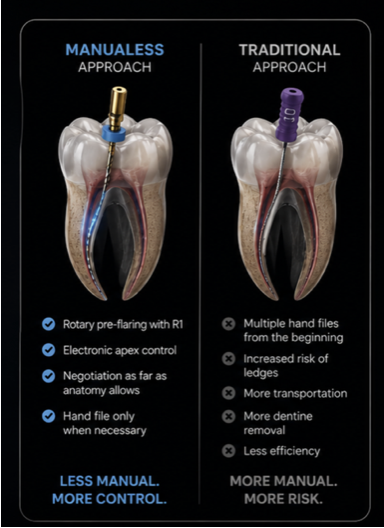
Fig. 2
MANUALLESS APPROACH
The objective is not to eliminate hand files, but to minimise their use.
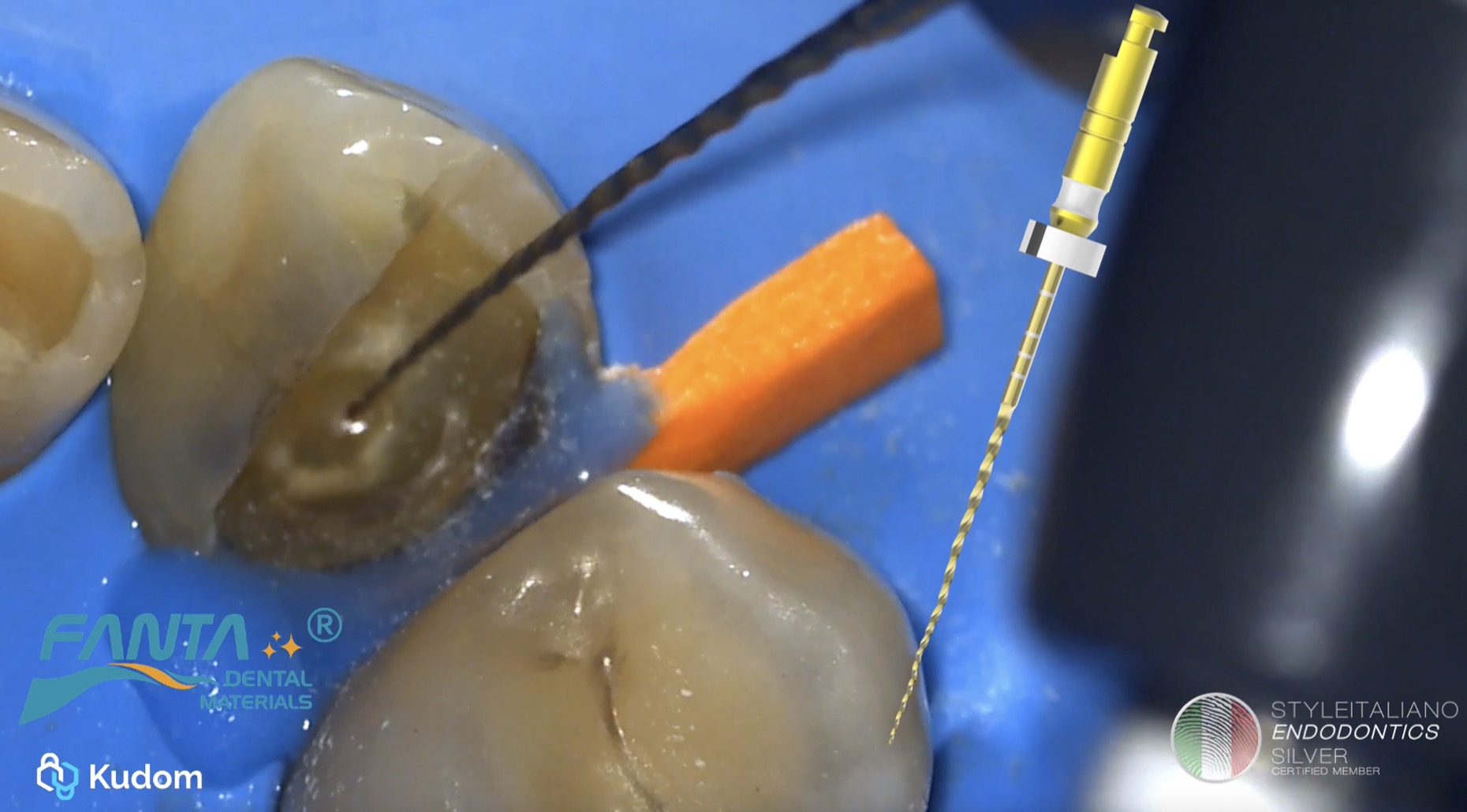
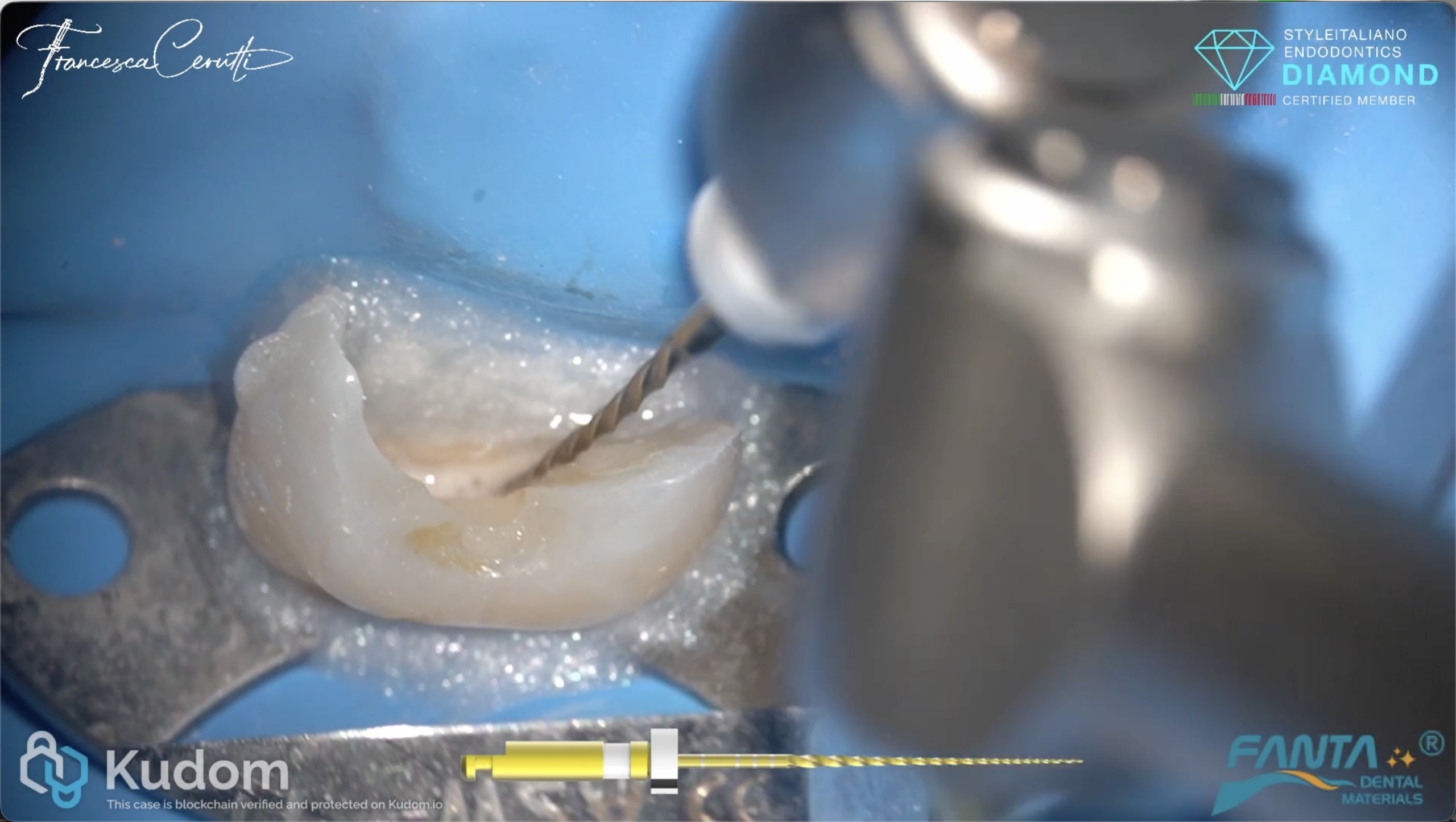
Rising R1 allows controlled pre-flaring and progressive advancement under continuous electronic apex monitoring. In many cases, canal negotiation can be extended significantly before a #10 K-file becomes necessary.
This strategy reduces repeated manual instrumentation, improves tactile control, and creates a reproducible pathway towards working length.
The result is a more conservative, efficient, and predictable workflow, particularly in long and severely constricted canals.
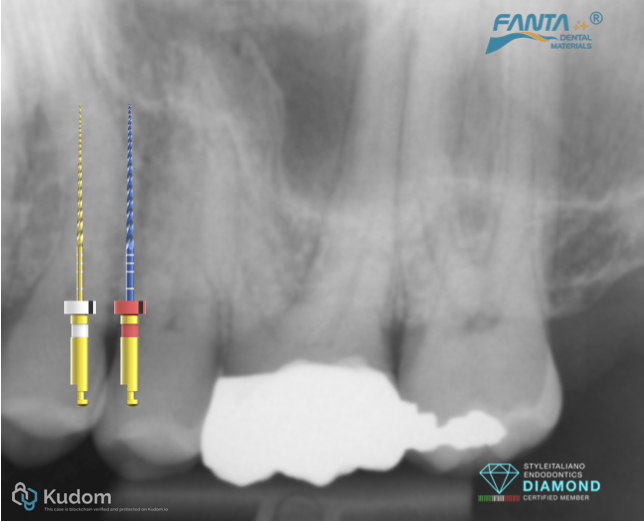
Fig. 3
Files selected for the case
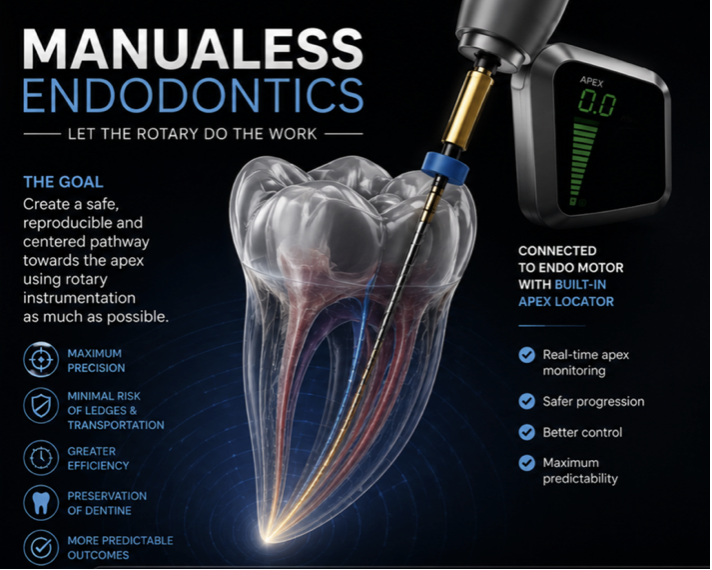
Fig. 4
MANUALLESS CONCEPT
The concept is to reduce dependence on manual negotiation by creating a controlled and reproducible pathway, even in long and severely constricted canals
Less time negotiating.
Less procedural stress.
More focus on shaping
A smarter workflow for greater efficiency, confidence, and clinical predictability
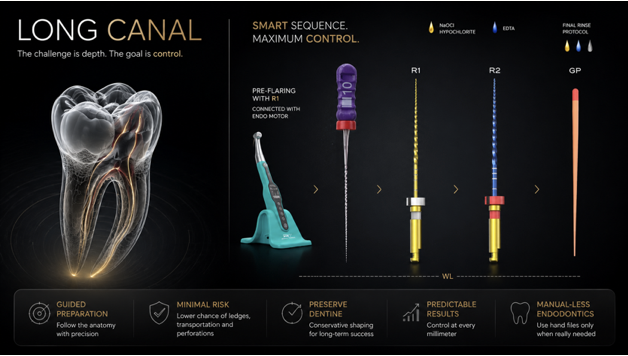
Fig. 5
PROCEDURAL PROTOCOL
• Initial pre-flaring is performed with the Rising R1 connected to an endodontic motor equipped with a built-in apex locator
• If the canal anatomy allows, Rising R1 may reach the working length (WL) directly
• In more constricted anatomies, a #10 K-file is used to negotiate the canal up to the working length
• Once patency and WL have been confirmed, Rising R1 is reintroduced to further enlarge the glide path, followed by shaping with Rising R2
• Throughout instrumentation, irrigation is performed using sodium hypochlorite (NaOCl), followed by 17% EDTA and a final rinse with Saline Solution
• Obturation is completed using a matched gutta-percha cone and a hydraulic calcium silicate cement sealer with the Single Cone Technique
This protocol is designed to minimise dependence on manual negotiation while maintaining maximum control and predictability in long, severely constricted canals
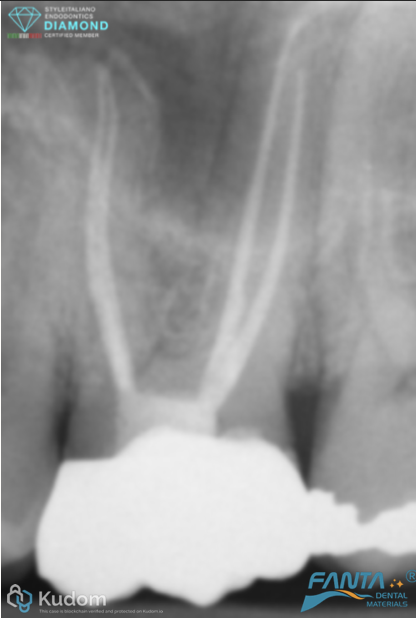
Fig. 6
CLINICAL OUTCOME
Despite the presence of a long and curved root canal system, a minimally invasive approach was maintained throughout the entire procedure.
Particular attention was paid to preserving the original anatomy, including the complete separation of the MB2 and MB1 canals, avoiding unnecessary dentine removal and excessive canal enlargement.
Controlled negotiation, conservative shaping, and predictable obturation allowed full management of the canal system while respecting its natural morphology.
The final radiograph demonstrates that anatomical preservation, efficiency, and predictability can coexist, even in highly challenging endodontic cases.
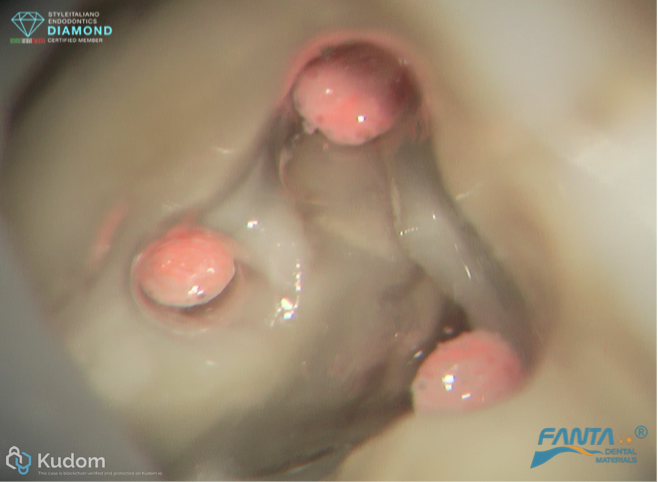
Fig. 7
FROM POSSIBILITY TO PATHWAY
When anatomy becomes challenging, success begins with finding a predictable path
FROM CHALLENGE TO PREDICTABILITY
Cbct review, illustrates the successful management of a long and severely constricted canal, achieved through a progressive and reproducible workflow.
Rather than relying on extensive manual negotiation, the Fanta Rising concept creates a controlled pathway towards working length, allowing efficient shaping while respecting the original anatomy.
Rising R1 facilitates canal progression, the #10 K-file is used only when necessary, and Rising R2 completes conservative preparation prior to obturation.
The result is a predictable outcome characterised by anatomical preservation, procedural control, and increased operator confidence, even in some of the most demanding endodontic cases.

Fig. 8
Take home message
Conclusions
CONCLUSIONS
The Fanta Rising sequence combines controlled mechanical pre-enlargement, manual negotiation, and conservative shaping into a predictable workflow for the management of long, ultra-narrow canals
The Rising R1 facilitates coronal advancement and improves access to the apical third, while the #10 K-file confirms canal negotiation and working length. The Rising R2 then enables efficient shaping while respecting the original canal anatomy
This integrated approach enhances control, reduces procedural stress, and increases predictability when treating some of the most challenging root canal anatomies encountered in daily practice.